
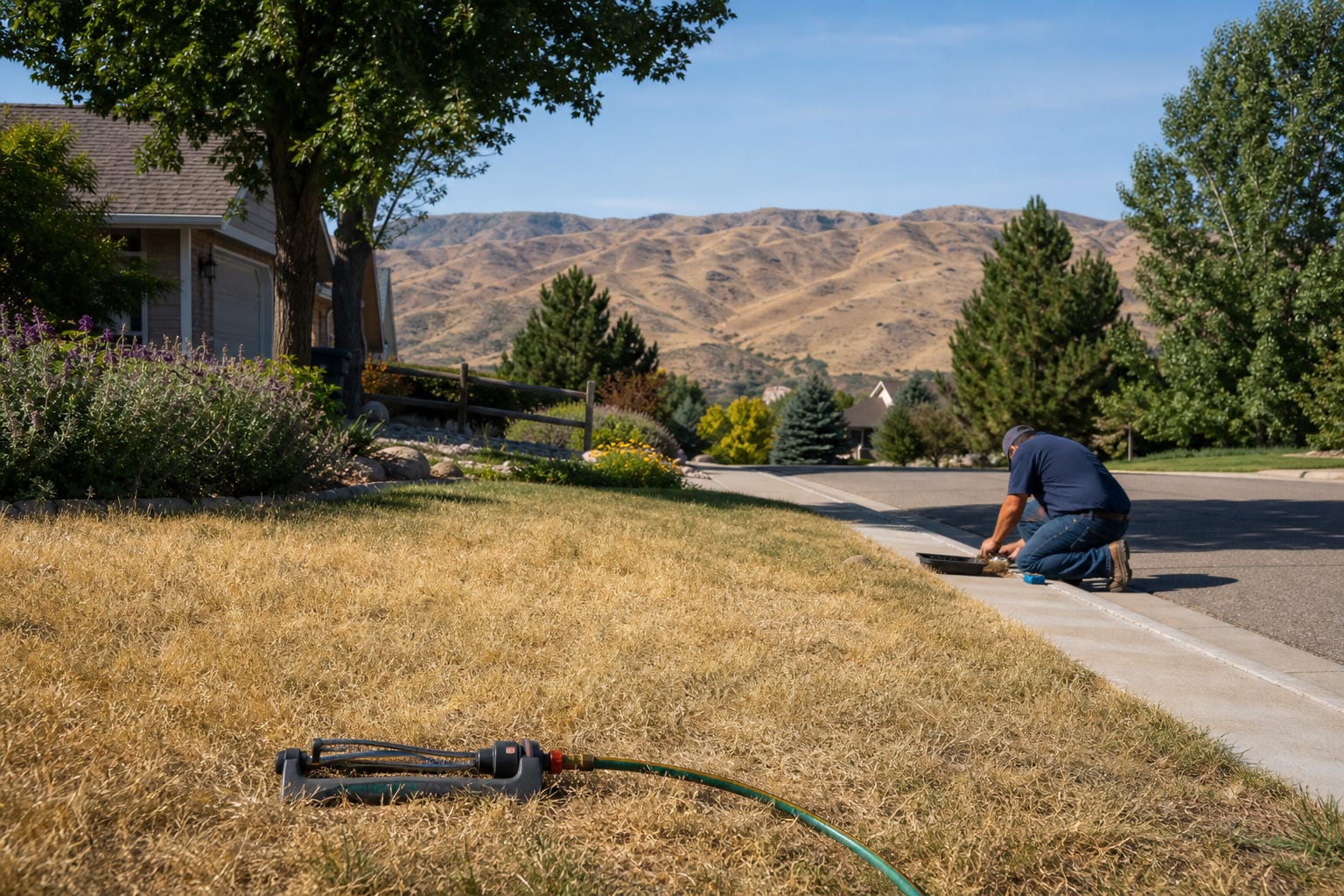
Boise has not declared a drought emergency. But the City Council just gave Mayor Lauren McLean a legal playbook for one, including a path from voluntary water-saving guidance to mandatory limits if Ada County's water picture gets worse.
The ordinance, adopted Tuesday, lands after an unusually warm winter and near record-low snowpack, with city officials warning that low mountain runoff can reach Boise through reservoirs, river flows and summer water supplies. For families, property owners and taxpayers, the question is no longer whether water conservation is polite advice. It is when City Hall may decide it has to become a rule.
What the ordinance changes
The new drought ordinance creates a phased response for the city. At the low end, Boise can issue voluntary guidance and ask residents to cut outdoor water use. At the high end, the mayor can require reduced use or pause certain uses of potable water for specific activities during a drought emergency.
City officials say the trigger is not a political mood check. The response would be tied to the U.S. Drought Monitor's classification for Ada County, along with water-supply evaluations and local conditions. That matters because a drought order affects what people can do on their own property, especially when summer demand is driven by lawns, landscaping and recreation.
Mayor McLean told the council the city was not declaring a drought emergency this week. The move was framed as preparation. That distinction is important. Boise is building the authority before the emergency, not writing rules in the middle of a panic.
Drinking water is the pressure point
The ordinance applies to users of Boise's public drinking water system. It does not cover private wells, canal water or customers who rely on a separate irrigation provider. That carveout is not a small detail in a valley where many neighborhoods use canal and pressure-irrigation systems for yards.
Still, the city says most of Boise uses drinking water on lawns, gardens and landscaping. Its water conservation page says 70 percent of Boise's drinking water supply comes from limited groundwater resources. During summer, Veolia Idaho says demand in its service area can climb above 90 million gallons a day, compared with about 25 million gallons a day in winter.
That is the practical problem behind the policy fight. Boise's hottest months do not just test reservoirs. They test whether a growing city can keep treating clean drinking water as the default way to keep grass green.
The local-control test
The ordinance gives Boise a local tool, but it also puts the city on an accountability clock. If restrictions ever arrive, residents will want to know why one neighborhood is covered, why another is exempt, which drought data triggered the order and how quickly the limits will end.
That is where the right question is not just whether water should be saved. Idaho families generally understand conservation when the facts are plain. The sharper question is whether government can write emergency authority with clear boundaries before it touches private property routines and household habits.
Boise officials are telling residents to water during cooler parts of the day, avoid daily watering, use native or drought-tolerant plants and check for leaks. Those are ordinary steps. The new ordinance is the bigger signal. If the snowpack keeps coming up short, the fight over Boise water will move from helpful tips to who controls the tap when the valley is dry.