
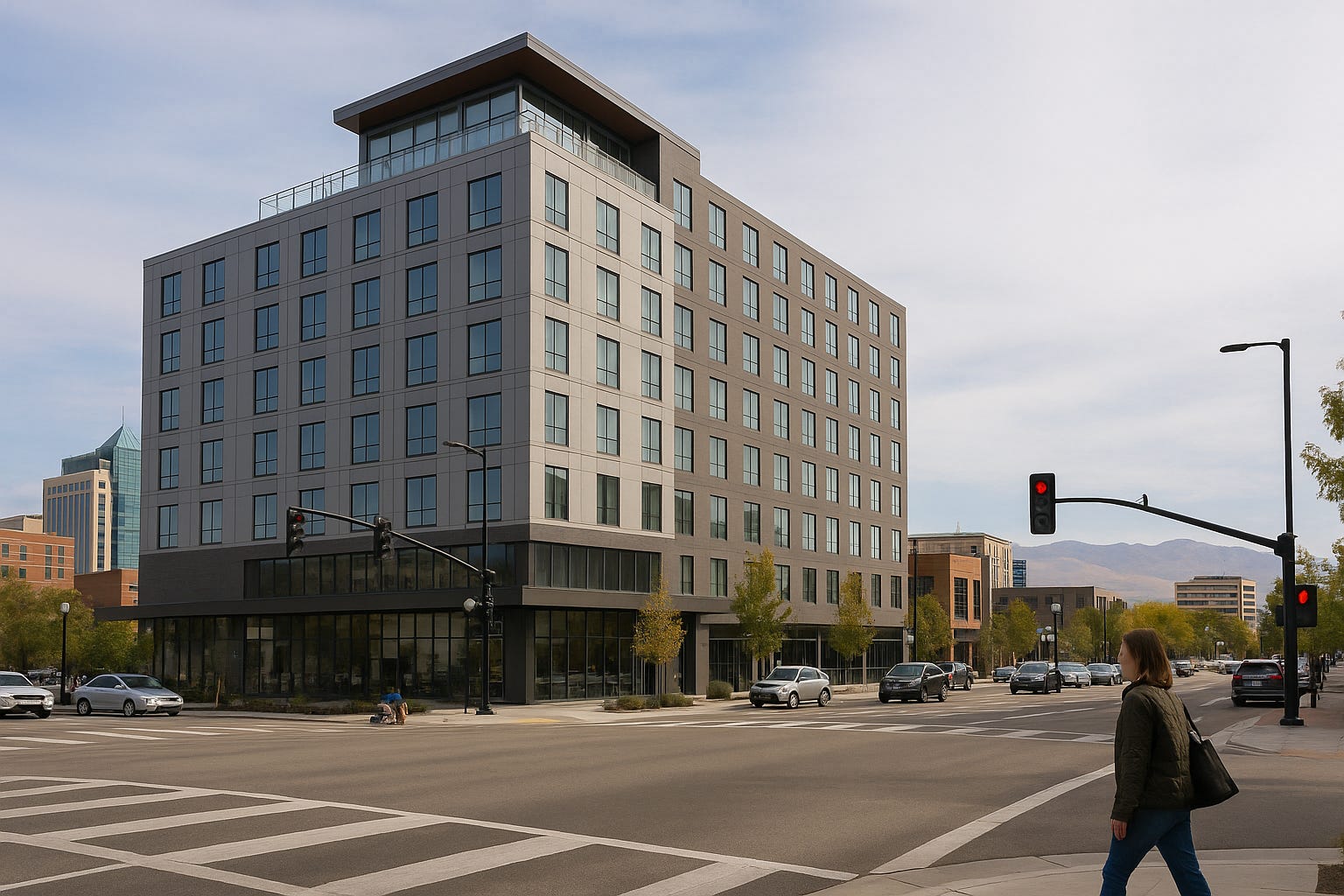
Boise's newest downtown hotel is not just another place for visitors to sleep. The 296-room AC Hotel Boise Downtown and Element by Marriott Boise Downtown opened this month at 1005 W. Grove Street, putting the city's largest hotel at the edge of its business, convention and entertainment core.
For downtown Boise, the real question is what happens after the ribbon-cutting. A hotel this large is a bet on meetings, business travel, restaurant traffic, families, and the kind of steady visitor flow that can help nearby small businesses long after a grand opening week fades.
What the new hotel adds
The project combines two Marriott brands under one roof. Element by Marriott occupies floors five through seven, with 121 studio and one-bedroom suites built for longer stays. AC Hotel fills floors eight through fifteen with 175 rooms aimed at short-stay, business and design-focused travelers.
The property also adds about 8,250 square feet of meeting and event space. That matters for a downtown that has spent years trying to turn growth into actual commerce instead of just taller buildings and higher rents. Meeting rooms, hotel blocks and event traffic can feed restaurants, shops, transportation, entertainment and service workers across the core.
The Boise Post, a 16th-floor rooftop restaurant and lounge, is open to the public and built for up to 140 guests. The hotel also includes a lobby-level AC Cafe, shared coworking space, a fitness center, outdoor hot tub and fire pits. Those public-facing pieces are important because they make the building more than a private visitor box. They give locals a reason to use the project too.
Why downtown businesses should care
Large hotels are economic plumbing. They move convention guests, corporate travelers, families and weekend visitors into the same few blocks where local restaurants and small businesses need reliable foot traffic. Boise has plenty of growth headlines. The better test is whether that growth creates daily work and local sales instead of only photo opportunities.
Pennbridge Hospitality has framed the project as a major downtown investment, and the company previously described the tower as a 15-story project at 11th and Grove. Travel-industry coverage has called it Boise's largest hotel and the city's first dual-branded Marriott property.
That scale gives Boise more capacity to compete for business that might otherwise land in larger regional markets. It also puts pressure on the city and downtown stakeholders to keep the surrounding blocks clean, safe, walkable and useful. A hotel cannot carry a downtown by itself. It needs public order, dependable streets, good restaurants, and a business climate that makes visitors want to come back.
The local bet
The hotel's general manager said Boise demand now supports a project of this size and sophistication. That is the optimistic read. The practical read is that Boise now has to prove it can turn demand into durable local benefit.
If the AC and Element property pulls more conventions, business travelers and family visits into the core, nearby employers and workers should feel it. If locals actually use the rooftop restaurant, cafe and shared spaces, the building becomes part of downtown life instead of just another lodging asset.
That is the business story to watch. Boise has added another big piece of downtown capacity. Now taxpayers, workers and small businesses get to see whether the promise of growth turns into real local commerce.