
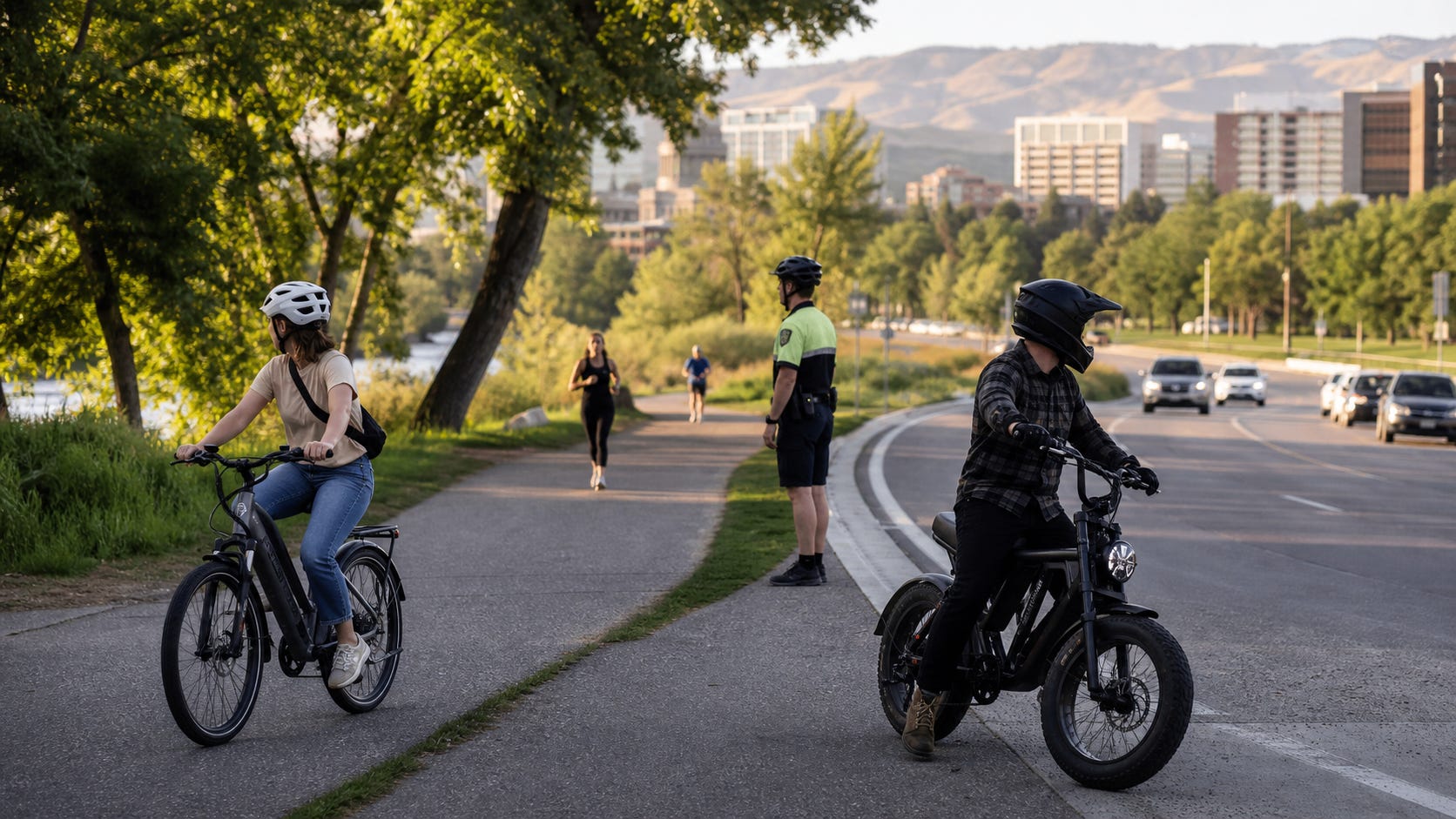
Boise City Council has put high-powered electric motorcycles into a clearer legal lane, approving emergency rules that treat fast e-motos more like motorcycles than ordinary e-bikes when they show up on city streets, sidewalks, the Greenbelt and other public paths.
The ordinance, approved Tuesday and set to take effect July 1, draws a local-control line around a fast-growing summer problem: electric rigs that can outrun a normal bike, confuse parents and riders, and leave police without a clean rule to enforce until someone gets hurt.
What now counts as an e-moto
The new city definition covers a two- or three-wheeled electric vehicle with a motor above 750 watts or a top speed above 28 mph. City legal documents say that puts the machines outside the normal Class 1, Class 2 and Class 3 e-bike framework and outside Boise's existing e-bike definition.
That distinction matters. A true e-bike can keep its place in the bike-lane world. An e-moto, under the new Boise rule, is treated as a motor vehicle when it is operated on a public roadway or highway inside city limits. That means the machine needs to be licensed, titled and insured under state requirements before it belongs on public streets. Riders also have to comply with Idaho driver restrictions, including the rules that apply to operating a motor vehicle.
The council's rule also closes the loophole that made these machines hardest for families and law enforcement to sort out. E-motos are always barred from city sidewalks, pathways and bike paths, including places built mainly for walkers, cyclists, scooter riders and families. The only city-managed trails open to them are trails specifically designated for motorcycles or other motor vehicles.
Why the city moved fast
City documents describe a marked rise in physical injuries tied to e-bikes, e-scooters and electric motorized vehicles that do not fit neatly into existing definitions. The concern is not just speed. It is the mix of summer crowds, children, commuters, pedestrians, bike paths, the Greenbelt and machines that look like bikes to a buyer but behave more like small motorcycles in public space.
That is where the taxpayer and public-safety stakes show up. If the city waits until every category is perfectly named by state code, police are stuck guessing and families are stuck sharing paths with vehicles that may be too powerful for the setting. If Boise writes a local rule, officers get a clearer enforcement line and riders get a clearer warning before a crash turns into a lawsuit, medical bill or permanent injury.
The ordinance says the city's goal is clarity, standards and injury prevention. It reports no direct financial impact, but the larger cost question is obvious enough for any parent on the Greenbelt: who pays when a high-powered machine is treated like a toy until the moment it hits somebody?
The next test is enforcement
The new law does not ban ordinary e-bikes. It separates them from a faster class of electric vehicle that city officials say has been sold and used under the e-bike label despite higher power, higher speed or missing pedals. That is the practical difference families will care about. The issue is not whether Boise residents can ride. It is whether the fastest machines belong where kids, walkers and slower riders expect bike-path rules.
For Boise, the policy now shifts from definition to follow-through. The city has drawn the line: e-bikes on bike paths, street-legal e-motos on streets, and public spaces managed with enough order that families do not have to guess what is coming around the bend.
This seems problematic. An e-moto usually has a top end speed of 28-30. If treated like an automobile an e-moto can’t reach the posted 35 mph and higher automobile speeds. That opens up another round of safety discussions. As does the age of the driver. The ban on the greenbelt is necessary. Perhaps they can use the designated cycle pathways and bicycle infrastructure on the road. A trial period over the summer would help clarify advantages and disadvantages of forcing e-motos to register as an auto.