
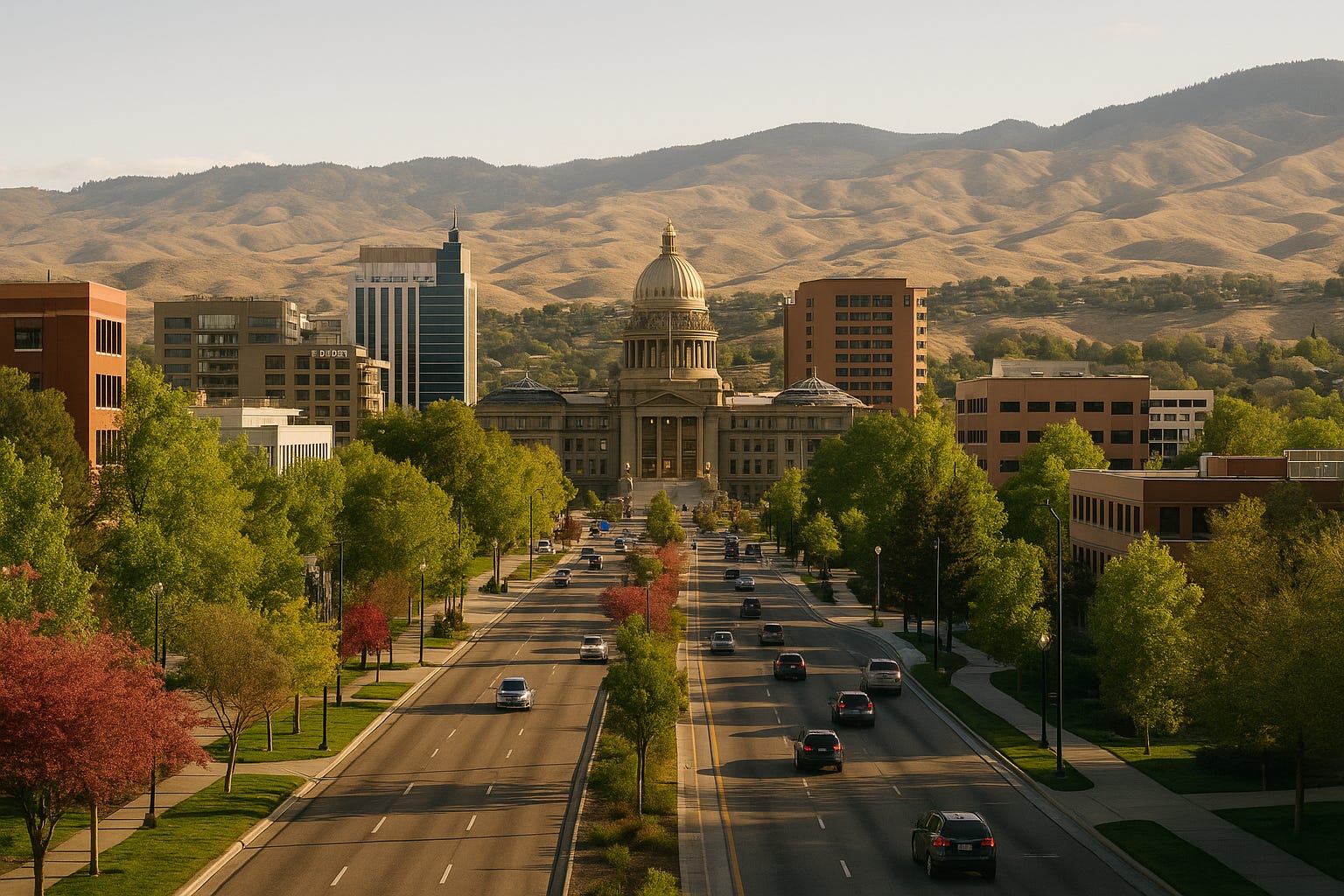
Boise residents are not just being asked what they want from City Hall next year. They are being shown, in public budget documents, where the pressure points are.
At a May 19 Boise City Council budget workshop, the Mayor's Office and Finance Department laid out an early FY2027 budget approach built around maintaining current services, preserving financial flexibility, and deciding which larger investments need new funding. The agenda listed presentations from Chief of Staff Hannah Brass Greer, Finance staff, and department leaders including Police Chief Christopher Dennison and Fire Chief Aaron Hummel.
The practical question for taxpayers is simple: how much should current residents pay now, and how much should be handled through voters, grants, growth fees, or future budgets?
City slides described current resources as largely committed and said only about 1 percent of General Fund revenue is flexible in each budget cycle. The same presentation said many desired investments require both new money and more time, with public safety facilities and staffing, community amenities, and a FY2028 impact fee update all listed in the budget context. Public safety bond and levy exploration was also marked as in progress.
Property taxes are one of the biggest pieces. For FY2027, city staff recommended taking the maximum allowable base property-tax increase of 3 percent, taking the maximum allowable new construction amount, using taxing authority connected to the sunset of the Westside District, and setting aside $900,000 for the property tax rebate program. A separate slide listed $2 million in forgone property taxes tied to public safety equipment replacement, police overtime, a permanent physical security guard, two attorneys connected to county courtroom requirements, police professional service agreement increases, fire operations and maintenance increases, and a Valley Regional Transit commitment.
That is the part families and property owners will watch closely. Boise's own public explanation of property taxes says taxing districts may increase taxes up to 3 percent each year, plus growth from new construction and annexation, and that amounts above that generally require voter approval through a bond or special levy. In other words, the budget debate is not only about services. It is about which costs stay inside City Hall's annual authority and which costs go directly to voters.
The spending side shows why the debate is tight. The workshop materials said FY2027 General Fund expenses are driven by salaries and benefits for 1,580 full-time equivalent positions. Personnel accounts for 71 percent of those expenses, operations and major equipment for 20 percent, transfers for 6 percent, and Valley Regional Transit for 3 percent. The presentation proposed 10 new General Fund positions, including three Planning and Development Services staff funded with development-fee revenue, two criminal attorneys, one full-time physical security position, one Hillcrest librarian, one zoo maintenance worker, one pool maintenance mechanic, and one citywide continuous improvement role.
Public safety sits near the center of the tradeoff. Boise Police listed response evolution, workforce stabilization, capital planning and investment, and employee wellness as strategic priorities. Police capital requests included a facilities strategic plan, $1.8 million for technology optimization, and $2.8 million for major equipment. Boise Fire listed a $320,000 radio replacement with an Assistance to Firefighters Grant, $5.7 million in new capital requests for engines, a heavy rescue vehicle, battalion chief vehicles and staff vehicles, and a $671,000 SAFER grant match for nine firefighters.
Residents may also see the budget through monthly bills, not just tax statements. The Public Works section proposed a 9.9 percent Water Renewal rate increase, described as about $5.70 per month, to cover operating costs and the capital plan. Materials Management proposed a 9.5 percent residential increase, about $2.60 per month, with commercial trash, commercial recycling, and roll-off increases also listed. Geothermal and irrigation rate increases were also included in the department presentation.
The city has opened FY2027 budget feedback through July 13 and scheduled the annual public budget hearing for July 14. City budget guidance says the budget process starts in January, departments present requests in public meetings in May and June, and City Council adoption comes in early fall for a fiscal year that begins October 1.
That gives Boise residents a narrow but real window. Growth is bringing more demand for police, fire, utilities, parks, libraries, streets, and basic maintenance. The public record now shows the first draft of how City Hall may try to pay for it. The accountability test is whether the final budget makes those tradeoffs plain before taxpayers and voters are asked to carry them.