
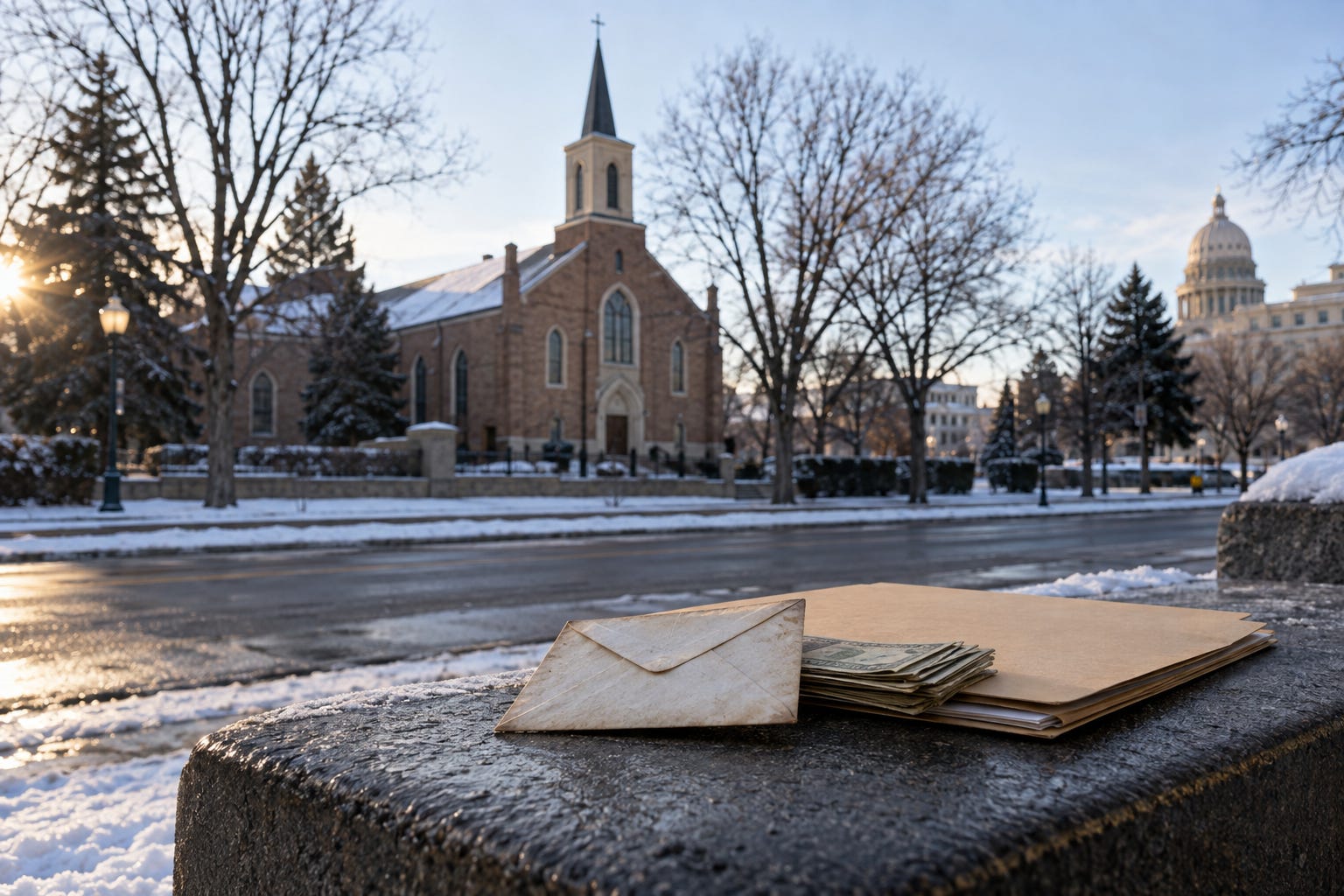
For nearly 44 years, Boise knew him only by a name investigators believed was invented. He was found dead beside a pew at Sacred Heart Catholic Church in December 1982, carrying no identification but leaving behind a typed note and $1,900 in cash. On Wednesday, the Ada County Sheriff’s Office says it will finally tell the public who he was.
That answer may close one part of an extraordinary local mystery. It could also open another. Authorities say they plan to address a possible connection between the Boise case and the 1982 Tylenol poisonings in Chicago, but they have not yet explained what they believe ties the cases together.
The clues he left inside a Boise church
The man was discovered near a church pew on Dec. 4, 1982. Investigators determined that he died by suicide after ingesting cyanide. He had no identification, but he carried nineteen $100 bills and left a typewritten note.
The note directed that the cash be used for his funeral and cremation, with any money left over going to the church. It was signed “Wm. L. Toomey.” Investigators later concluded that the name was an alias.
The few physical details only deepened the mystery. A former Ada County coroner recalled that the man appeared well groomed, neatly dressed and professional. Yet detectives could not connect him to a verified identity. A Boise police detective who worked the case later acknowledged that it was one mystery he had been unable to solve.
The case reached a national audience when it appeared on “Unsolved Mysteries” in 1990. Still, no public answer followed. The man was cremated and buried in Eagle, where his headstone carries the name William Toomey.
That could now change. Ada County Cold Case Detective Tim Cooper and Sheriff Matt Clifford are scheduled to speak at a 10 a.m. news conference Wednesday. Forensic psychiatrist Dr. Park Dietz and “Unsolved Mysteries” co-creator Terry Dunn Meurer are also expected to participate.
Why investigators are looking toward Chicago
The timing and the poison have always made the case unusually unsettling. Seven people in the Chicago area died in 1982 after taking Tylenol capsules contaminated with cyanide. Those deaths occurred roughly two months before the unidentified man died from cyanide in Boise.
The Chicago killings remain unsolved. They also changed how ordinary medicine is sold, helping drive the adoption of tamper-evident packaging that consumers now take for granted.
Ada County officials have described the Boise connection as possible, not proven. They have not publicly said whether they believe the man committed a crime, possessed information about the poisonings or was connected in some other way. Until investigators release their evidence, the overlap in timing and substance is a lead, not a conclusion.
That distinction matters. A dramatic theory can attract attention, but a cold case is resolved through records, identification and facts that can withstand scrutiny. Wednesday’s announcement will be measured by what investigators can document, not by how strange the theory sounds.
A real name would restore part of the record
Identifying the man would give Ada County something basic that the case has lacked since 1982: an accountable public record of who died inside a Boise church. It may also allow officials to determine whether surviving relatives have been waiting for answers, although authorities have not yet disclosed whether any family has been located.
The case also shows why old files still matter. Local investigators preserved a mystery through changing personnel, changing technology and four decades of dead ends. The promised identification is a reminder that patient police work can still recover a name long after the trail appears cold.
The next step is evidence. Investigators must explain how they reached the identification, what can be verified about the man’s life and what, if anything, connects him to the Chicago poisonings. One point, however, is already clear from Ada County’s announcement: the man buried as William Toomey may not be unknown much longer.