
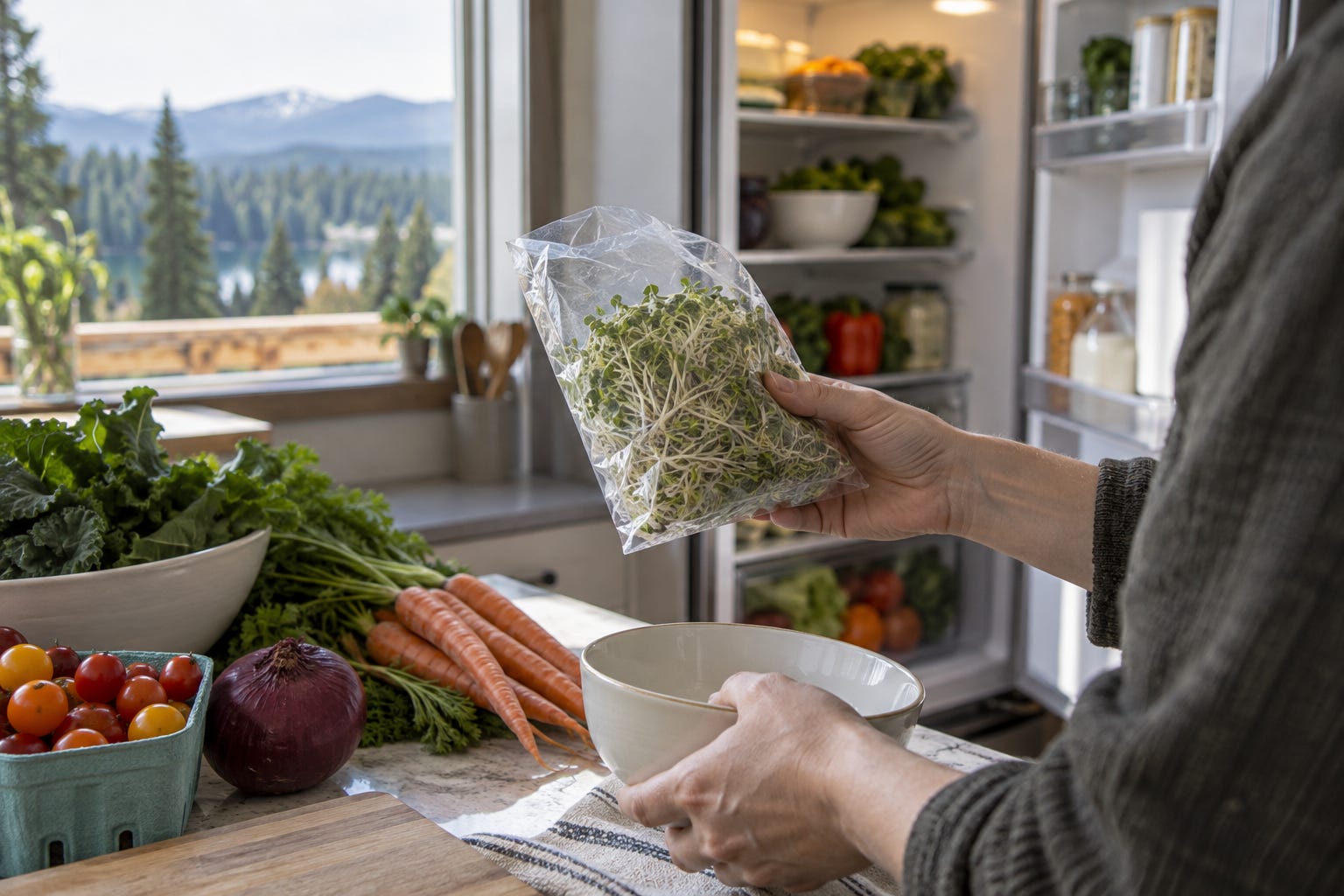
Broccoli sprouts grown in northern Idaho have been linked to a multistate Salmonella outbreak that has sickened 22 people and hospitalized two, according to federal health officials. The recall covers 215 shipping cases of sprouts from Evergreen Fresh Sprouts in Moyie Springs, including packages with use-by dates as late as Sept. 16.
The immediate job for Idaho households, restaurants and grocery stores is straightforward: check refrigerators and inventory, then discard or return any affected sprouts. The investigation is still open, and the Centers for Disease Control and Prevention says the true number of illnesses is likely higher than the confirmed count.
The dates Idaho shoppers need to check
The recalled product was sold without a brand name in clear plastic four-ounce zip bags. The printed UPC is 8 38796 00105 1. Affected packages carry use-by dates of Sept. 7, Sept. 9, Sept. 11, Sept. 14 or Sept. 16.
Evergreen said the broccoli sprouts were delivered to three distributors in Washington between Aug. 24 and Sept. 2. Federal officials said the product reached grocery stores, restaurants and food-service customers in Idaho, Montana and Washington, and may have traveled farther through additional distribution.
That means an expired date is not a reason to ignore the notice. A forgotten package can remain in a home refrigerator, and a restaurant or retailer may still have product or containers that touched it. Federal guidance says recalled sprouts should not be eaten, served or sold.
The Moyie Springs company stopped producing and distributing broccoli sprouts on Sept. 4 and said it is conducting a root-cause investigation. The recall announcement, posted Sept. 10, covers 215 cases, each containing six four-ounce bags.
An unopened package helped solve the link
The outbreak involves a strain called Salmonella Bovismorbificans. Illnesses began between July 7 and Aug. 26. Patients ranged in age from 2 to 87, with a median age of 48. Two people were hospitalized, and no deaths had been reported in the latest federal update.
Interviews supplied one of the clearest clues. All 19 patients interviewed by state and local health officials said they had eaten sprouts during the week before becoming ill. Seventeen specifically remembered eating broccoli sprouts.
Laboratory work then tightened the connection. Montana officials collected an unopened package from a sick person's home. Whole genome sequencing found that Salmonella in the package was the same strain found in people included in the outbreak. The company also said a third-party laboratory detected Salmonella in broccoli sprouts carrying the Sept. 16 use-by date.
Traceback work identified Evergreen Fresh Sprouts as the common grower. Federal investigators are still working to determine how the contamination occurred and whether any additional products are affected. This outbreak is being handled separately from another federal investigation involving recalled alfalfa sprouts.
The confirmed total may lag behind the outbreak itself. Many people recover without being tested, and the CDC says it can take three to four weeks to determine whether a reported illness belongs to an outbreak. The current count is therefore a floor, not necessarily the final number.
Families and food sellers have a short checklist
People who find an affected package should throw it away or return it to the place of purchase. They should also clean and sanitize refrigerator shelves, containers and other surfaces that may have touched the sprouts. Restaurants and retailers should remove the product from service and clean affected storage and preparation areas.
Salmonella illness commonly causes diarrhea, fever and abdominal cramps within 12 to 72 hours after contaminated food is eaten. Symptoms usually last four to seven days. Young children, older adults and people with weakened immune systems face a greater risk of severe infection. Anyone who develops symptoms after eating the recalled sprouts should contact a health care provider.
The practical lesson is not complicated. Idaho families should be able to trust food on the shelf, and producers and sellers have a duty to move quickly when testing shows a danger. In this case, the strongest protection starts at home and behind the counter: identify the dates, remove the sprouts and clean anything they touched while investigators finish the work of finding the source.