
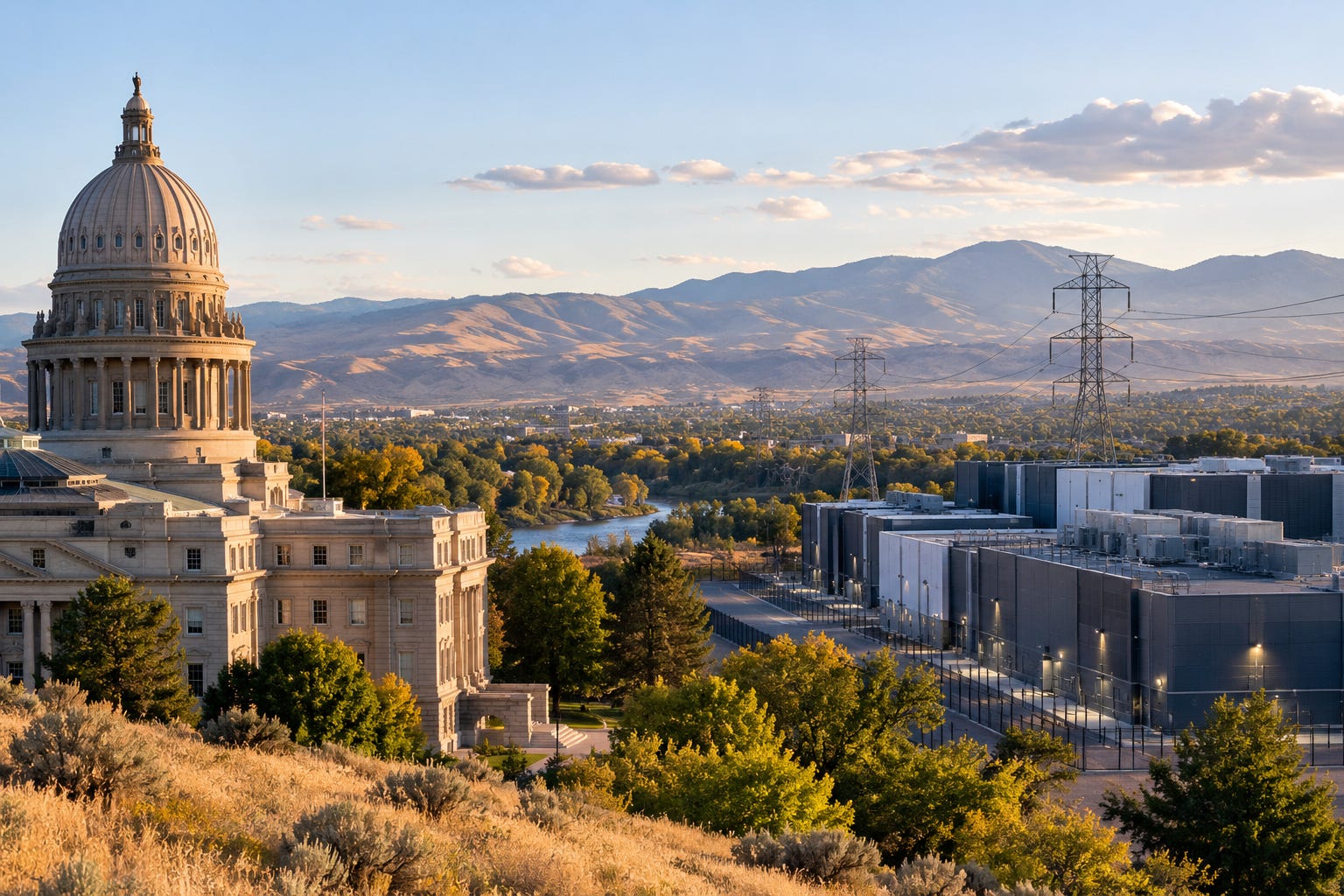
Idaho Sen. Mike Crapo backed an effort Wednesday to put the expense of new data-center power infrastructure on the companies needing it, rather than on families and small businesses. The proposal won a Senate majority but stopped short of the votes needed to move forward.
Crapo and fellow Idaho Republican Sen. Jim Risch voted yes. The September 30 tally was 57 in favor and 43 against, leaving the Ratepayer Protection Act three votes below the 60-vote threshold for advancing to consideration.
For Idaho electricity customers, the issue is who finances additions to the grid when a large computing campus wants more power. Wednesday's vote established no new federal protection against those costs appearing in other customers' bills.
Both Idaho senators backed the measure
Crapo described his support in a September 30 statement as a way to accommodate artificial intelligence development while protecting Idaho communities from its infrastructure expenses. He said the country needs the energy resources to compete in AI, but customers operating large facilities should finance what those facilities require.
The legislation had already cleared the House on September 16, with 417 members voting for it and three against. Rep. Gabe Evans, a Colorado Republican, led that measure. Ohio Republican Sen. Jon Husted has led the Senate effort.
The Senate's official record identifies Wednesday's decision as a cloture vote on the motion to proceed. It was a procedural test of whether consideration could advance, not a vote that enacted the bill. Neither Idaho senator's support changed that result.
The bill targets campuses needing at least 100 megawatts
The House-passed text draws a specific boundary around the customers covered by its proposed standard. It applies to nonresidential users seeking or entering power agreements after enactment for facilities devoted primarily to computing or data storage. Their combined peak demand must reach at least 100 megawatts at one site or campus.
That definition is narrower than a rule for every Idaho business that uses electricity. It concerns qualifying data-center loads and the infrastructure added to serve them, not a blanket reassignment of all utility expenses.
The proposed standard would have utilities recover the extra expense of required generating equipment, transmission infrastructure and distribution upgrades from that customer. A special rate or another agreement could provide the means of payment, according to Evans' description of the legislation.
The obligation would also account for a customer ending its agreement or stopping its electricity purchases. The aim is to keep remaining customers from inheriting an unpaid infrastructure obligation after a major user leaves.
A second provision addresses the period before construction. Utilities would obtain financial commitments or upfront contributions from the qualifying customer before undertaking the necessary upgrades. That puts the question of payment ahead of the work rather than leaving it to be resolved afterward.
Idaho would retain the rate-design decision
The legislation's state-by-state approach matters. It would require consideration of the federal standard, without requiring every state to adopt an identical rate structure. Evans' office says states would keep authority to decide how it fits their own utility systems.
Under the House text, state regulators and covered utilities outside state rate regulation would generally have a year after enactment to begin that review or schedule a hearing. They would have two years to finish consideration and reach a determination. Those clocks have not started under this bill because it has not become law.
The text also recognizes prior state action. Its new review timetable would not apply to a utility where a state had already implemented a comparable standard, conducted a proceeding considering it, or held a legislative vote on implementation.
For Idaho families and business owners, Crapo's stated objective is to keep the power demands of a new computing campus from becoming their infrastructure bill. The proposal preserves state decisions about rates while asking regulators to examine who caused the added expense. For now, both Idaho senators are on record supporting it, but the proposed federal review requirement remains stalled.