
Fifty years after the Teton Dam collapse killed 11 people and sent floodwater through eastern Idaho, the old dam site near Newdale is no longer only a scar. It is again a policy question: how does Idaho store more water for farms, families and growth without forgetting what happens when big infrastructure outruns public accountability?
A memorial now sits where the warning still matters
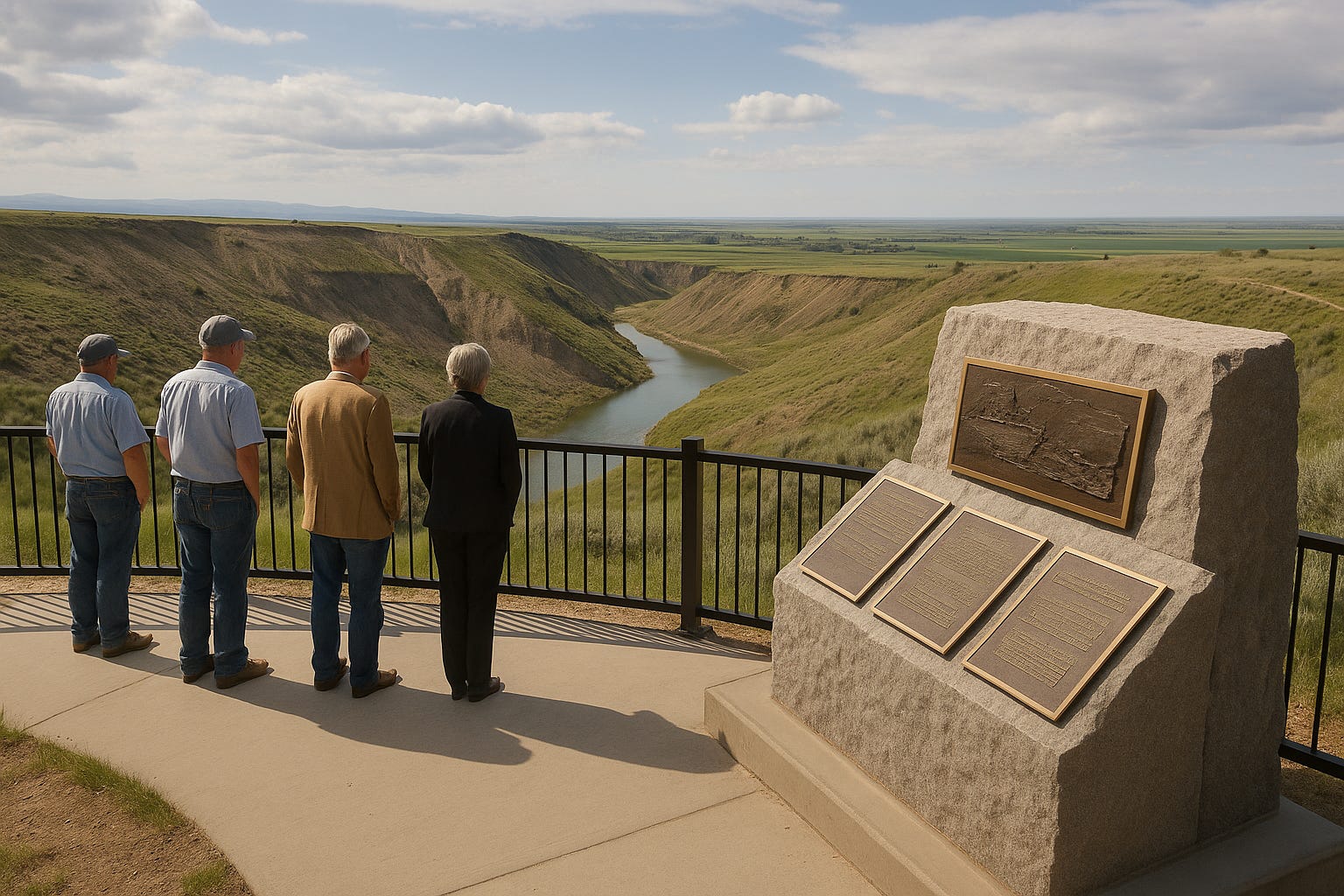
Community members, elected officials, water managers and federal representatives gathered Friday near the failed dam site to mark the 50th anniversary of the June 5, 1976 collapse. The commemoration included a ribbon-cutting for a new overlook on the east side of the site, with plaques meant to tell visitors what happened there and why it still matters.
The ceremony drew Lt. Gov. Scott Bedke, Bureau of Reclamation representatives, Idaho Water Resource Board Chairman Jeff Raybould and local officials with personal ties to the flood. Vintage planes flew over the site in a missing man formation during the ceremony, a tribute to the 11 people who died.
The numbers still land hard. Accounts from the anniversary week describe roughly 80 billion gallons of water pouring into eastern Idaho, Rexburg taking floodwater measured in feet, thousands of residents displaced, more than 13,000 head of livestock killed, and homes, farms and public infrastructure damaged across several communities.
The storage debate did not stay buried
The anniversary also arrived as Idaho is looking again at water storage. Officials at the commemoration pointed to a newly approved basin study that will examine ways to increase storage across the Snake River Basin, including the possibility of a new project in the Teton River drainage. The study is expected to take three to five years and involve regional stakeholders.
State Sen. Kevin Cook, R-Idaho Falls, has been one of the public voices arguing that the state needs to look seriously at the old site again. He has said Idaho sends large amounts of spring runoff downstream after reservoirs fill, while farms and communities still need water later in the year. Cook has also said a Teton project could hold about 288,000 acre-feet, though any actual rebuild would require years of study, engineering and public support.
That is why this is more than a history story. Eastern Idaho's farms depend on water. Growing communities need reliable supply. Taxpayers deserve to know whether a project is safe, affordable and worth the risk before anyone sells it as destiny.
Rebuilding would be a billion-dollar test
The old dam failed as its reservoir was being filled, and experts still point to geology and construction decisions as central questions. At a College of Eastern Idaho panel, historians, a geologist and a dam safety engineer discussed the human cost, the engineering mistakes and the political pressure around the original project. One expert warned that any modern rebuild would have to deal directly with fractured geology and could run into the billions of dollars.
Federal dam safety officials say the Teton failure changed how the Bureau of Reclamation evaluates and manages dams. That is the constructive lesson Idaho should keep. The question is not whether Idaho can build hard things. The question is whether it can build them with enough transparency, testing and humility to keep families safe downstream.
What Idaho should watch next
The basin study will be the first real checkpoint. It should show whether more storage can be gained through a new dam, taller existing dams, aquifer recharge, or some combination of options. It should also show who pays, who benefits, what land changes, what public safety guarantees exist, and how local water users are treated.
Idaho has a real water problem and a real memory problem. The state needs storage, work, farms and growth. It also needs accountability every time public money and public safety meet in the same canyon.