
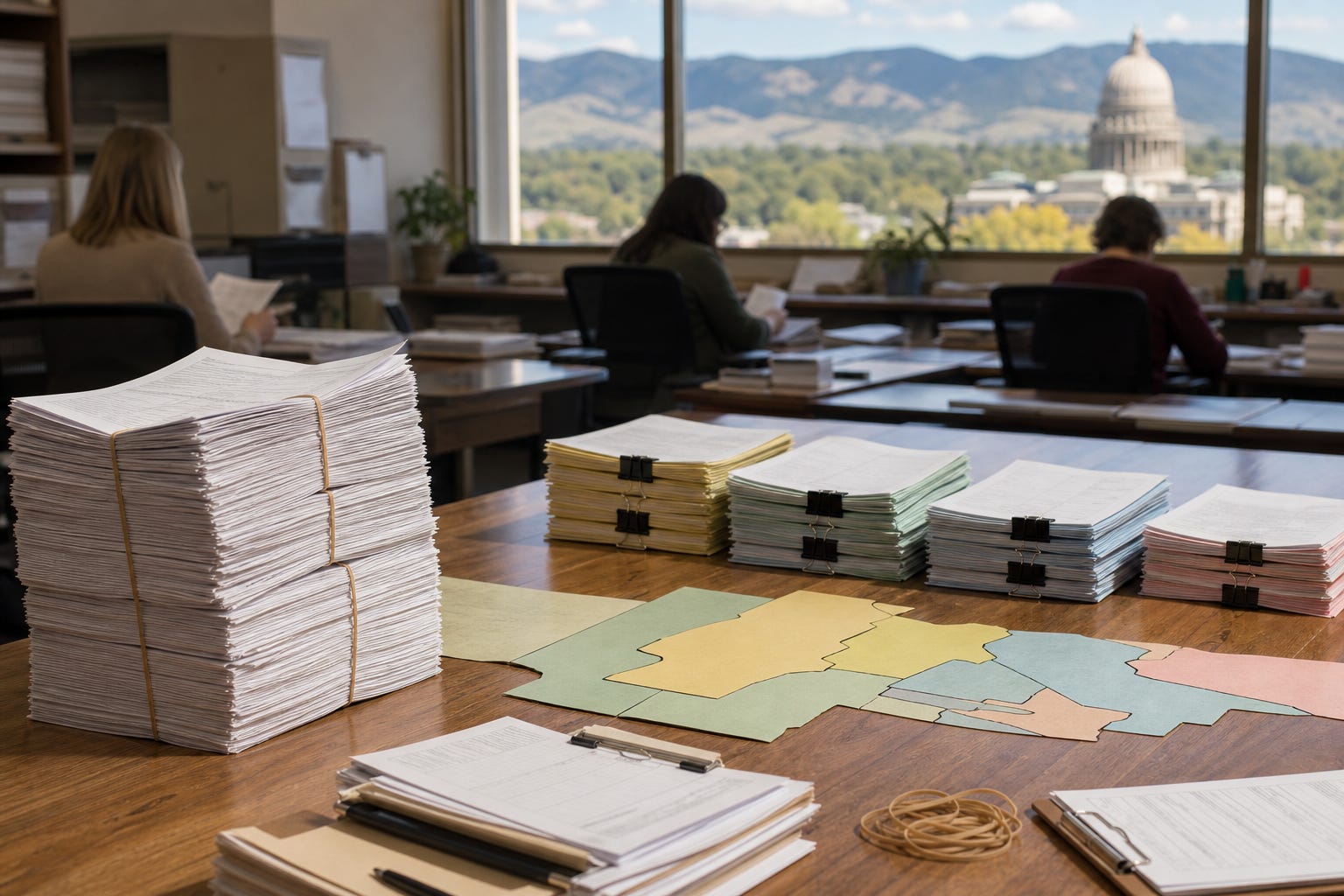
Idaho's medical cannabis campaign said it gathered roughly 150,000 signatures. After county verification and a final state review, no more than 58,024 signatures were available for filing, according to the Secretary of State's determination. That left the Idaho Medical Cannabis Act 12,701 signatures short of the statewide minimum and off the Nov. 3 ballot.
The loss was not confined to one total. The campaign cleared the geographic threshold in 13 legislative districts, while state law requires 18. The result gives Idaho voters a clear example of how the state's initiative safeguards work: a large raw stack can generate attention, but only verified signatures distributed across Idaho can change the ballot.
The campaign missed both ballot tests
Idaho sets two tests for a statewide initiative. Sponsors must collect valid signatures from 6 percent of registered voters statewide, which meant 70,725 signatures for this election. The geographic test demands that at least 18 legislative districts each contribute signatures equal to 6 percent of their registered voters. Idaho has 35 districts. County clerks verify petition signatures before a campaign makes its final filing with the state.
Organizers said their collection effort reached all 44 counties and produced roughly twice the statewide requirement in raw signatures. Raw collection, however, is not the legal measure. The final filing contained no more than 58,024 verified signatures and reached only 13 qualifying districts.
Secretary of State Phil McGrane's office determined that either numerical failure was enough to keep the measure off the ballot. The office treated the additional petition and reporting concerns as separate problems, not substitutes for the missing signatures.
This was not a state ruling on whether medical cannabis is good policy. It was a ruling that the campaign did not earn a ballot position under the same statewide and geographic rules every Idaho initiative must meet.
Separate petition concerns reached state police
The review found more than a shortage of valid names. State and county records could not confirm Idaho residency for 293 petition circulators, even though state law requires circulators to be Idaho residents and at least 18 years old. A required warning about who may legally sign was also missing from a majority of petition packets.
Campaign finance filings failed to list roughly 175 people who were paid to circulate petitions, the state review said. In another instance, a county transmitted a petition sheet with a signature attributed to a voter record showing that the person died in 2021. Other entries on that sheet were tied to records previously removed from voter rolls. The office referred the sheet to Idaho State Police for review.
That referral is not a finding that any person committed a crime. State officials have not publicly identified who wrote the questioned signature or announced a charge. The distinction matters for election accountability: suspicious records deserve review, and conclusions still require evidence.
Organizers point to an outside contractor
In its response, the Natural Medicine Alliance of Idaho maintained that it ran the campaign in good faith and hired a professional signature-gathering firm because its organizers were not experienced in petition drives. The group said it noticed disorganization as the effort continued but received assurances that residency, reporting and filing requirements were being followed. It later brought in a second firm, whose work it defended.
Organizers attributed the problems described by McGrane's office to the original vendor. They said they would cooperate with any review and examine possible legal or procedural options. Campaign finance records show the group spent about $2.7 million on the effort.
The campaign grew from the family and friends of an Idaho pediatrician who died from brain cancer in 2024 after finding relief from medical cannabis during treatment outside the state. That policy argument may return. For now, the campaign's mechanics decided the outcome. Idaho's initiative process lets citizens propose laws directly, but it also makes campaigns accountable for the contractors collecting signatures in their name.
November still carries a marijuana question
The medical cannabis proposal will not be on the general election ballot, but Idaho voters will still face a marijuana-related constitutional question. House Joint Resolution 4 would give the Idaho Legislature exclusive authority to legalize marijuana, narcotics and other psychoactive substances. It would also remove the citizen-initiative route for legalizing those substances. A no vote would retain the existing initiative authority.
That means the failed petition does not end Idaho's drug-policy debate. It changes what voters will decide. Instead of voting on a specific medical cannabis program, Idahoans will decide whether future legalization measures should come only through their elected lawmakers.
McGrane's review also leaves a practical standard for every future campaign. Signatures must belong to qualified voters. The required districts must be represented. Circulators must meet residency rules. Petition forms and finance reports must be in order. In Idaho's citizen lawmaking process, paperwork is not clerical scenery. It is the chain of trust between a campaign and the ballot.