
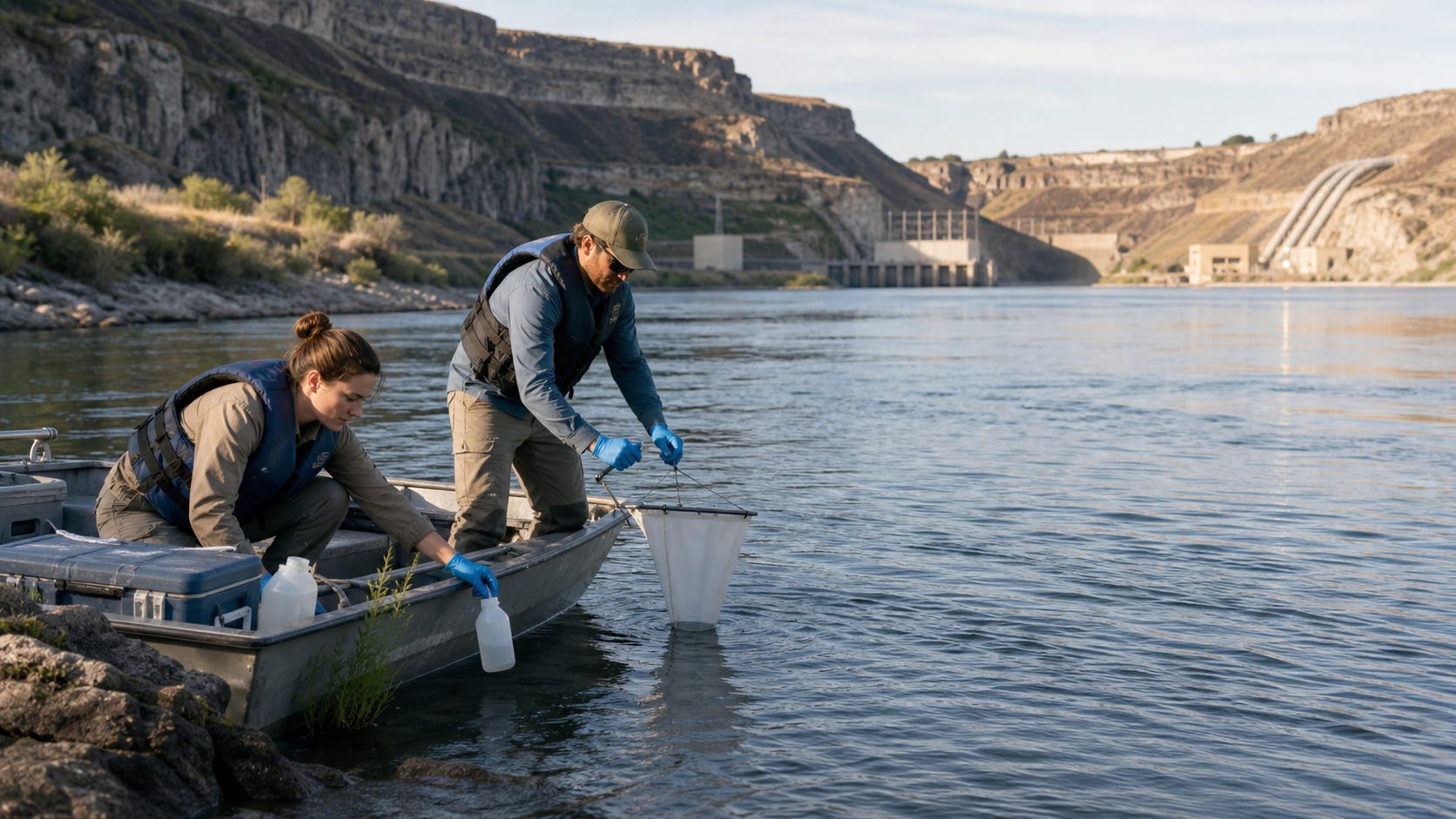
Idaho's fight against quagga mussels has produced its strongest number yet: 2026 sampling found 77% fewer larvae in the infested portion of the Snake River than state crews found in 2025.
The decline is real, but it is not a victory lap. Officials still found both larvae and adult mussels near Twin Falls this year, and the state launched another multiphase treatment this week. Once these mussels spread into pipes, pumps and reservoirs, eradication can turn into permanent maintenance paid by water users and taxpayers.
The infestation is smaller, not gone
As of Aug. 14, crews had identified eight veligers, the microscopic larval form of the mussel, and seven adults. The known infestation remains limited to the Snake River from just above Twin Falls Dam to Shoshone Falls. That is a much tighter battlefield than a statewide network of reservoirs and canals, but it is still a live infestation.
The Idaho State Department of Agriculture has collected more than 420 samples inside the affected river corridor this year and more than 3,000 across the state. The work includes water sampling, environmental DNA testing and divers searching places where adult mussels can survive.
That search is shaping the latest treatment. Crews are focusing more closely on pools, cracks and other refuges rather than treating the problem only as a broad stretch of river. The draft plan calls for two copper-based products across separate treatment zones near Twin Falls and Shoshone Falls, with the work expected to continue through Sept. 13.
This is the fourth consecutive year that quagga mussels have been detected near Twin Falls. Copper treatments in 2023, 2024 and 2025 reduced and contained the population, but repeated detection explains why the state is still aiming for full eradication instead of declaring the river clear.
The annual bill is the real threat
The state's cost estimate puts the stakes in plain terms. If the infestation establishes itself downstream, recurring chemical control at farm canals, power facilities and municipal water works could cost users $69 million every year. That estimate does not include every indirect cost created by clogged equipment, reduced power production or disrupted water delivery.
More than 1,700 users depend on Snake River water between Twin Falls and Lewiston. They include farms, irrigation providers, municipal drinking-water systems and other small water users. A permanent infestation would move the cost from a targeted state response into the operating budgets of communities and businesses throughout the river corridor.
Officials have pointed to California's golden mussel invasion as a warning. Golden mussels are a different species with similar destructive habits. Since their detection near Stockton in October 2024, larvae have appeared across a nearly 500-mile span reaching toward San Diego. One irrigation provider spent almost $3 million on cleanup, while a regional water association estimated $9 million in cleanup costs.
Idaho's approach is expensive and aggressive because the alternative is not passive. Quagga mussels attach to hard surfaces, multiply rapidly and clog the infrastructure that moves water for agriculture, energy and homes. They also strip food from aquatic ecosystems and can damage native fish populations.
Copper treatment carries its own cost
The chemicals used against quagga mussels also kill fish and other aquatic life. After the first large treatment in 2023, state crews removed roughly six or seven tons of dead fish. Later work became more targeted, and the state reported more limited fish mortality after the 2024 treatment.
That tradeoff makes monitoring and public accountability essential. The current program calls for copper checks at 44 river locations through the treatment and dissipation area. State agriculture staff, environmental regulators, contractors and the product manufacturer monitor levels before, during and after application.
The public also has a direct role in keeping the problem contained. Watercraft inspection and decontamination remain mandatory between Broken Bridge and Hansen Bridge. Boats and other equipment entering the water must be inspected before launch and decontaminated after exit at designated stations near Centennial Waterfront Park, Shoshone Falls and Twin Falls Reservoir.
The 77% decline has narrowed Idaho's fight. Eradication would end it. Anything short of that leaves farms, water systems, utilities and taxpayers exposed to an annual cost that could outlast today's treatment.