
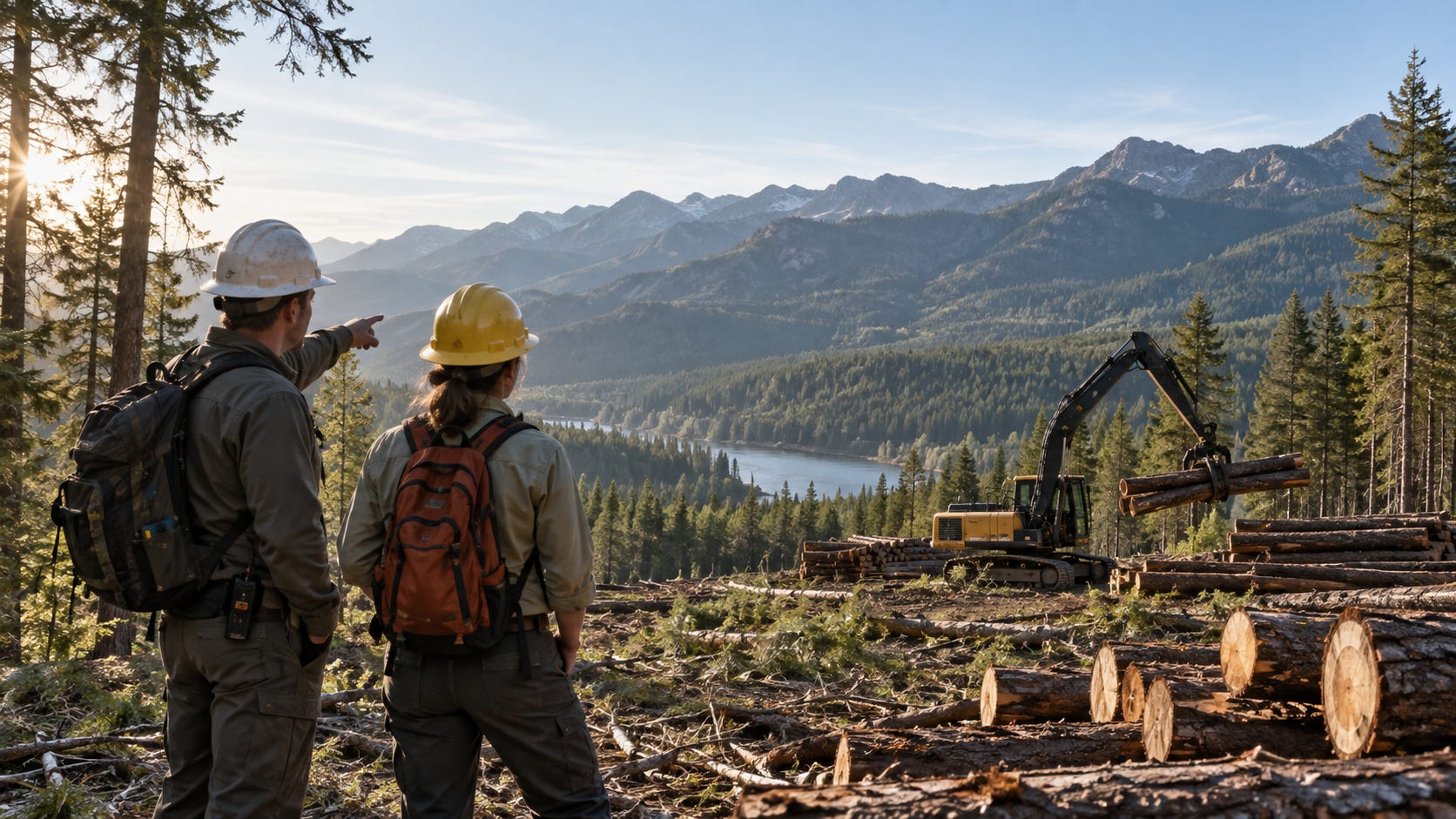
Idaho is preparing for more than 100 future timber sales on federal forests under a package of five agreements announced Oct. 2. The U.S. Forest Service and state land managers are putting $12.4 million in new federal funding behind work that ranges from removing fire-prone vegetation to rebuilding roads and replanting trees.
At the center of the package is a 20-year agreement that reaches every national forest in Idaho. For communities that depend on timber work or live near fire-prone public land, the arrangement connects two practical needs: a supply of wood for industry and treatment of forests around places where people live and work.
The sales are a forecast of future work, not a list of completed auctions.
Where the $12.4 million will go
The money is intended to help prepare timber sales and carry out those projects, but harvesting is only part of the package. The agencies also identified reforestation, road repairs, thinning and work to protect watersheds as eligible uses.
Other projects can involve recovering forests after fires and salvaging timber. Removing hazardous fuels is another priority, placing prevention work alongside recovery from damage that has already occurred.
The agencies expect the five agreements to support dozens of restoration projects in addition to the timber sales. Their stated goals include a more dependable wood supply, stronger rural economies and less wildfire exposure for communities.
Jon Songster, a forestry administrator with the Idaho Department of Lands, described the new funding and longer planning horizon as tools to move more projects into the field. Michiko Martin, a regional forester with the Forest Service, emphasized protection of the communities around those forests.
The joint announcement provides the funding total and broad categories of work. It does not list a start date for each project, a forest-by-forest spending breakdown or the volume of timber each sale would produce.
Idaho can work on land it does not own
The program is called Good Neighbor Authority. It lets states, counties and tribes arrange to carry out management work on federal land through agreements with the Forest Service or the Bureau of Land Management.
This latest Idaho package is a partnership between the Forest Service and the Department of Lands. Its statewide, two-decade framework is meant to make planning and investment more consistent over time, rather than organizing the effort around one isolated forest site.
That distinction matters to local control: Idaho's land agency can help implement projects on national forests even though the property is federal. The arrangement concerns management work, not a transfer of those forests into state ownership.
Idaho began using the authority in 2016. The agencies describe a program that brings together federal and state managers with local governments, tribes and private businesses. The anticipated economic benefit comes from the work and timber supply those projects can generate, rather than a promised number of new jobs in this announcement.
Little links the deal to his forest-management order
Gov. Brad Little welcomed the agreements and tied them to his Make Forests Healthy Again executive order. He identified faster restoration, reduced fire risk and support for Idaho's timber industry as the reasons for pursuing the expanded partnership.
The new package follows a separate Shared Stewardship Agreement signed in 2025. That earlier arrangement called for more sustainable timber production and larger restoration efforts, including projects that cross ownership boundaries.
State and federal officials estimated that the 2025 framework had the potential to double timber production in Idaho within five years, according to reporting on that agreement. That was a prospective estimate, not a finding that production has already doubled or a guarantee attached to the new funding.
The latest announcement adds specific federal dollars and a long-term statewide agreement to that effort. The next tangible results for Idaho communities will be the individual timber sales and restoration projects the agencies expect it to support.