
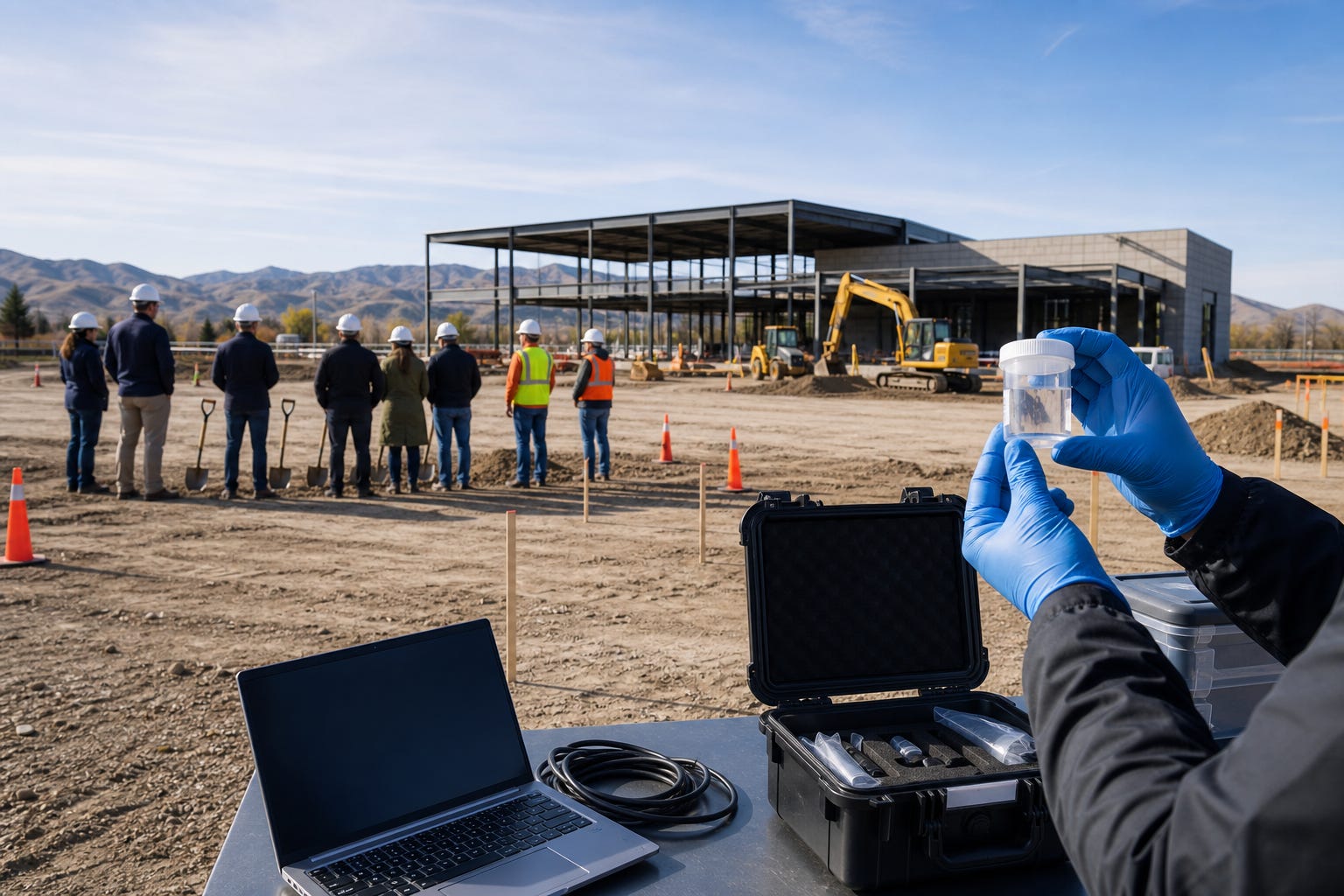
Idaho State Police is scheduled to begin work Tuesday on a $29 million forensic laboratory at its Meridian headquarters. The 20,000-square-foot project arrives as the agency reports that digital-forensics cases have an average turnaround of 176 days, nearly six times its 30-day goal.
Gov. Brad Little, ISP Director Bill Gardiner and Forensic Services Director Matthew Gamette are scheduled to speak at the 10:30 a.m. groundbreaking. Construction is expected to finish in January 2028.
A statewide caseload is pressing the current labs
During fiscal year 2026, Idaho's forensic laboratories logged 16,069 submissions, 3,745 of them DNA samples. Their customer list covered 114 police and other law-enforcement bodies. County prosecutors statewide, 14 public-defense offices and a coroner in each of Idaho's 44 counties also relied on the system. That makes the Meridian project a statewide public-safety investment, not simply a new building for one police department.
The pressure is uneven across disciplines. An ISP dashboard updated Aug. 1 lists digital forensics at a 176-day average turnaround, with 25 cases beyond the agency's strategic target. DNA casework averages 66 days against a 30-day goal, with 89 cases beyond the target. Latent-print comparison averages 71 days against a 60-day goal.
Other work is moving faster. Controlled-substance analysis averages nine days against a 30-day goal, while firearms and toolmark work averages 24 days. The contrast points to where added rooms, equipment and specialized staff capacity could make the biggest difference.
The new building targets four pressure points
The planned laboratory will bring together casework DNA, fingerprint examination, digital evidence processing and Idaho's unit for the National Integrated Ballistic Information Network. That federal network helps investigators compare ballistic evidence from gun crimes and identify possible links between cases.
ISP also plans space for whole-genome sequencing, an emerging form of DNA analysis that could add options for active investigations and cold cases. The building requires specialized electrical, plumbing, ventilation, information-technology and security systems that ordinary office space cannot provide.
Moving those functions into the new structure will open room in the existing headquarters lab for chemistry, toxicology, the state DNA database and alcohol analysis. In practical terms, the project is meant to add capacity twice: once inside the new building and again in the space it leaves behind.
The $29 million comes from federal American Rescue Plan Act money allocated to Idaho. This is the first phase of a larger laboratory expansion. Later phases are included in the overall design, but they are not part of the current construction contract.
Little and lawmakers put a measurable bet on public safety
Gardiner credited Little's support for law enforcement and the Idaho Legislature's backing with moving the long-planned project into construction. His stated goal is to give scientists facilities that can keep pace with changing technology and rising demand from local agencies.
That support gives Idaho a clear accountability test. The agency already publishes turnaround goals and current averages, so taxpayers will not have to judge the project by a ribbon cutting or a square-foot total. They can watch whether digital evidence moves faster, whether DNA delays shrink and whether local police, prosecutors, defense attorneys and coroners get reliable answers sooner.
Speed cannot come at the expense of sound science. ISP's digital-forensics operation received renewed national accreditation in 2025 with no findings, and the new capacity will need to preserve that standard as the workload grows.
When the doors are expected to open in January 2028, the 176-day digital turnaround will be the number to watch.