
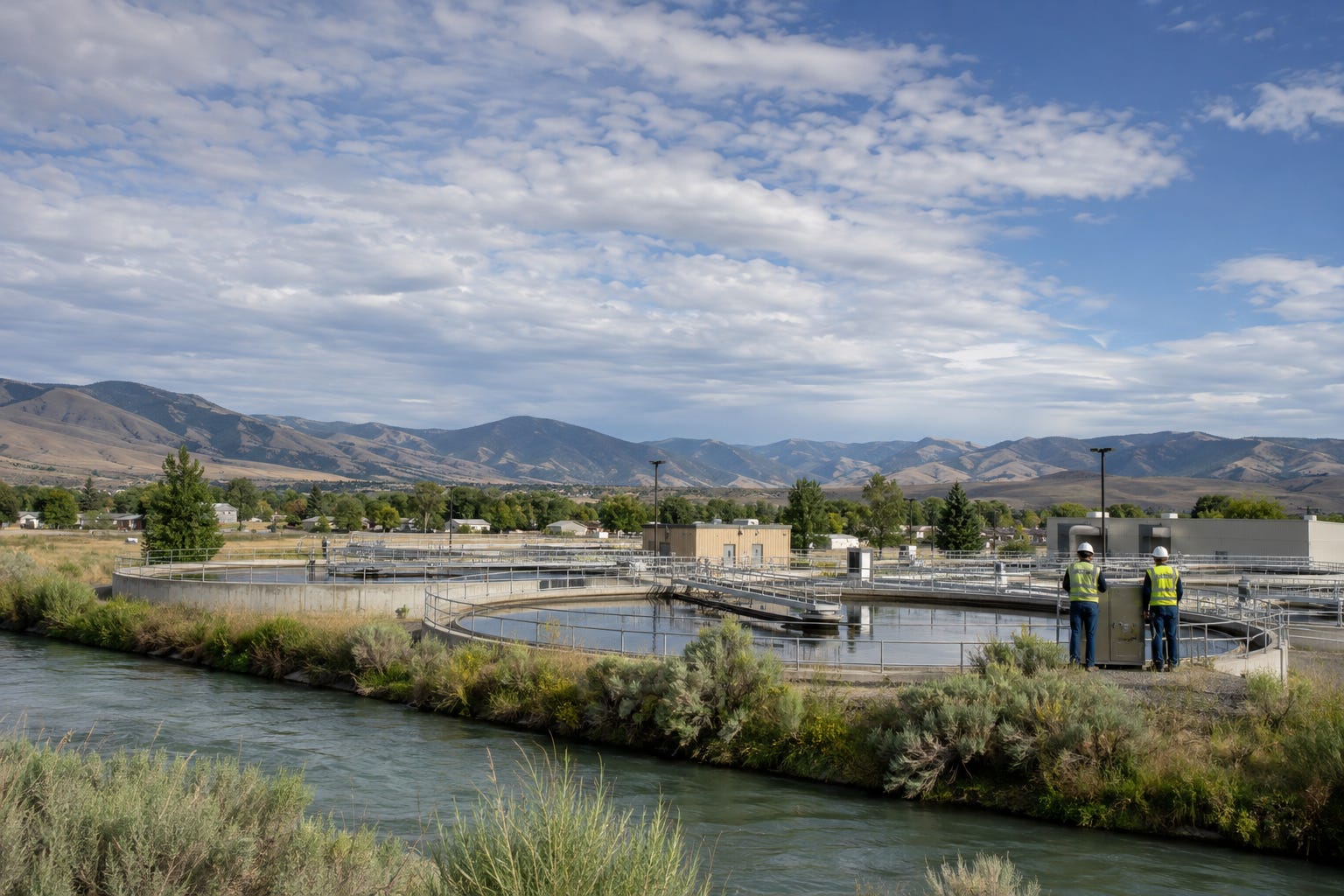
Idaho wastewater plants reported 464 Clean Water Act permit violations in 2025, and most of the trouble was concentrated in a small group of communities. A new statewide review found that nearly 53% of the facilities examined exceeded at least one pollution limit during the year. Eleven plants accounted for 57% of all reported violations.
The findings turn an easy-to-ignore utility issue into a public health and infrastructure test. Wastewater permits control what treatment plants may release into rivers and lakes, including limits for bacteria, ammonia, nutrients and metals. An exceedance does not automatically mean a drinking-water emergency or an unsafe swimming hole, but repeated failures can signal equipment, capacity or operating problems that need a durable fix.
Eleven facilities drove most violations
The Idaho Conservation League published the figures in its ninth annual review of municipal wastewater records. The group found that plants in Driggs, Preston and Plummer together produced 27% of the statewide violation count. Driggs and Preston also accounted for 86% of the pounds of pollutants discharged above permit limits.
Driggs recorded the largest pollutant load over its limits and the most effluent violations of any facility, according to the report. Its tally reached about 44,000 pounds above permitted levels and 51 violations. The city's ammonia problems have lasted for years, making Driggs a useful example of what happens when a treatment system cannot consistently do the job it was built to do.
Federal regulators have already stepped in. A 2025 settlement with the Environmental Protection Agency requires Driggs to complete an upgraded wastewater facility by Dec. 15, 2028. The city also agreed to a $400,000 civil penalty and recurring progress reports. The settlement followed a 2022 federal complaint alleging repeated permit exceedances.
The Idaho Department of Environmental Quality told local media that it knows which facilities have repeatedly missed their limits and has taken or is taking compliance and enforcement action. The agency said details about some open cases could not yet be released. That leaves an important accountability question for affected communities: whether enforcement produces completed upgrades and sustained compliance, not merely another schedule.
The data does not show a statewide health emergency
The report covers pollutants that can matter for people, fish and waterways, but its totals need context. No major fish kill or reported public health incident has been tied to the 2025 violations, according to the review's author. Permit limits are also designed with a safety margin, so crossing a limit is not the same thing as proving immediate harm.
That distinction cuts both ways. A violation should not be inflated into evidence that every nearby river is dangerous. It also should not be dismissed because visible damage has not appeared. Bacteria such as E. coli can indicate fecal contamination. Excess nitrogen and phosphorus can feed harmful algae growth. Ammonia and some metals can harm aquatic life, especially when exposure persists. Permits exist so communities do not have to wait for a crisis before correcting a plant.
Idaho's own environmental agency describes wastewater treatment as a safeguard for human health and the environment. Plants must remove pollutants before treated water is released. The compliance record is therefore a measure of whether a basic local service is meeting the standard promised to the public.
Upgrades are already changing the numbers
The statewide picture was not uniformly poor. Fifty-four Idaho cities and towns reported no discharge violations in 2025. Nampa and Star were among the systems with clean records. Of Boise's two facilities, one reported none and the other reported two.
The review also points to communities where capital work appears to be paying off. Winchester and Genesee completed major plant upgrades in 2025 and showed substantial improvement. Preston finished an upgrade late in the year and had reported no violations in 2026 when the new findings were released. Driggs is designing its replacement facility under the federal timetable.
Those examples matter because they shift the story from blame to performance. Aging infrastructure can be expensive and technically difficult to replace, especially in smaller communities. The useful measure is whether local leaders, plant operators and regulators identify the failure, publish a realistic plan and finish the work.
What Idaho communities can watch next
The next annual totals will show whether the concentration of violations is shrinking and whether the worst-performing plants are improving. Residents can also watch local utility plans, public meeting records, permit notices and enforcement updates. Those documents reveal deadlines, project costs and whether promised repairs remain on schedule.
Clean water enforcement is rarely dramatic until something goes badly wrong. Idaho's 2025 record offers a less costly warning. Most reported violations came from a limited group of facilities, dozens of towns stayed within their limits, and upgrades have already improved results in several places. The accountability test now is straightforward: turn the known problem plants into the next clean-record plants before preventable pollution becomes a larger public safety bill.