
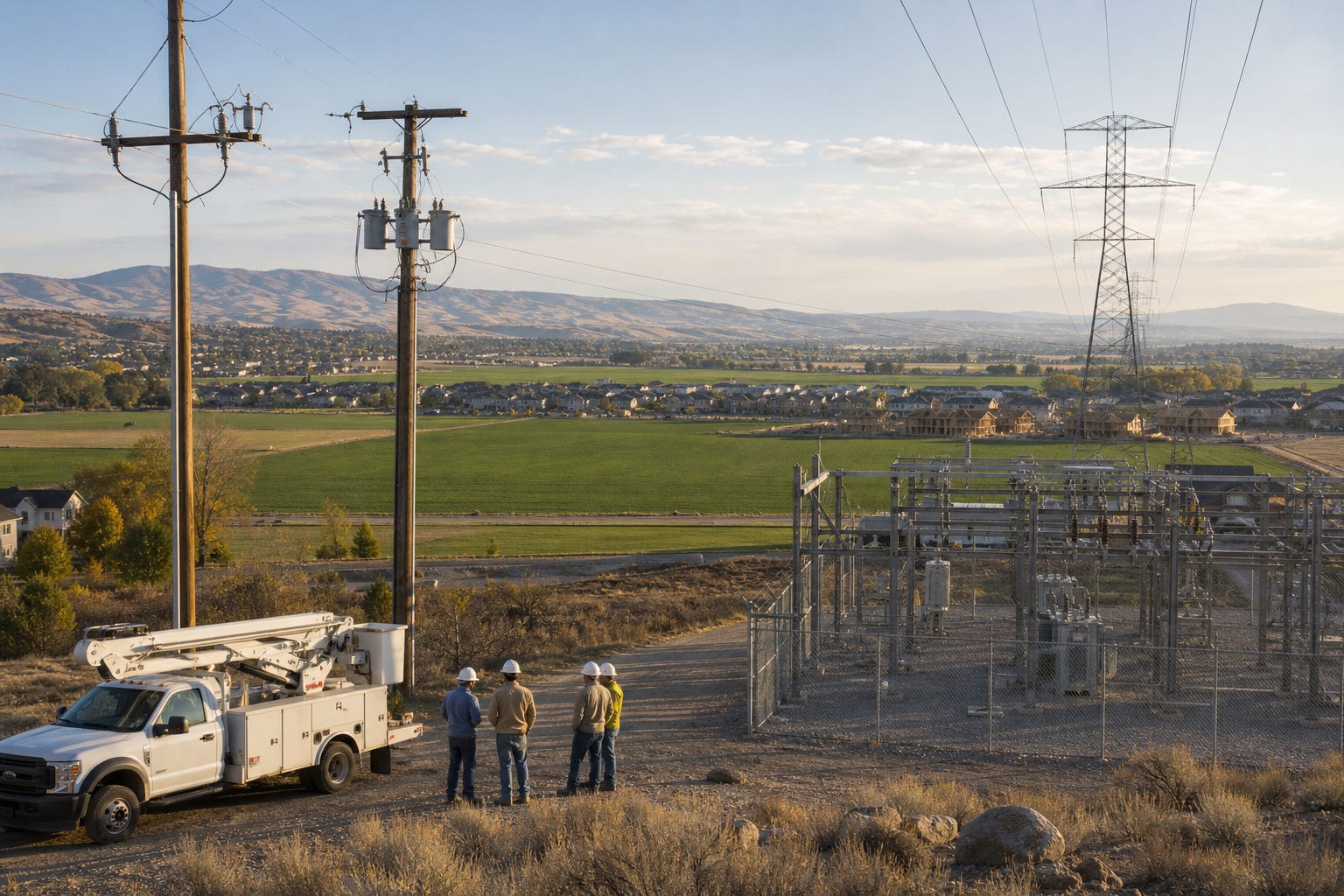
BOISE, Idaho. Idaho Power's bid to leave Oregon's retail electric business is now before Idaho regulators, putting a $154 million price on a strategic decision driven less by Oregon than by Idaho's rapid growth.
Under the proposal, about 20,000 residential, irrigation, commercial and industrial customers in four eastern Oregon counties would move to Oregon Trail Electric Cooperative. Idaho Power would sell most of the local distribution network used to serve them, but it would keep major generation and transmission assets and continue moving power across the state line.
If approved, the transaction would narrow Idaho Power's two-state retail operation to Idaho. The Boise-based utility says that would let it direct more capital spending, grid work and employees toward rising demand in its home state. For Idaho ratepayers, that is the central claim regulators must now examine.
Twenty thousand customers make up a small slice
Idaho Power serves more than 660,000 customers across a 24,000-square-mile territory. Its Oregon retail customers account for roughly 4% of that customer base, while the company projects Oregon will represent less than 3% of its total electricity sales by 2030.
Oregon Trail Electric Cooperative is already embedded in the region. The Baker City-based cooperative serves about 32,000 meters and nearly 60,000 residents across Baker, Grant, Harney and Union counties. Its territory borders much of the system it wants to acquire.
The sale would move Idaho Power's full Oregon retail territory, including customers in portions of Malheur, Harney, Baker and Wallowa counties. Most distribution lines, substations and related equipment would transfer. The cooperative says its combined system after closing would cover about 52,000 meters, 5,000 miles of distribution line and 38 substations.
This would not be a complete Idaho Power exit from Oregon. The utility would retain most high-voltage transmission facilities and its Oregon generation assets, including the Hells Canyon Complex. It would also keep the Boardman to Hemingway transmission project, a regional line being built between Oregon and Owyhee County.
Idaho growth is the real business case
Idaho Power told regulators that operating one retail territory instead of two would simplify the company and let it concentrate its resources on Idaho's growing population and electricity needs. The company does not expect the transaction to create immediate cost increases for Idaho customers, and it argues that a tighter operating footprint could produce financial benefits over time.
Those benefits are not guaranteed by the sale price alone. Idaho regulators still have to test the company's assumptions and the contracts that will keep electricity moving after ownership changes. Idaho families, farms and businesses need reliable power regardless of which company owns a distribution pole on the other side of the state line.
The proposed structure is designed around that reality. Oregon Trail Electric Cooperative would buy wholesale power from Idaho Power for the transferred customers through September 2030, with an option for a four-year extension. The cooperative would also provide transmission service needed to move electricity from Oregon-based power contracts back into Idaho Power's system.
That makes the transaction more than a real estate deal for wires and substations. Idaho Power wants to shed a small retail obligation without giving up the regional grid connections that support Idaho customers. The value for ratepayers will depend on whether that balance holds as demand and infrastructure costs keep climbing.
Oregon customers would get local ownership and a higher bill
The 20,000 customers moving to Oregon Trail Electric Cooperative would become member-owners. They would gain representation through board elections and become eligible for capital credits when the cooperative's finances allow them. The cooperative says it returned $3 million in retired capital credits to existing members in 2025.
The transition would also bring a rate increase. Oregon Trail Electric Cooperative estimates the transferred customers would pay about 5.7% more than their current Idaho Power rates when the deal closes. Idaho Power estimates that keeping the territory would instead require an Oregon general rate increase of at least 17% to recover recent investments and inflation. Regulators will have to examine both projections rather than treat either number as settled.
The cooperative says no existing jobs would be eliminated. It plans to open an Ontario office and service center and hire workers in Malheur County for local maintenance, outage response and member service. It also plans to suspend disconnections for nonpayment for six months after closing and waive new deposits for the transferred customers.
Three regulators still control the clock
Idaho Power filed its Idaho application on June 30. The Idaho Public Utilities Commission issued its notice on Aug. 13 under case IPC-E-26-21, opening the door for intervention petitions and written public comments. The companies also filed in Oregon, and the Federal Energy Regulatory Commission must approve the transaction.
The parties are aiming to close in early 2027, but the review still has to answer practical questions on costs, service continuity and long-term accountability. Idaho Power says the sale will protect Idaho customers from near-term financial effects while allowing more focused investment at home. Oregon customers are being asked to trade a larger investor-owned utility for a locally governed cooperative and a smaller projected rate increase.
The $154 million headline is the easy part. The harder test is whether Idaho Power can turn a smaller retail map into more capacity, steadier service and disciplined investment for the families, farms and businesses driving Idaho's next decade.