
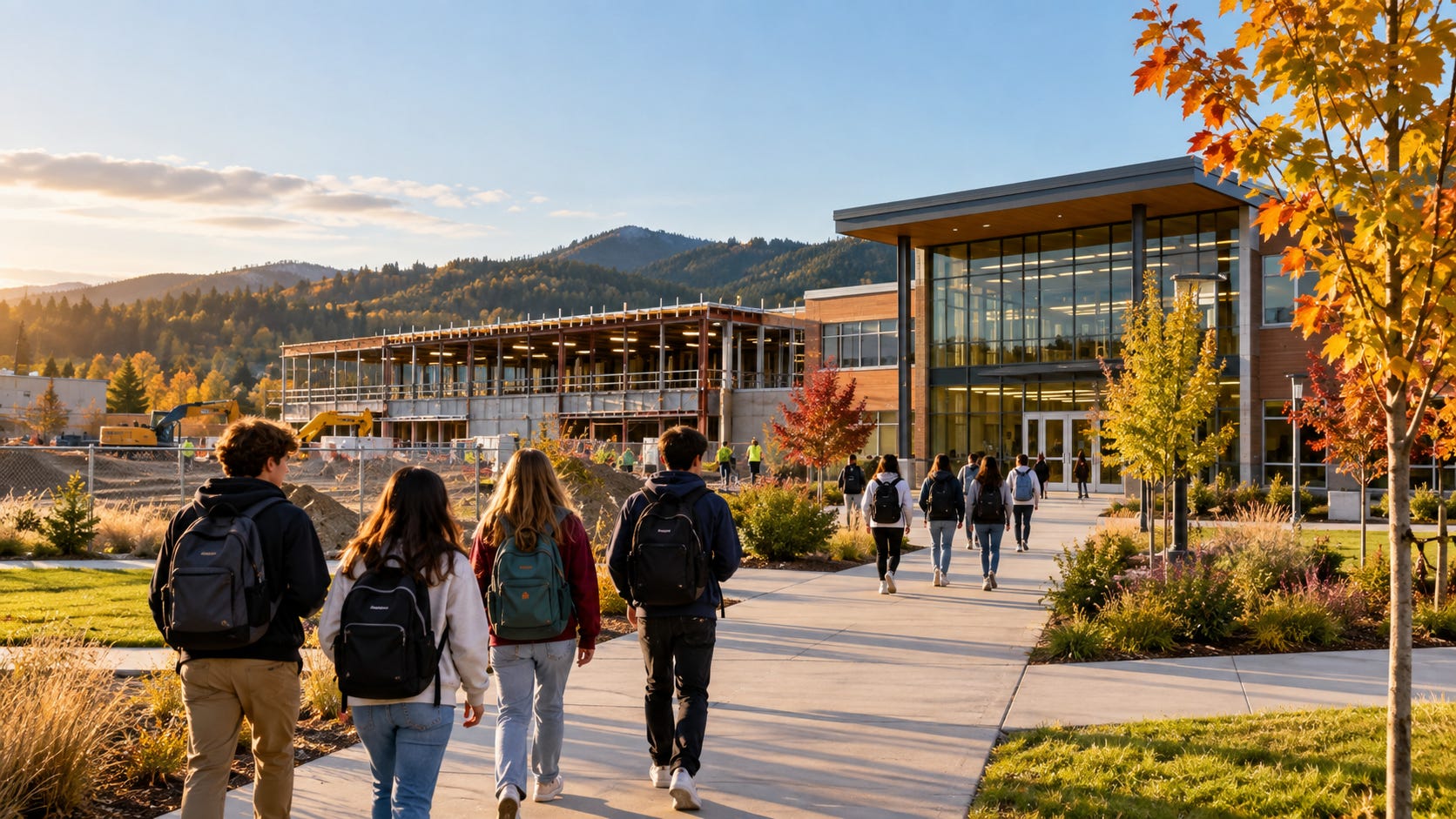
On November 3, Idaho voters in districts across the state will face school funding requests totaling more than $307 million. Not one is a bond. The money is on local ballots as plant-facility and supplemental levies, with decisions that range from a new high school campus in Moscow to teachers, safety staff and classroom programs in Coeur d'Alene.
The statewide total is a sum of proposals covering different periods, not a single tax bill that every Idaho household would pay. Thirty-one districts are seeking supplemental levies, while five have plant-facility questions. Each community votes on its own measure. The stakes are more concrete than the statewide figure: which projects go ahead, which existing services continue, and what property owners in each district are asked to contribute.
Moscow voters face a seven-year campus decision
Moscow School District is asking to collect up to $9.37 million a year for seven years, roughly $65.6 million in all. Its ballot describes converting and enlarging the existing middle school to serve as a high school, with career technical education and performing arts space. The plan also includes work on the former Russell school building for alternative high school programs and district offices, plus new heating and cooling equipment at Lena Whitmore Elementary.
This is a plant-facility levy, not a bond. It needs support from 60% of the district's voters to pass. The sample ballot estimates an annual cost of $280 for each $100,000 of taxable assessed property value under current conditions. That is a rate tied to taxable value, not an estimate of what every homeowner will owe. For Moscow families, the vote reaches beyond the size of a building: it determines whether the district can carry out that specific campus plan with this local funding source.
Coeur d'Alene asks voters to renew operating funds
In Coeur d'Alene, the question is a two-year supplemental levy of $30.25 million per year, or $60.5 million in total. The district's ballot assigns about $12.3 million annually to teacher and support-staff jobs and about $7.1 million to academic programs, including career training and advanced courses. Another roughly $4.3 million a year is designated for school safety and health programs, including safety staff, nurses and mental-health support. Athletics, technology, classroom materials and operating expenses also have listed allocations.
The proposal replaces a levy scheduled to expire in June 2027. Its ballot estimates $110 per $100,000 of taxable assessed value each year, compared with $91 under the expiring levy. That is a projected $19 increase at that taxable-value level, subject to actual assessments and applicable tax relief. Unlike Moscow's facility measure, this supplemental levy requires a simple majority. Parents and taxpayers can see in the ballot itself both the proposed spending categories and the estimated local cost.
Smaller ballots make different trade-offs
The proposals are not interchangeable. In Payette, a $3 million, two-year supplemental levy would put $1.5 million toward a gym and locker-room renovation in its first year. The following year's plans include stadium lights, a security vestibule at the primary school and playground equipment. In Twin Falls, a $14.4 million, two-year request would largely fund staffing and benefits, with about $1.5 million per year assigned to safety and security.
These examples also show why a voter should check the specific district question rather than judge a local ballot by the $307 million statewide headline. A renewal may keep programs in place; another measure may change facilities or the estimated tax rate. The dollar totals span multiple years, and the listed tax estimates do not account for every effect of Idaho's property-tax relief, which is applied to eligible school measures under state rules.
Why the bond column is empty
No Idaho school district is seeking a bond this November. Bonds require a two-thirds majority in Idaho, and the last school bond to pass in the state did so in May 2024. Facility levies and supplemental levies instead have their own thresholds, as the Moscow and Coeur d'Alene ballots illustrate. State law now limits the elections at which districts can seek these additional property-tax funds to May and November.
The November requests exceed the $159 million on last fall's ballots and the $183 million considered this May, although the consolidated election calendar accounts for some of the difference. What matters on election day is not the statewide sum alone. Voters in each district will decide whether its named schools, employees and projects justify the particular local levy printed on their ballot.