
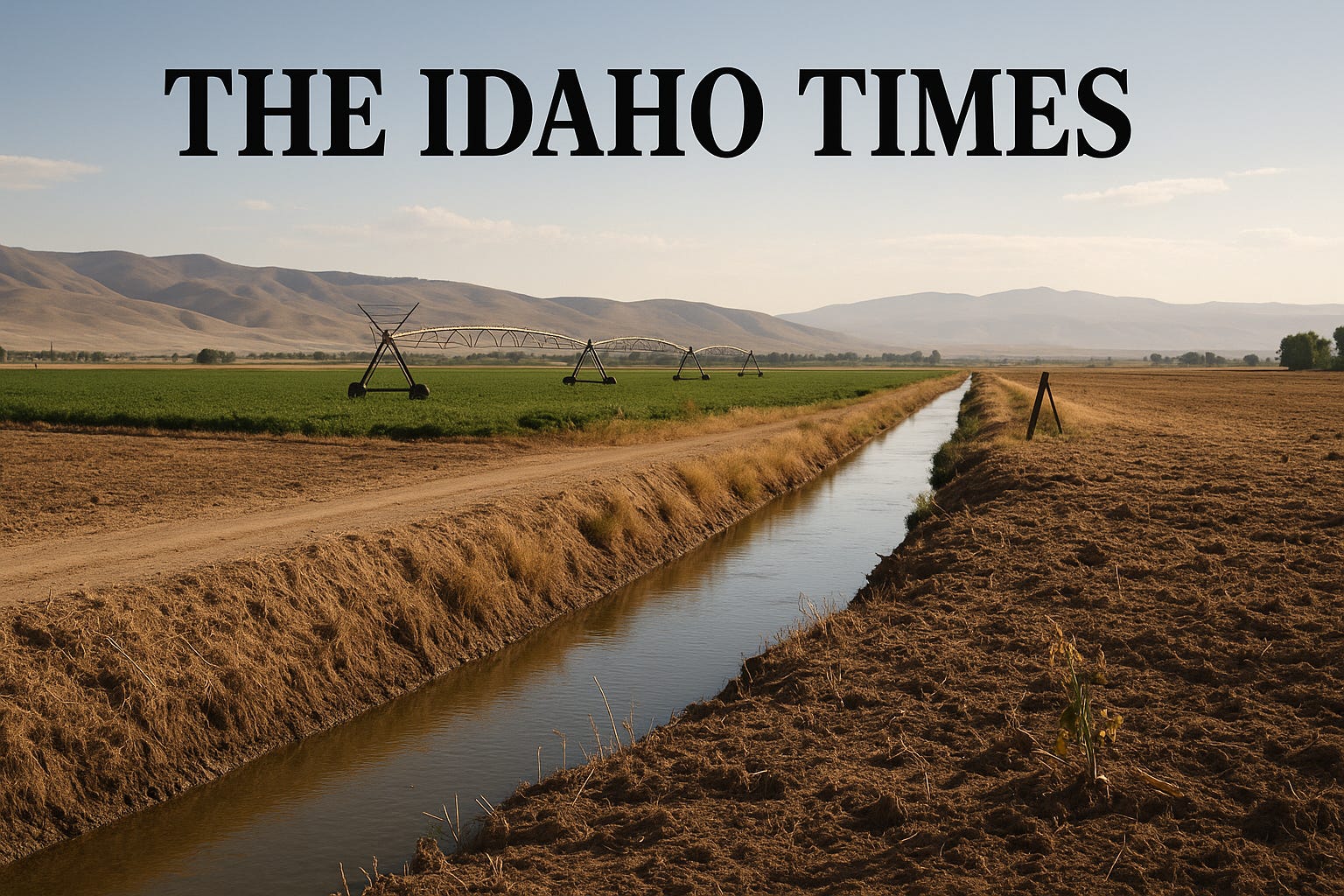
Idaho's dry year is no longer just a mountain snowpack story. With a statewide drought emergency active in all 44 counties, federal drought data showing about 900,300 Idaho residents living in drought areas, and water managers warning that spring rain did not erase the shortage, the summer test is moving toward farms, fire crews, property owners and families who depend on local water decisions.
Snowpack is already setting summer terms
The number that matters most for many Idaho irrigators is not how green the foothills looked after April storms. It is how much stored mountain water is left to move through rivers, reservoirs, canals and fields during the working part of the year.
USDA's Natural Resources Conservation Service reported that Idaho's statewide snowpack stood at 58 percent of normal on May 1. The same report, summarized by agricultural coverage in the region, noted that roughly three quarters of Idaho's surface water comes from snowpack. That makes a weak snow year a direct problem for growers, ranchers, city utilities and rural communities, not just a weather statistic.
The federal drought update for the West described Idaho's April 1 snow season as the state's lowest on record. It also said the 2025 to 2026 winter was exceeded for warmth only by 1933 to 1934. Drought.gov's current Idaho page shows the split in the numbers: April brought above-normal precipitation, but January through April remained 1.40 inches below normal statewide.
That is why a wet spring month can help lawns and trails without fixing irrigation math. Boise may be in better shape than harder-hit parts of the state, but the statewide picture still points to a summer of tighter choices.
Water rights are the pressure valve
The Idaho Department of Water Resources declared a statewide drought emergency on April 13 after approval from Gov. Brad Little. The practical effect is narrow but important. Under Idaho law, an approved drought declaration lets the department process temporary water-right changes and exchanges when those changes do not injure existing rights.
That matters because Idaho's water system runs on priority, paperwork and local trust. Farmers and other users need room to solve real shortages, but senior rights still have to mean something. The emergency order does not automatically unlock broad financial aid, and IDWR's drought declaration page says changes made under a drought declaration expire at the end of the year unless the director extends or ends them sooner.
For taxpayers and local governments, that keeps the debate concrete. The question is not whether the state can make it rain. It cannot. The question is whether agencies, counties and water users can move quickly enough to protect crops, domestic supply and public order while respecting Idaho's property-based water system.
Fire danger is not waiting for August
The National Interagency Fire Center's May outlook gives Idaho some breathing room, but not a free pass. Its Northern Rockies forecast calls for normal significant wildland fire potential through June. By July, the outlook points to above-normal potential in lower elevations of the Idaho Panhandle, with more northern Idaho risk showing up in August.
Normal fire potential is still fire potential. Dry fuels, wind, lightning and human mistakes do not wait for a headline. The same national outlook says its purpose is to help fire managers protect life, property, natural resources and firefighter safety while reducing firefighting costs. That is a public safety mission and a taxpayer issue at the same time.
For rural Idaho, the stakes are familiar: grazing land, timber, fences, homes on the edge of open ground, volunteer fire capacity and road access when smoke or closures hit. A dry summer turns those practical details into county-level decisions. Burn restrictions, defensible space, irrigation timing and emergency staffing are not abstract policy fights when a community is one wind shift away from trouble.
The local stakes are practical
The next phase will be measured in reservoir levels, delivery schedules, county fire restrictions, crop stress and household water habits. Families will feel it through outdoor watering rules, smoke days, food costs and the price of keeping public services ready. Growers will feel it through planting decisions, pasture conditions and the risk that a short water year turns into a short income year.
Idaho has handled hard water years before, but this one arrives with a record-low snowpack signal, a statewide emergency order and a fast-approaching fire season. That combination rewards preparation over drama. Local control only works when local institutions have accurate information, move on time and keep faith with the people who do the work.
The simple lesson is also the most Idaho one: water, land and public safety are connected. When the snowpack fails, the consequences do not stay in the mountains.