
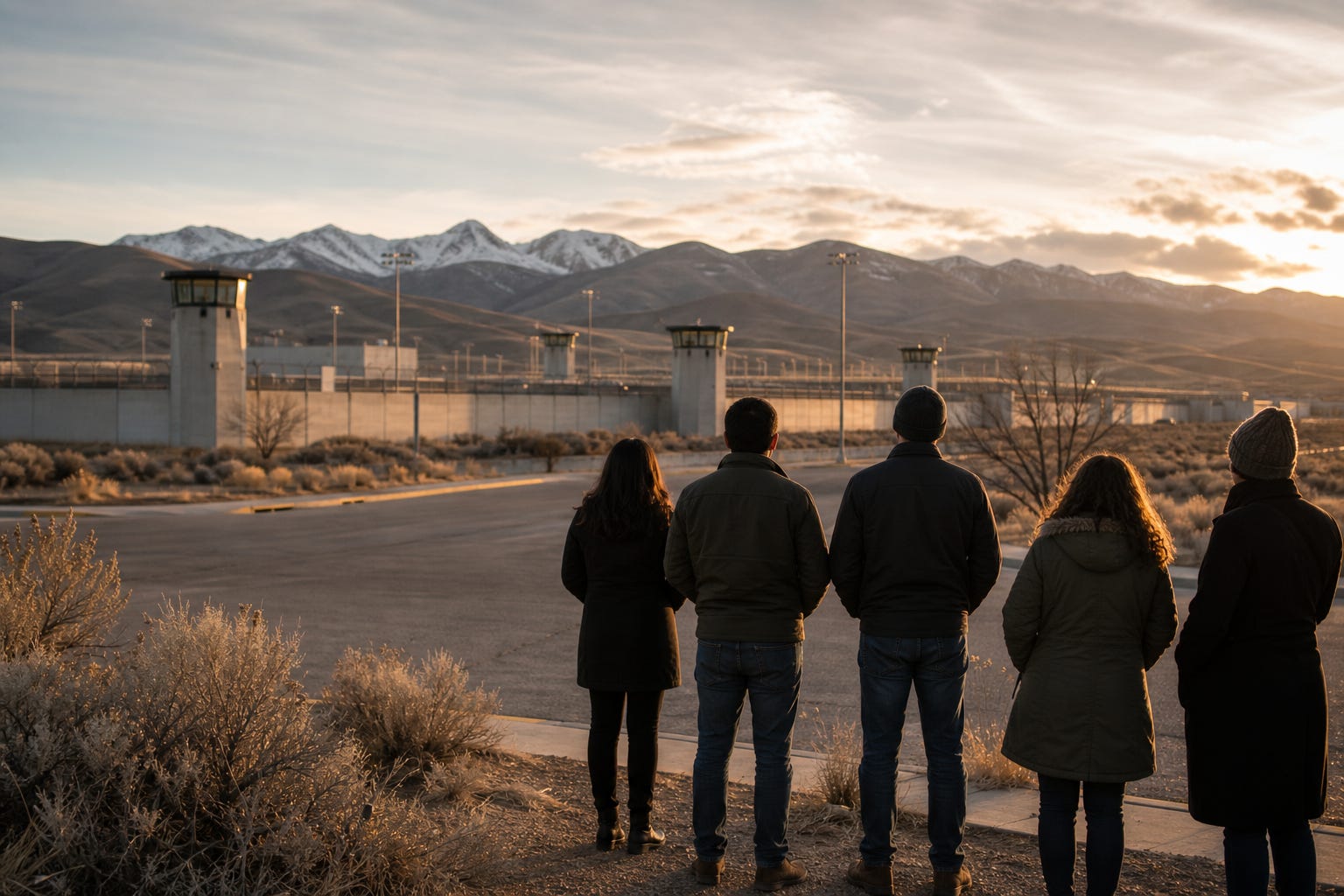
Idaho is two weeks from a major death penalty switch: beginning July 1, state law puts the firing squad ahead of lethal injection as the first method for carrying out court-ordered executions, and the prison system has now posted procedures for how the change would work.
The policy turns a Statehouse vote into a practical test for the Department of Correction, trained law enforcement volunteers, victims' families, prison staff and taxpayers. It also brings more than $1.2 million in execution chamber work into the public accountability frame.
What changes on July 1
Idaho Code Section 19-2716 currently lists lethal injection first and firing squad second. The version effective July 1 reverses that order, putting firing squad first and lethal injection behind it. After a death warrant is issued, the correction director must certify to the court within five days whether the lead method is available.
The Department of Correction says the change follows House Bill 37, the law that makes firing squad Idaho's primary execution method beginning July 1. The agency's public execution chamber page ties the work to F-Block at the Idaho Maximum Security Institution south of Boise.
That means July 1 is not only a symbolic date. It is the point when Idaho's death penalty process moves from a lethal injection first system to a shooting first system, with the prison agency responsible for proving the method is ready when a warrant arrives.
Who can serve on the team
The newly released procedure relies on volunteers from law enforcement, not random prison employees being pulled into the role. Public reporting on the standard operating procedure says the volunteers must have at least three years of Idaho POST certification, firearms training and demonstrated proficiency. They also cannot have recent discipline tied to firearms, use of force or similar conduct.
The plan calls for three shooters, two backup officers and a team leader who handles the department owned firearms. The identities of execution team members are protected under Idaho law, with only top prison officials allowed to know who they are.
Accuracy is a hard gate. Volunteers have to pass a live fire test under conditions meant to resemble the chamber setup. One missed shot disqualifies a volunteer. During an execution, the shooters would fire from roughly 10 yards, according to details released through the agency.
The cost and training test
The state has already bought five .308 caliber firearms for the task, with accessories reported at about $4,844 each. Construction work on the chamber has been reported at more than $900,000, plus roughly $314,000 for design and engineering, putting the total project above $1.2 million.
Training requirements are also part of the public test. Local coverage of the procedure says the execution team must complete at least four training sessions in the 12 months before an execution. Once a death warrant is served, training shifts to a weekly schedule. In the final 48 hours, the team must complete multiple sessions and two full scale rehearsals.
For taxpayers, the question is straightforward: if Idaho is going to carry out court ordered sentences this way, the process has to be secure, disciplined and honestly priced. Anything less would fail the families waiting on old cases and the public asked to fund the system.
Why families are watching
The Department of Correction says Idaho has eight people under sentence of death: seven men at the Idaho Maximum Security Institution and one woman at Pocatello Women's Correctional Center. The agency also says three executions have occurred since Idaho enacted its current death penalty statute in 1977. Idaho last carried out an execution in June 2012.
The current shift follows years of pressure over lethal injection access and a halted 2024 execution attempt in which the medical team could not establish IV access. Republican Gov. Brad Little signed the 2025 law that made the firing squad the lead method, with implementation delayed until July 2026 so the prison system could prepare.
For Idaho families, victims' relatives, prison staff and taxpayers, July 1 is not just a procedural deadline. It is the date when the state has to show whether an old penalty can be carried out with modern discipline, public order and accountability.
I can’t comprehend this change to firing squad. It’s abhorrent and I’m (one more time) embarrassed to have been born here and currently reside here.