
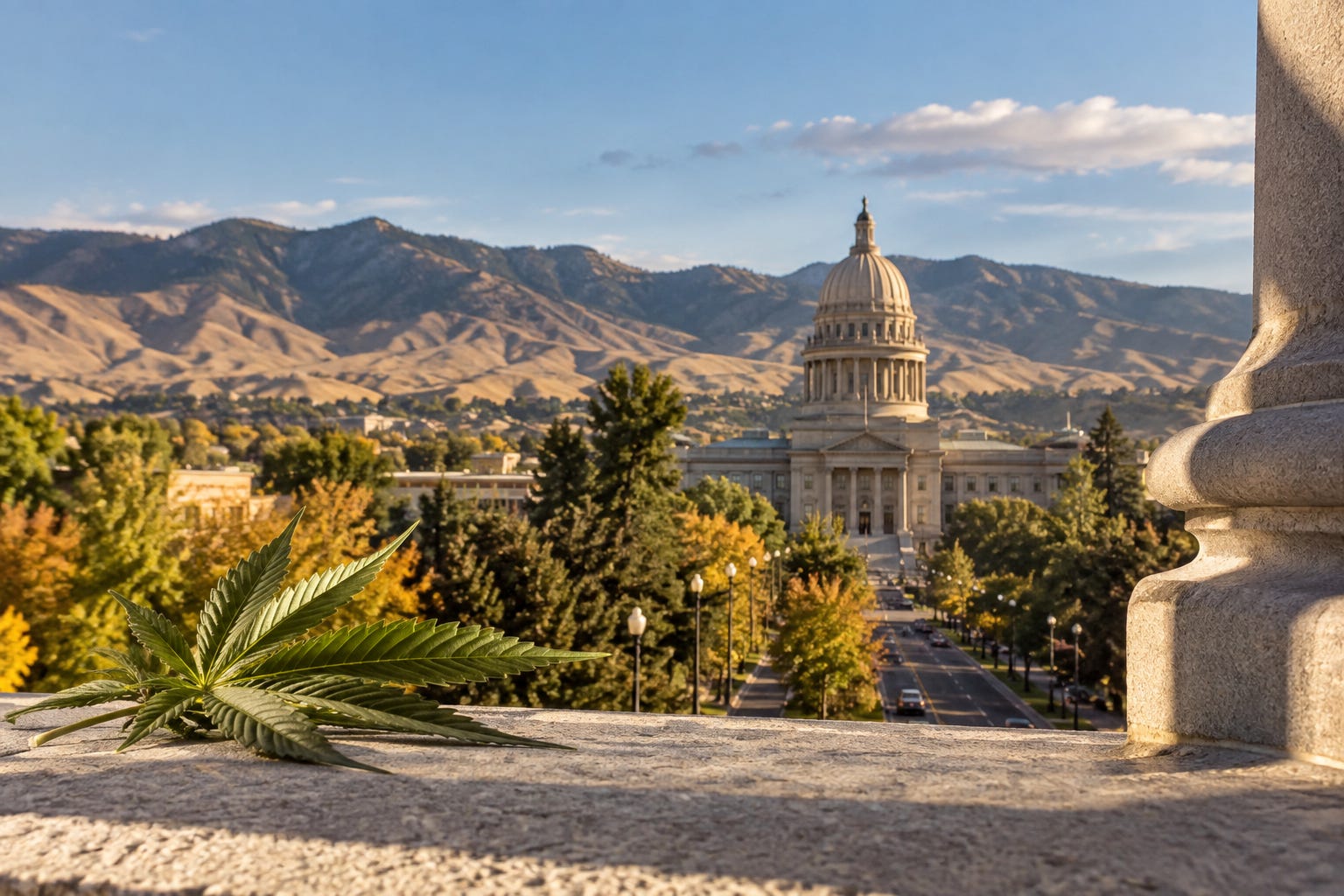
On Nov. 3, Idaho voters will decide whether a future marijuana legalization proposal must go through the Legislature rather than a citizen initiative. The question, House Joint Resolution 4, reaches beyond cannabis: it would give lawmakers exclusive authority over legalization of narcotics and other psychoactive substances as well.
Approval would not make marijuana legal. It would not rewrite Idaho's current possession penalties, either. The change is to who could authorize legalization later, and that restriction would be written into the state Constitution.
The ballot would change the route, not existing drug laws
Idaho currently has two routes for making state laws: legislation passed by elected lawmakers and initiatives enacted by voters. HJR 4 would close the initiative route for legalization of the substances it names. A no vote would leave the present constitutional arrangement intact.
The proposal would add a subsection to Article III, Section 26. That section already gives the Legislature authority over alcoholic beverages, under a provision dating to 1934. HJR 4 keeps that language and adds the drug provision alongside it.
Its reach is not limited to retail sales. The new language covers cultivation, manufacturing and distribution, as well as possession, use and prescribing. The text calls for the restriction to begin upon voter adoption.
The Legislature could still pass a legalization law if the amendment succeeds. HJR 4 reserves that decision to lawmakers; it does not command them to approve it or prohibit them from considering it. The resolution also leaves the existing controlled-substance statutes in place, a point stated in its accompanying fiscal note.
Skaug and Grow make a public-safety case
Rep. Bruce Skaug, R-Nampa, carried the resolution on the House floor. Sens. Scott Grow and Todd Lakey backed the proposal, and all three are listed as contacts on its supporting statement of purpose. Their written rationale centers on the consequences of drug legalization for communities and the health of families.
The argument supporting HJR 4 in the official voter materials favors handling legalization proposals through the legislative process. It describes opportunities for police and people affected by drug abuse to testify, and emphasizes holding legislators responsible for their votes.
That is the supporters' case for the amendment, not evidence that the vote itself would reduce drug use. The constitutional language assigns authority. It does not create a treatment program, change criminal sentences or require a particular legalization bill to receive a hearing.
Lawmakers placed the question before voters during the 2025 session. The House approved it 58-10 on March 5, with two members absent. The Senate approved it 29-6 on March 11. Those votes advanced the constitutional proposal, but the public still has the final decision in November.
A yes vote is not a marijuana ban forever
The distinction matters for Idaho families assessing what the ballot would actually accomplish. Marijuana possession would remain governed by existing law under either election result. A yes vote would instead determine the institution responsible for any future legalization.
The proposal concerns the listed drug activities, not citizen initiatives on every subject. Initiatives ordinarily change statutes; HJR 4 would change the Constitution. Revising a constitutional provision later requires another legislative referral, supported by two-thirds of each chamber, followed by voter approval.
Opponents' argument in the voter materials favors keeping the initiative option and notes that legislators can already amend or repeal voter-enacted statutes. Supporters prefer requiring a legalization proposal to go through elected representatives from the outset.
Neither position changes the immediate legal effect described in the resolution: approval reserves legalization authority to the Legislature, while rejection leaves the existing routes available. The November choice is about who writes Idaho's future drug policy, not whether marijuana becomes legal on Election Day.