
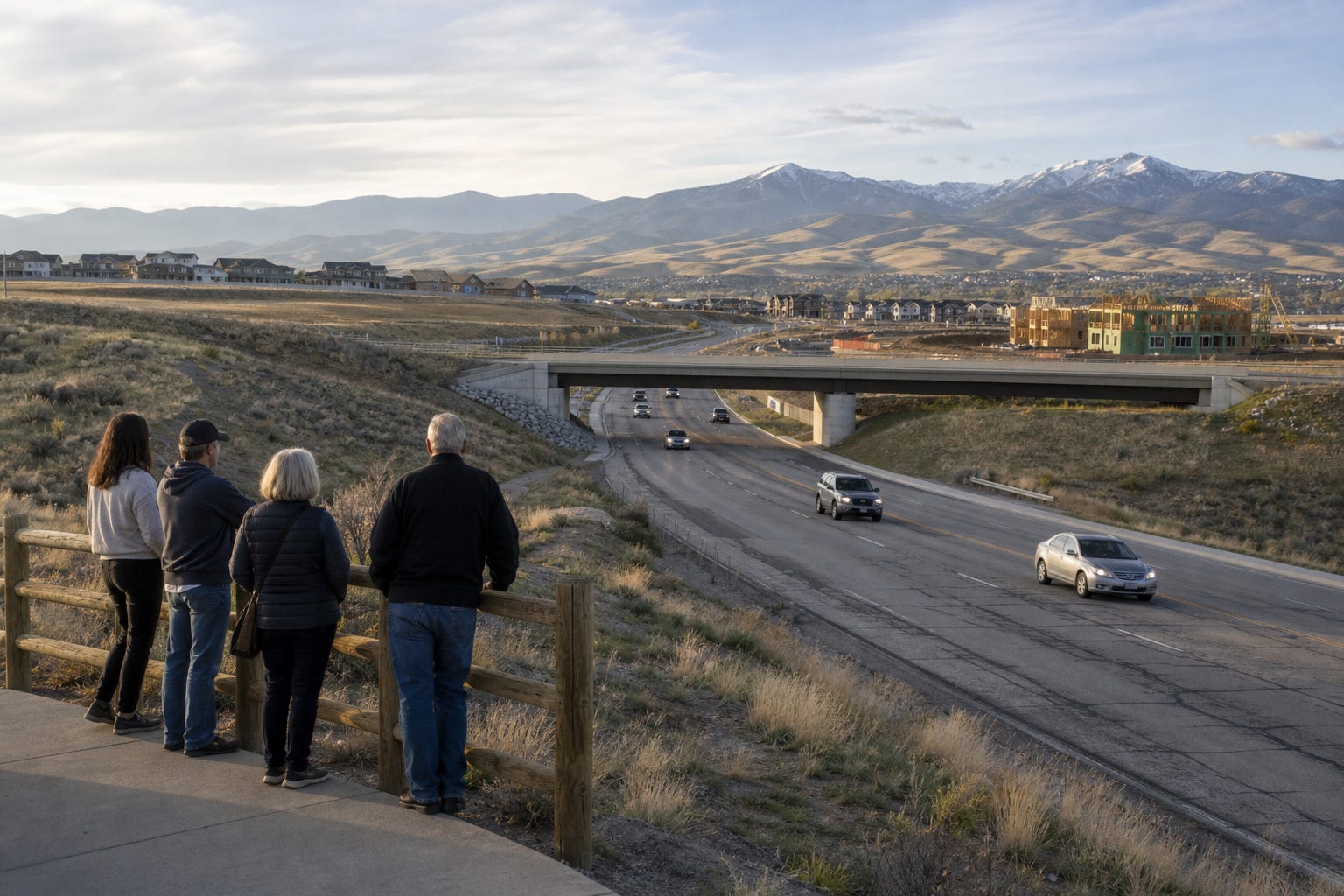
Idaho's next highway plan has become a taxpayer test: keep older roads and bridges working now, or keep pushing new capacity for towns that are still growing faster than their pavement. The Idaho Transportation Department's draft FY2027 to FY2033 investment program is open for public comment through July 31, and its latest rewrite moves a long list of expansion projects into early-development or unfunded status after state transportation funding changed.
Road money is moving to preservation
The department says the draft seven-year plan was modified after changes in transportation project funding levels. The Idaho Transportation Board reviewed staff recommendations in mid-June, and the agency is now asking the public to weigh in before the board considers final approval in September.
The practical shift is simple. Funded work is being aimed first at keeping the existing system usable. The current program includes $200 million a year for pavement and $100 million a year for bridges, according to the department's public comment notice. Board Chairman Bill Moad said the agency still wants to deliver major capacity projects that support the economy, but available money puts the immediate focus on keeping roads and bridges safe, smooth and open.
That is not glamorous, but it is the basic duty taxpayers expect first. A bridge that fails or a highway that falls apart costs families, freight carriers and local employers more than a delayed ribbon cutting. The tension is that Idaho's growth has not paused while the state sorts out the money.
Southwest Idaho has the sharpest growth pinch
The draft District 3 highway file, covering Southwest Idaho, shows why the debate matters beyond a line item in Boise. The proposed unfunded or early-development list includes I-84 mobility improvements, a State Highway 16 segment from State Highway 44 to Beacon Light in Ada County, and State Highway 55 work tied to Eagle and Caldwell growth corridors.
Those are not abstract map lines. The State Highway 16 entry near Eagle is described as a widening project that would take the segment to four lanes, add an overpass at Floating Feather and improve the Beacon Light intersection. The State Highway 55 Pear Lane to Farmway phases near Caldwell are described as capacity and safety work with two travel lanes in each direction, a center turn lane, wider shoulders, bridge replacements, culvert extensions and utility relocations.
When those kinds of projects slide, the pain lands locally. Parents sit longer on school and work trips. Small businesses wait on freight routes. County and city officials take the complaints even when the funding decision sits higher up the chain. In fast-growing Idaho, an unfunded road project can become a property-tax argument, a public-safety argument and a local-control argument all at once.
The public comment window is the pressure point
The department is taking comments through July 31 by email, phone, mail and an interactive project map. All comments are supposed to go to the Transportation Board before the September vote on the investment program.
That gives city halls, highway districts, farmers, freight employers, parents and daily commuters a short window to make the case for specific corridors. Vague frustration will not move much. Specific pressure might.
The larger lesson is not that every project can be funded at once. It cannot. The lesson is that Idaho's growth bill is real, and the state now has to show taxpayers which promises are maintenance, which are expansion, and which are only placeholders until the money comes back.