
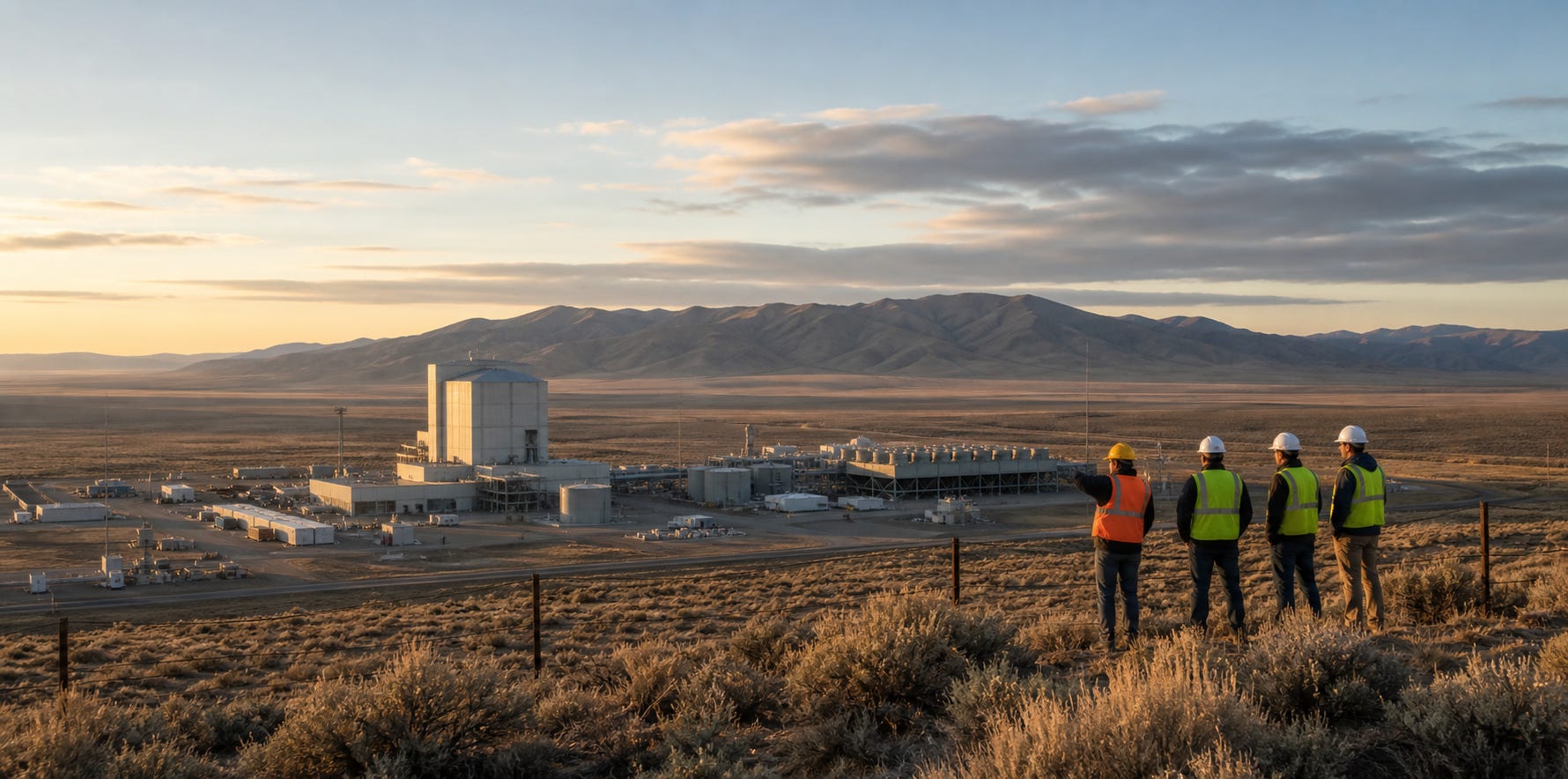
Idaho National Laboratory is back in the national nuclear spotlight after a privately developed advanced reactor reached zero-power criticality at the eastern Idaho site, a milestone that now sits inside President Donald Trump's broader push to speed up new reactor deployment.
A private reactor hit a key test in Idaho
Antares Nuclear's Mark-0 advanced reactor achieved criticality at Idaho National Laboratory, according to public reporting and federal nuclear energy materials. Criticality means a reactor can sustain a controlled nuclear chain reaction. In this case, the demonstration was described as a zero-power test, which is designed to prove reactor physics and control behavior without producing commercial power.
That matters because Idaho National Laboratory is not just another federal campus. It is the country's lead nuclear energy laboratory, and eastern Idaho has spent decades carrying the burden and the benefit of national nuclear work. A successful advanced-reactor test there turns a technical milestone into a local workforce, infrastructure, permitting and taxpayer story.
Washington wants a faster nuclear clock
The reactor news comes as the Trump administration has been pushing federal agencies to accelerate advanced nuclear work. Public summaries of the administration's nuclear agenda point to a goal of getting multiple advanced reactors to criticality by July 4, 2026, a timeline that puts pressure on the Department of Energy, regulators, national laboratories and private developers to move faster than the old federal pace.
For Idaho, the upside is obvious. If advanced nuclear moves from white papers into hardware, the state can claim a larger role in a strategic industry tied to energy security, grid reliability, military resilience and high-skill work. The risk is just as practical: fast timelines still need serious safety review, clear public communication and local accountability so Idaho communities are not treated as a proving ground without a say.
The local payoff is jobs, power and control
The stronger Idaho angle is not novelty. It is control. Advanced nuclear advocates argue smaller and newer reactor designs could eventually support remote sites, military needs, industrial power demand and data-heavy growth without leaning entirely on weather-dependent electricity. That gives Idaho a chance to connect scientific leadership with real work for engineers, operators, skilled trades and suppliers.
Idaho taxpayers also have a stake in whether federal nuclear spending produces usable capacity or another slow pile of studies. The INL milestone gives supporters a concrete result to point at, but one demonstration does not settle the larger question. The next test is whether Washington can turn the Idaho lab's success into safe projects, durable jobs and energy infrastructure that strengthens the state instead of simply using its land and workforce.
Eastern Idaho is carrying a national bet
The Mark-0 test shows why Idaho keeps showing up in national energy debates. The state has the lab, the technical base and the history. Now it has another proof point as federal officials and private companies try to make advanced nuclear power move on a shorter clock.
That puts eastern Idaho in a familiar position: close to the promise, close to the risk and close enough to demand results. If the new reactor race is going to run through Idaho, local workers, families and taxpayers deserve more than celebration. They deserve a clear return.