
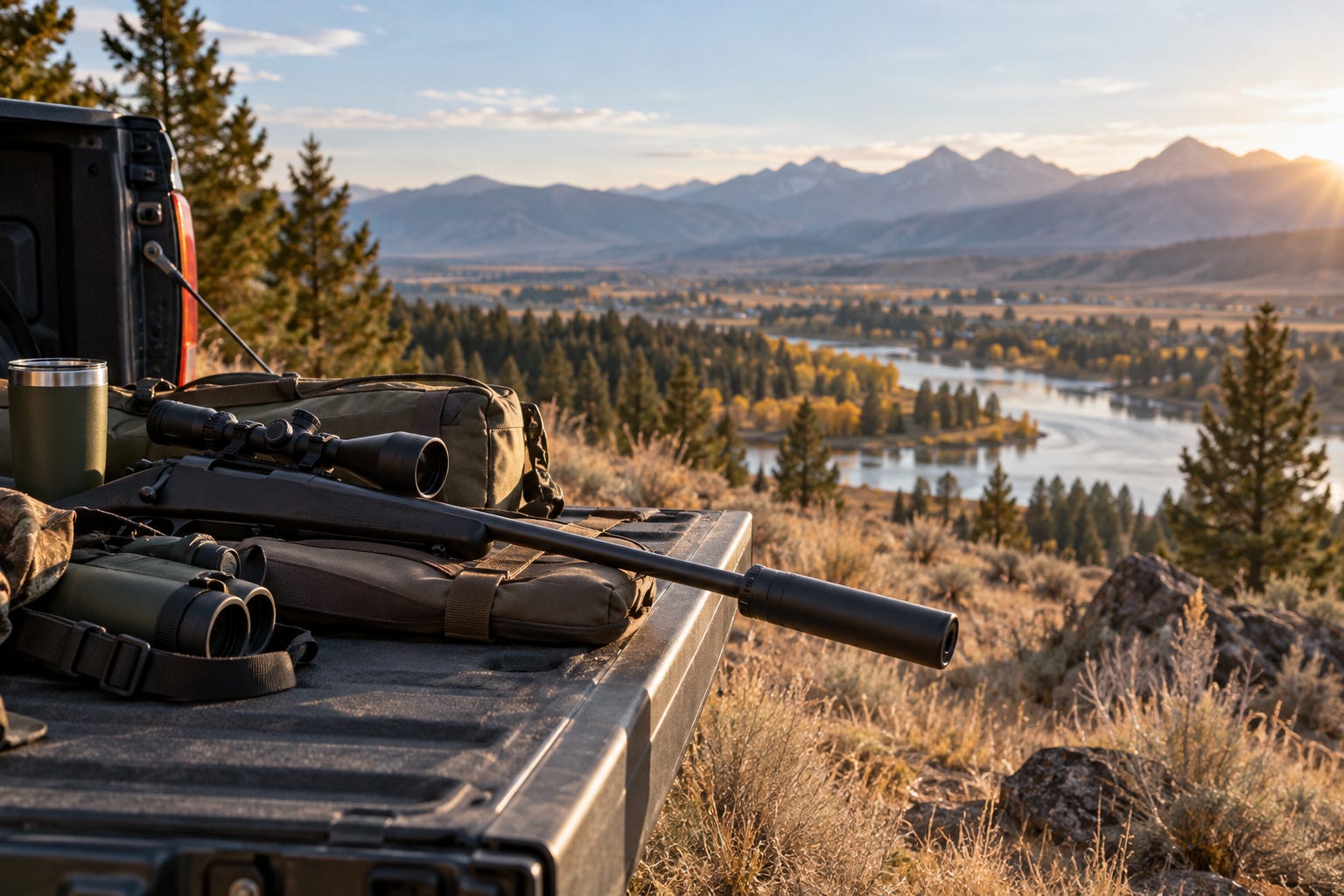
Idaho gun buyers no longer need a connection to a particular lawsuit to benefit from federal registration relief for suppressors and certain short-barreled firearms, Attorney General Raúl Labrador announced Monday. An ATF policy issued October 9 extends that relief nationwide, broadening the practical reach of litigation Idaho joined with 14 other states.
For Idaho gun owners and the small businesses that serve them, the change removes a distinction that had separated purchasers covered by a court order from everyone else. But it does not erase the National Firearms Act. Background checks remain, and the new policy carries a warning about what could happen if federal enforcement returns.
An Idaho-backed case now reaches more buyers
The dispute grew out of a change Congress had already made. The federal tax on the covered items dropped to zero in January 2026 under the One Big Beautiful Bill. Historically, the NFA had coupled a $200 tax with an approval and registration system dating to 1934.
Idaho and its fellow plaintiffs argued that the registration requirements lost their constitutional footing when the tax disappeared. A federal court in Texas accepted that argument on August 5, according to Labrador's office. The Justice Department subsequently chose not to appeal.
That court victory was narrower than the policy announced last Friday. Its protection attached to the plaintiffs and covered members and customers, including Silencer Shop customers and participating state agencies. Labrador's office identified Idaho State Police as an example. Other buyers were not automatically within that protection.
The October guidance expands the agency's nonenforcement approach beyond those groups. Suppressors, along with the short-barreled rifle and shotgun categories, are covered by the change described in Idaho's announcement. Silencer Shop's October 9 update also identifies the NFA category known as any other weapons.
Dealer checks and state laws still apply
Purchasing one of the covered items still involves the dealer's standard federal transaction record, Form 4473, and a background check. Labrador's announcement specifically preserves those requirements. The change concerns the additional NFA approval and registration process, not a general exemption from firearm purchase rules.
An internet order also does not become a shipment straight to a buyer's home. The attorney general's office says it must go through a federally licensed dealer in the purchaser's home state. Dealers remain bound by applicable state and local restrictions.
Crossing a state line raises separate questions. Silencer Shop says federal authorization for interstate transportation of short-barreled rifles or shotguns remains required under the current guidance. It also cautions that another state's registration requirements or prohibitions may still apply. Idaho's relief is not blanket permission to possess or transport an item everywhere.
Nor does the announcement cover every weapon regulated by the NFA. Silencer Shop says machine guns and destructive devices remain subject to their existing NFA requirements and taxes.
Permanent repeal would take another step
The federal registry is still operating. Voluntary registration remains available, Labrador's office says, even though the agency is not enforcing registration for the covered categories under its new policy.
That distinction matters for property an owner expects to keep for years. Idaho's announcement warns that possessing an unregistered firearm would not automatically receive protection if the policy were reversed. Silencer Shop likewise distinguishes the court's injunction from an agency decision that can change. Its update identifies a renewed congressional tax, an overturned injunction or a Justice Department reversal as possible routes back to enforcement.
Labrador has also sought a legislative answer. In September, he joined 20 other attorneys general asking Congress to remove the provisions permanently, his office said. The October guidance broadens the relief available now; it does not accomplish that separate repeal.
For a prospective buyer, the remaining questions are specific: which rules apply to the item, where it will be kept or taken, and whether to use the registration process that still exists. Labrador's office directs owners and dealers to the current ATF guidance or a private attorney before a transaction. The courtroom win has reached more Idahoans. Congress has not yet made it permanent.