
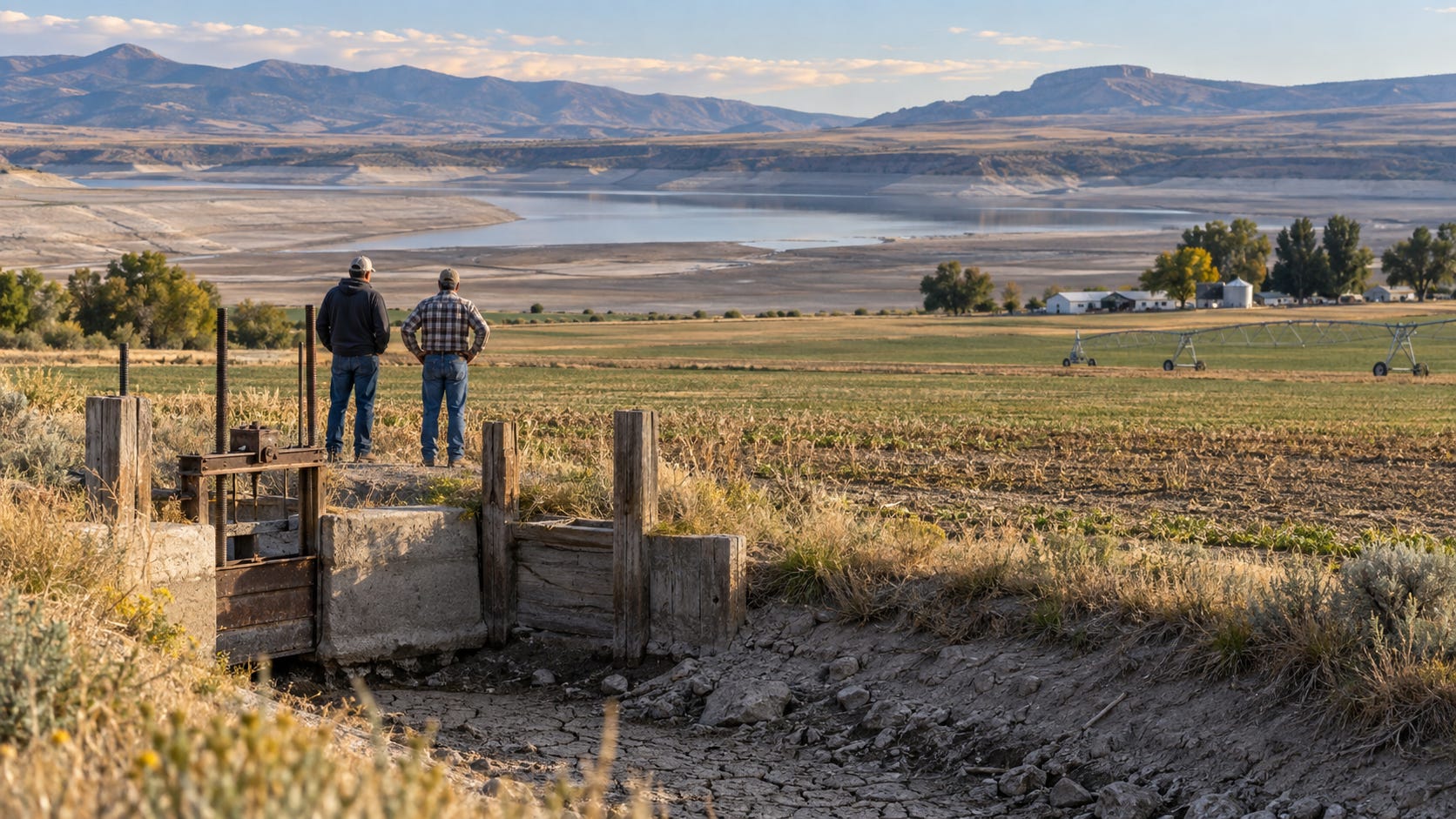
The Upper Snake River reservoir system entered mid-September at just 8 percent of capacity, the lowest level in its recorded history. That number turns Idaho's difficult 2026 water year into a hard starting point for 2027: farms, canal companies and groundwater districts will head into winter with almost no stored cushion.
The shortage is not confined to a chart. One Blackfoot farmer has already taken roughly 300 acres out of production or conservation use, irrigation districts report double-digit reductions, and water managers are warning that even a strong snow season may not refill a system this depleted.
For Idaho families far from a headgate, the stakes still reach the grocery aisle, rural payrolls and the businesses that depend on farm production. The reservoirs hold more than water. They hold time, giving farms and communities a buffer when snow and rain fall short. That buffer is nearly gone.
The water bank is nearly empty
The Bureau of Reclamation tracks seven major reservoirs in the Upper Snake system: Jackson Lake, Palisades, Grassy Lake, Island Park, Ririe, American Falls and Lake Walcott. Together, they have more than 4 million acre-feet of storage capacity. In the latest reporting, the combined system stood at 8 percent full.
The last comparable low came in 1993. That year, heavy snow and cool conditions reduced irrigation demand and helped storage recover. Water experts caution that repeating that combination would require more than a few good storms. It would take sustained mountain snow, favorable spring temperatures and careful use through the next growing season.
Idaho entered this season after a historically weak snowpack. The Idaho Department of Water Resources issued a statewide drought declaration in April, and reservoirs were drawn down as irrigators tried to carry crops through summer. By August, state officials reported storage was falling by about 24,000 acre-feet a day.
A reservoir can look broad from the highway and still be functionally exhausted for the people who rely on its contracted storage. At 8 percent, the question is no longer whether 2026 was dry. The question is how much flexibility remains when farmers make planting and water decisions for 2027.
The cuts are already visible in Idaho fields
Adam Young, a Bingham Groundwater District board member who farms about 2,600 acres near Blackfoot, reduced his operation by roughly 300 acres over the course of the year. He described those changes as more than a temporary response and said further strain could make some reductions permanent.
The pressure reaches across the Snake River system. Dan Davidson, general manager of the Minidoka Irrigation District, reported that his users absorbed a 15 percent reduction this season while some other water users faced cuts as high as 33 percent. The Surface Water Coalition members he represents deliver water to about 550,000 acres of Idaho farmland.
Those figures translate into choices about which fields receive water, which crops can make it to harvest and which acres sit idle. They also affect equipment dealers, processors, truckers and small towns whose business activity follows the farm calendar. A water shortage begins at the canal gate, but it does not stay there.
Idaho's water-rights system adds another layer. Senior surface-water users hold priority, while junior groundwater users must meet mitigation and aquifer-recharge obligations during shortages. The current four-year mitigation agreement has provided protection against widespread well shutoffs, but the parties are expected to revisit that framework as the shortage carries into another year.
Winter could help without erasing the deficit
The winter outlook offers uncertainty rather than a rescue. National Weather Service forecasters in Pocatello expect temperatures to lean above normal for December through February. Most of Idaho has roughly equal chances of above-normal or below-normal precipitation, while a strengthening El Niño can produce very different snow outcomes from one winter to another.
That distinction matters. A warmer winter does not mean every week will be warm, and an equal-chances precipitation map does not predict a dry season. Idaho can still receive major snowstorms. What forecasters cannot promise is the sustained cold and snow needed to rebuild storage while also meeting spring and summer demand.
The system begins that test from a record low. Even an above-average snow year would first have to cover soil moisture deficits, natural river flows, reservoir refill and the next irrigation season. Water managers therefore are treating snowfall as one part of the answer, not a plan by itself.
The next decisions start before planting
The immediate work is practical: measure what remains, reduce avoidable losses and give water users clear numbers before they commit seed, labor and money to next year's crop. Young has pointed to automated canal gates as one way to hold water at consistent levels and reduce unnecessary diversion. Other proposals focus on storage, recharge and longer-term aquifer recovery. Each carries costs, timelines and tradeoffs that will require public review.
What cannot wait is the calendar. Farms make consequential decisions months before harvest, and irrigation districts cannot create a reserve after the demand arrives. The 8 percent figure is a warning about that shrinking margin.
Idaho has spent generations turning snowmelt into farms, food and durable rural communities. The next water year will test how well the state can protect that inheritance with limited storage and no guarantee from the sky.