
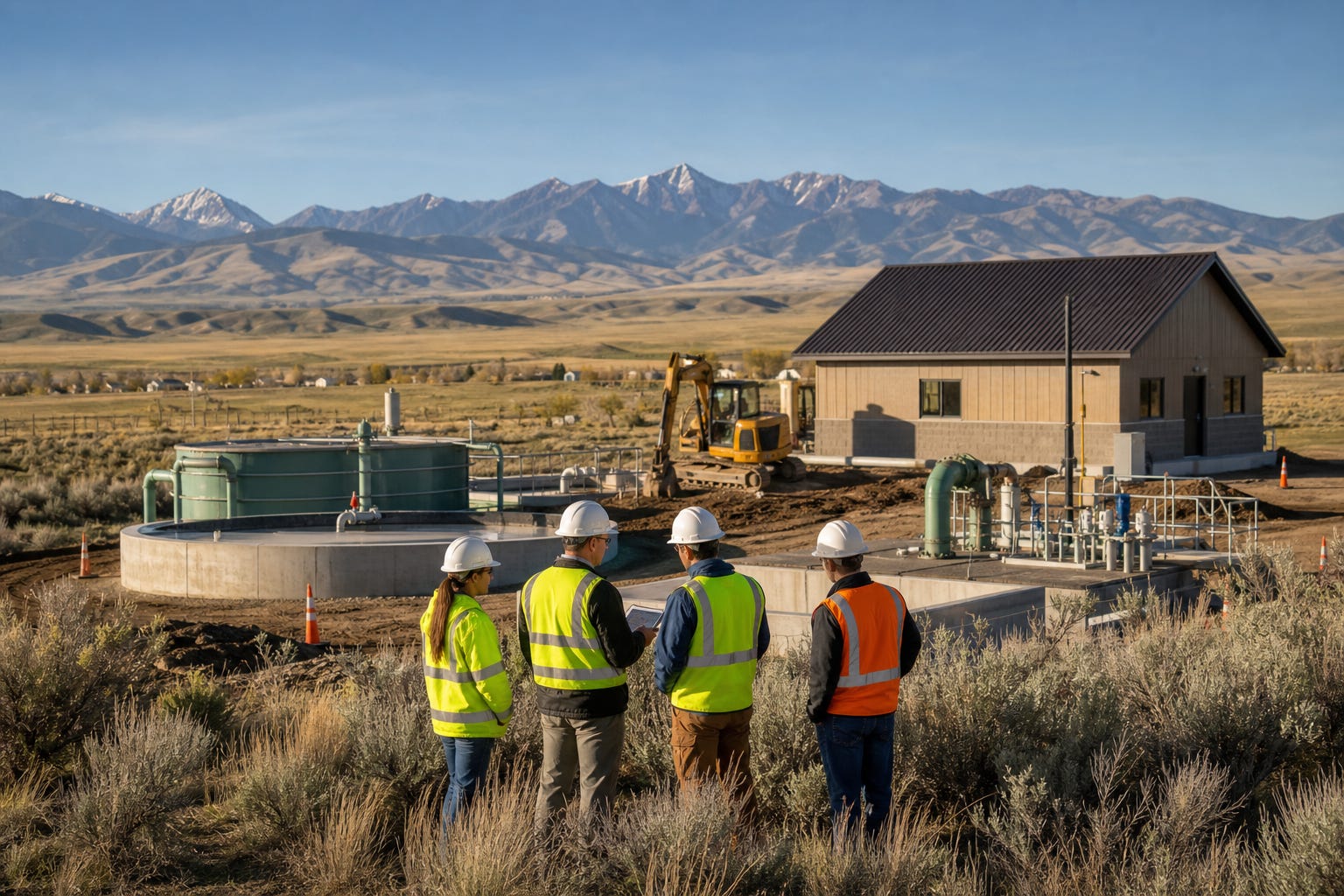
Idaho Attorney General Raúl Labrador has joined 21 other state attorneys general in asking the U.S. Environmental Protection Agency to finalize a rewrite of its project-review rules without changes. The proposal would apply to EPA employees and certain funding or permit applicants, with the goal of making covered environmental reviews shorter, more predictable and easier to coordinate.
For Idaho communities trying to build water systems, energy facilities or other infrastructure, the question is practical: how long can a project sit in review before costs move and taxpayers get the bill?
A 22-state letter backs the EPA rewrite
Labrador announced Idaho's participation on Aug. 13. The coalition, led by West Virginia Attorney General John McCuskey, submitted its 14-page letter to EPA Administrator Lee Zeldin on July 27. Attorneys general from 22 states signed it.
The states are supporting a proposed update to 40 C.F.R. Part 6, the EPA's own procedures for carrying out the National Environmental Policy Act. EPA published the proposal on June 25. It would incorporate changes Congress made in 2023 and 2025, recent executive orders, the removal of government-wide regulations from the Council on Environmental Quality and a 2025 Supreme Court ruling on the proper scope of environmental review.
The proposal is not a repeal of federal environmental review, and it would not put every Idaho road, subdivision or private project on a faster track. Federal Register materials say the covered parties include EPA staff and certain grant or permit applicants that must provide environmental information or prepare an environmental assessment or environmental impact statement for an EPA decision.
Congress already set the clock
The core deadlines are already federal law. An environmental assessment is generally limited to 75 pages and one year. An environmental impact statement is generally limited to 150 pages and two years, with a 300-page allowance for actions of extraordinary complexity.
EPA's proposal would put those limits directly into the agency's procedures and require a responsible official to certify compliance. It would also spell out when an extension is justified and require an explanation when a deadline cannot be met.
A separate fast-track option created by Congress allows a project sponsor to pay 125% of the government's anticipated review cost. Under that route, the lead agency generally has 180 days to complete an environmental assessment or one year to complete an environmental impact statement. The option is voluntary, and the sponsor pays for the accelerated timetable.
The proposed rule would also clarify which agency leads a review when several federal offices are involved. It would make it easier for EPA to adopt a low-impact categorical exclusion already vetted by another agency. In some cases, EPA could still use an exclusion after identifying an extraordinary circumstance if the action is not likely to cause significant foreseeable effects or if the project is modified to avoid them.
The delay numbers explain Idaho's position
The coalition's letter cites 100 to 150 National Environmental Policy Act cases filed each year and says projects that face such litigation are delayed by an average of 4.2 years. It also points to research estimating that litigation delayed or stopped about 2,000 projects during the law's first four decades. Those are national figures, not a count of Idaho projects.
Federal data included in EPA's proposal supplies another benchmark. Final environmental impact statements issued across federal agencies from 2013 through 2018 averaged 661 pages. The average completion time was 2.8 years from 2020 through 2024 and 2.2 years for statements completed in 2024.
Labrador's argument is that delay can become its own veto when financing, labor and construction prices keep moving. His office named roads, water systems and energy projects as the practical stakes. For Idaho taxpayers and local governments, a dependable review schedule can make the difference between a project budget that holds and one that has to be rebuilt before work begins.
EPA still has the final call
The proposal would remove population-specific language from three parts of EPA's current procedures and direct the agency to consider health and environmental effects on all individuals. The coalition supports that uniform standard along with the tighter review rules.
The public comment period closed July 27. Federal Register metadata listed 50 comments on Aug. 14, and EPA can revise the proposal before issuing a final rule. The proposal itself does not approve a single Idaho project. It changes the process EPA would use when a covered project reaches the agency.
Labrador's move puts Idaho on record for fixed limits, one accountable lead agency, broader use of low-impact exclusions and equal rules for affected communities. The result will be measured on the ground: whether a covered project can receive a thorough decision on schedule, before delay turns into a larger bill for Idaho families and taxpayers.