
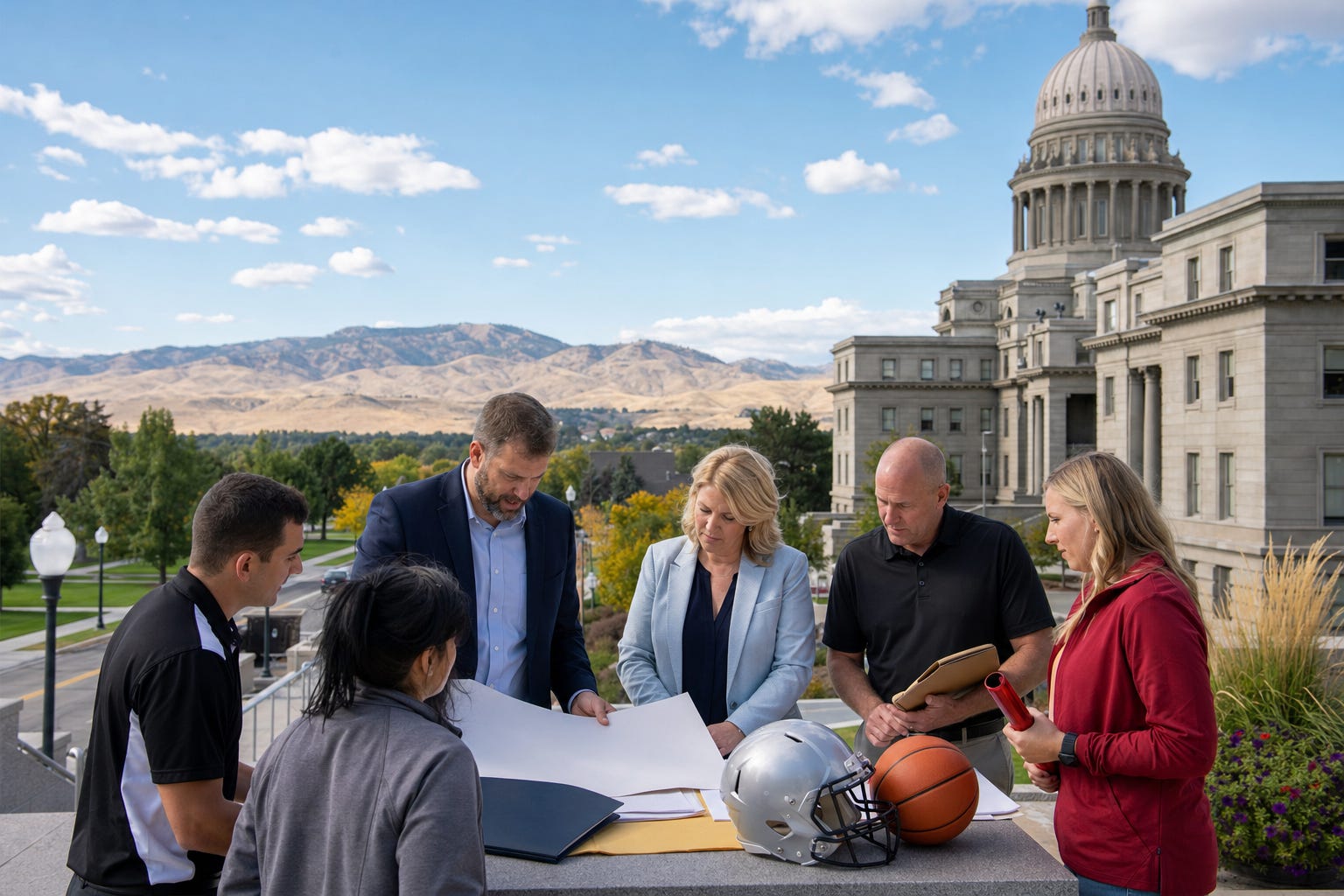
Gov. Brad Little has put Idaho college sports on a summer clock. His new Governor's Working Group on College Athletics is expected to tell him by September what Idaho can do, at the state and local level, to keep Boise State, the University of Idaho, Idaho State University and Lewis-Clark State College competitive as the national college sports market changes around them.
The assignment is narrow enough to sound procedural and large enough to matter. The group will hear from athletic departments at Idaho's public four-year institutions, review what other states are trying, and weigh policy ideas or investment options tailored to each campus. In plain English, Idaho is deciding how much of its college sports future should be planned at home instead of dictated by conferences, federal rules or richer out-of-state programs.
Statehouse names are now in the sports fight
Little's working group is not just a campus advisory circle. It gives the discussion a direct line into state policy, higher education and Idaho business. The panel is chaired by Idaho Falls businessman Cortney Liddiard and includes State Board of Education President Kurt Liebich, Senate Majority Leader Lori Den Hartog of Meridian and House Majority Leader Jason Monks of Meridian.
The roster also includes people with deeper campus and business ties: Troy Bell, an Idaho State University alumnus and former Bengal football student-athlete; Mark Miller, CEO of Miller Family Holdings and former chairman of Idaho First Bank; Debbie Hetherington, a former University of Idaho Foundation board member; and Mike Tatko, an Avista Utilities community relations manager in the Lewis-Clark region and a Lewis-Clark State College Foundation board member.
That mix matters because college athletics is no longer only an athletic department problem. Conference realignment, donor fundraising, facility needs, federal reform talks and new compensation models can shape enrollment, alumni loyalty, small business traffic and local pride. A Saturday crowd is also hotel rooms, restaurants, campus jobs, donor calls and a reason for Idaho families to care about their in-state schools.
The taxpayer question sits underneath the turf
The Governor's Office said the group will focus on what Idaho can do at the state and local level while the White House and Congress consider possible federal reforms. That framing puts a local-control question at the center of the assignment. Idaho can wait for national rules to settle, or it can decide which steps make sense for its own schools, students and communities.
The money side is unavoidable. Separate higher-education budget discussions last week showed public campuses are already balancing pressure on families and taxpayers. State Board coverage noted tuition increases between 4.4% and 4.7% at Idaho's four-year schools, including a $425 increase at Boise State. At the same meeting, Boise State leaders discussed enrollment growth, faculty workload and the school's push to strengthen its national profile.
That is why the athletics group should matter beyond sports fans. A recommendation that relies on public money, state policy or local investment will need a clear explanation of what Idaho gets in return. If the answer is better recruiting, stronger local economies, more student engagement or a bigger national brand, taxpayers deserve to see the tradeoff in plain language before the next bill comes due.
September is the first real test
The working group is expected to bring recommendations back to Little in September. The strongest version of that report would not be a generic love letter to college sports. It would name which problems belong to donors, which belong to university leaders, which belong to state policy and which should stay off the taxpayer tab.
Boise State's move into a rebuilt Pac-12 gives the issue a sharper edge, but this is not only a Boise story. Idaho, Idaho State and Lewis-Clark State each face a different athletic and community reality. The useful plan will recognize that a flagship football brand, a regional university and a smaller public college do not need the same answer.
For Idaho, the goal is simple enough: keep the schools competitive without letting national chaos write the state's playbook. Little has put the right people in the room. By September, Idaho should know whether that room can turn college sports anxiety into a practical state plan.