
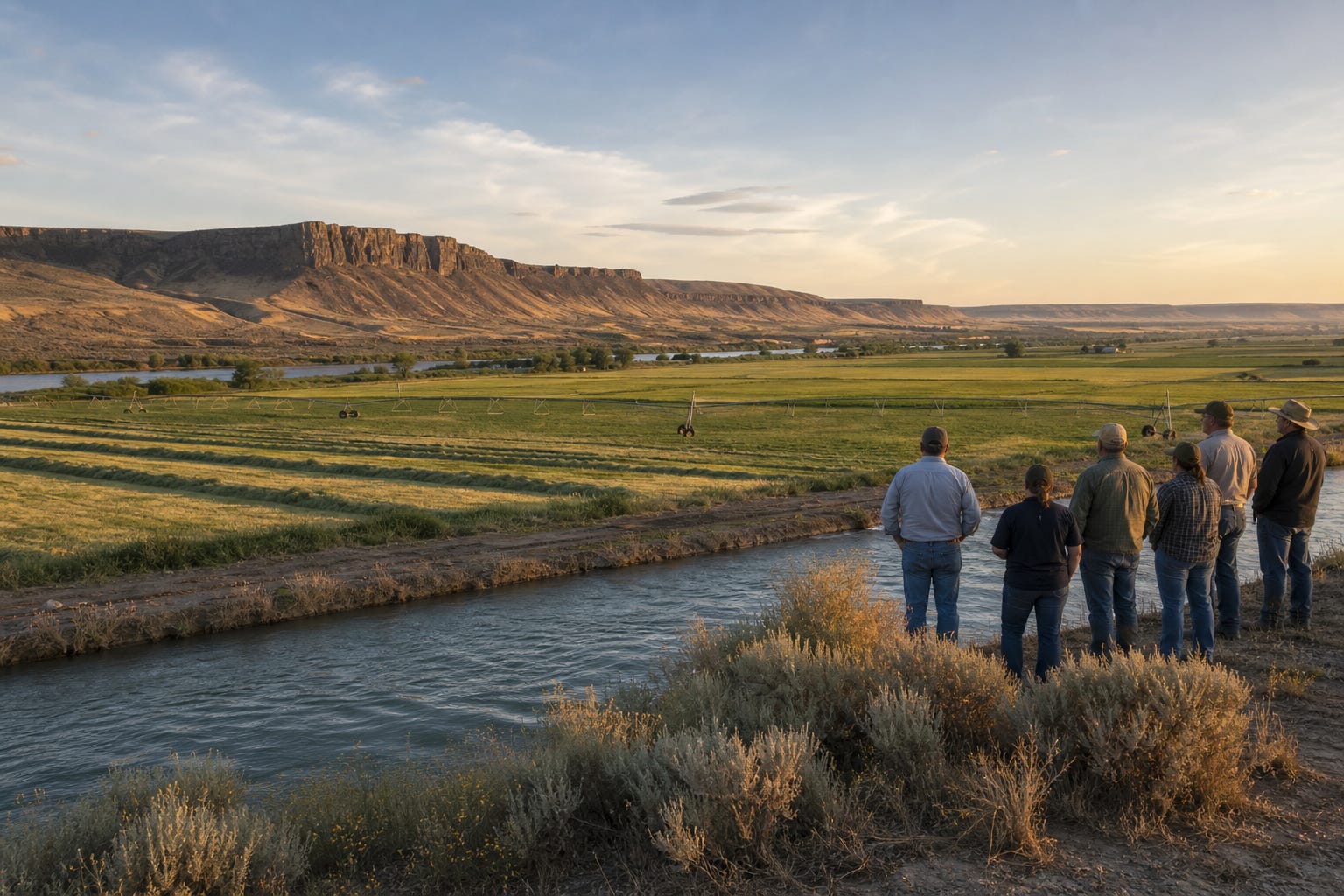
More than 4,000 Snake River water users have a reprieve from a shutdown threat that could have reached farms, ranches and other properties across southern Idaho. Gov. Brad Little moved Thursday to keep those water rights operating through the 2026 irrigation season while the state prepares a backup supply for the river.
Idaho Power told Little it would not push for curtailment this summer if the state makes specific commitments. In response, the governor asked the Idaho Water Resource Board to secure 5,900 acre-feet of storage water that could be released if flows near Swan Falls Dam fall short. It is a practical deal for a dry year, and it keeps the immediate burden off Idaho producers already facing high costs, weak crop prices and limited water.
A 3,900-cfs trigger that Idaho has never crossed
The legal pressure comes from the 1984 Swan Falls Settlement, which ended a major fight between Idaho and Idaho Power over the Snake River. The agreement allowed new water rights for agriculture, cities and businesses while protecting enough river flow for hydroelectric generation. Rights issued under that framework can be curtailed when the river falls below set minimums at the Murphy gage.
During irrigation season, that floor is 3,900 cubic feet per second. The state has never recorded a summer breach of that threshold since the settlement was signed. This year came close enough that the Idaho Department of Water Resources warned more than 4,000 trust water users in early June that their diversions might have to stop. The agency sent notices to roughly 3,300 owners and representatives.
The danger has eased for now. The department measured the river at 4,610 cubic feet per second on July 9, safely above the trigger. Recent conditions do not erase the risk, however. Snake River flows typically approach their seasonal low during summer, and the state still needs a plan if the gage drops later.
Little's plan adds water and accountability
Little's first step is the proposed 5,900 acre-feet of stored water. The Idaho Water Resource Board would secure that supply and use it to cover any shortfall at the Murphy gage. That gives the state a direct tool to protect the river standard without abruptly cutting off families whose farms and businesses depend on valid water rights.
The governor also asked for a longer-term committee within the Swan Falls Implementation Group. That panel would bring the affected parties together to examine durable solutions instead of waiting for another dry summer to force an emergency response. The approach preserves Idaho control over Idaho water while recognizing both irrigation and reliable power as essential infrastructure.
A third step focuses on administration. Little directed the water resources department to prepare a schedule for placing all trust water rights into districts overseen by watermasters. Better measurement and clearer local administration would give producers, regulators and Idaho Power a common record when river conditions tighten.
Farms get certainty for one season
For Idaho agriculture, the immediate value is certainty. A curtailment during the growing season can idle equipment, damage crops and interrupt the work that supports rural towns. Avoiding that outcome lets producers make decisions based on water availability rather than a sudden legal cutoff.
The agreement does not create new water, and it does not settle every question created by drought and growth. It does show what constructive state leadership can do before a warning becomes an economic loss. Idaho Power protects the flow standard tied to its hydroelectric system. Water users keep operating. The state gains time to improve accounting and negotiate a more durable framework.
That is the real test after this summer's reprieve. Idaho now has a chance to turn a one-year solution into a stable system that respects property rights, protects working farms and keeps the Snake River serving the communities built along it.