
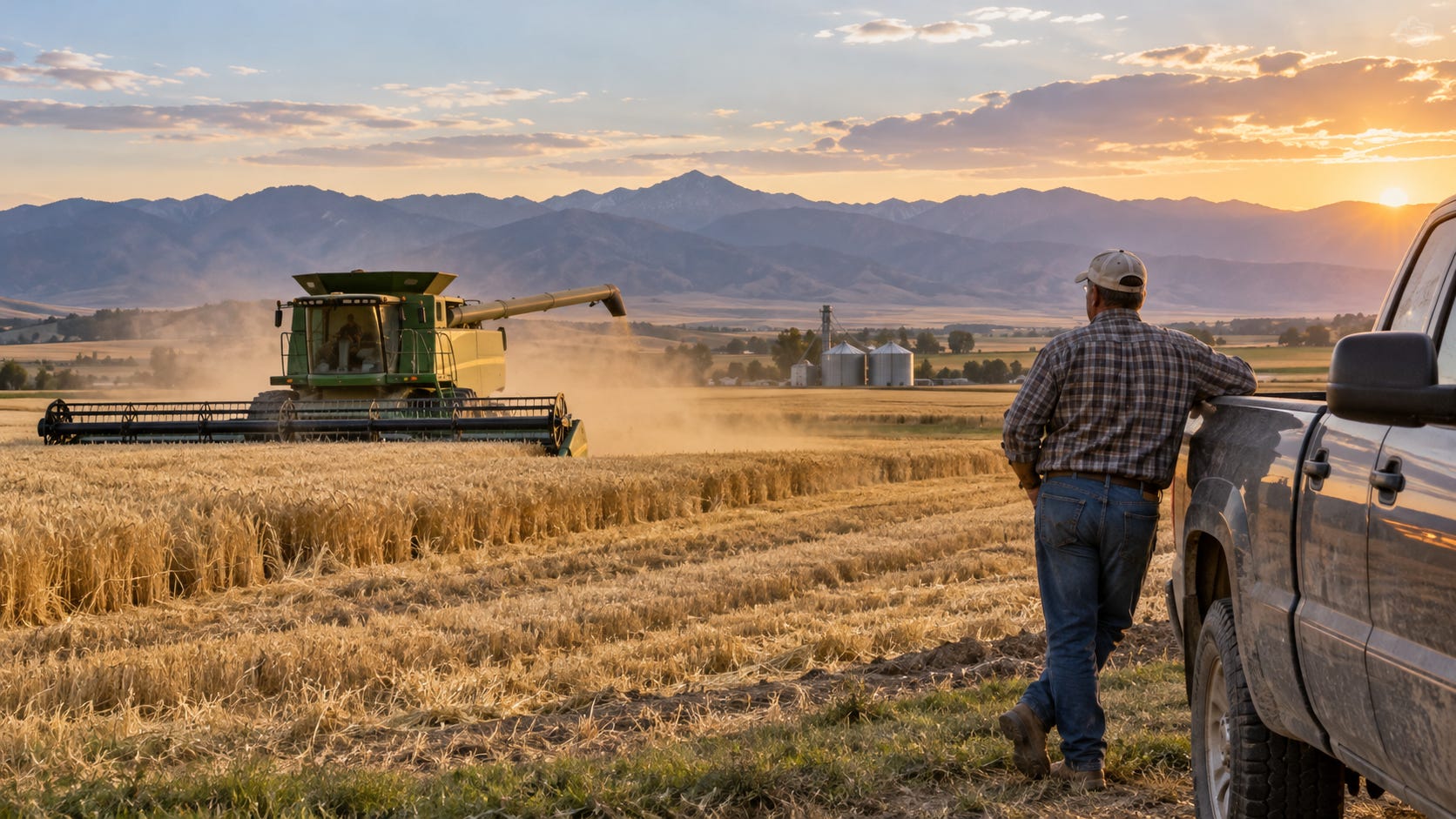
Gov. Brad Little has put Idaho's discretionary dyed-diesel inspections on hold for 30 days, giving farmers and ranchers a break from that enforcement during harvest. The October 9 order also carries a distinction worth reading before anyone changes the fuel in a truck: Idaho's pause does not erase obligations outside the state's inspection program.
Little directed the Idaho State Police and the Idaho Transportation Department to stop initiating those checks while they examine how Idaho handles dyed fuel. Drivers remain responsible for applicable federal requirements, rules in other states and their vehicles' warranty conditions.
The immediate change reaches beyond a single farming community. It applies to the two state agencies' discretionary inspections authorized by Idaho Code 49-676, with a review intended to inform what enforcement should look like afterward.
A harvest reprieve with a 30-day clock
Dyed diesel ordinarily serves off-road uses, including agricultural equipment, rather than highway travel. Its tax treatment differs from the fuel bought for on-road vehicles. That difference is why the distinction between suspending inspections and changing every applicable fuel requirement matters to farm families and transportation businesses.
The timing reflects the cost of getting this year's harvest moved. In its October 9 coverage, Local News 8 reported AAA's Idaho diesel average at $6.415 a gallon. Senate President Pro Tem Kelly Anthon said expensive diesel was adding to the broader cost pressure on producers during harvest, and described the pause as immediate relief alongside an opportunity to reconsider state requirements.
House Speaker Mike Moyle also supported the move. He framed it as a way to reduce the demands on agricultural producers while the state reviews its approach, emphasizing the work farmers and ranchers do to supply food and support Idaho's economy.
Little linked the action to President Donald Trump's push to reduce regulatory burdens. Local News 8 reported that Trump's earlier federal order temporarily allowed off-road dyed diesel for highway use while deferring federal fuel taxes. Idaho's separate action tells its own agencies how to handle inspections.
The state pause runs for 30 calendar days unless Little ends it sooner or extends it, according to the announcement reported by KMVT. It is temporary relief, not an announced permanent replacement for the inspection system.
What the order leaves with the driver
The signed directive is specific about who bears responsibility when a vehicle runs on dyed diesel under the order. The operator must still comply with other applicable federal law and with the laws of any other state. Vehicle warranty conditions remain the operator's responsibility as well.
For a farm or trucking business whose route crosses a state line, that means Idaho's decision cannot be treated as permission from the next state. The document expressly preserves that distinction rather than offering a blanket exemption for every trip or vehicle.
The order's operative language also concerns the initiation of discretionary dyed-fuel inspections. It does not describe a general suspension of traffic enforcement or all commercial-vehicle checks. Its named agencies and cited statute define the inspection activity being paused.
State police and ITD must recommend what comes next
Little paired the enforcement pause with assignments for both agencies. They must examine Idaho's existing inspection procedures, consider the effects of other states' approaches and send recommendations to the governor. The requested result is a more practical way to carry out the inspection responsibilities in state law.
That review is separate from the relief already taking effect during harvest. The order does not announce the agencies' eventual recommendations or guarantee a particular permanent change. For producers making fuel and transportation decisions now, the definite action is the temporary halt to those discretionary state checks, with federal, interstate and warranty responsibilities still in place.