
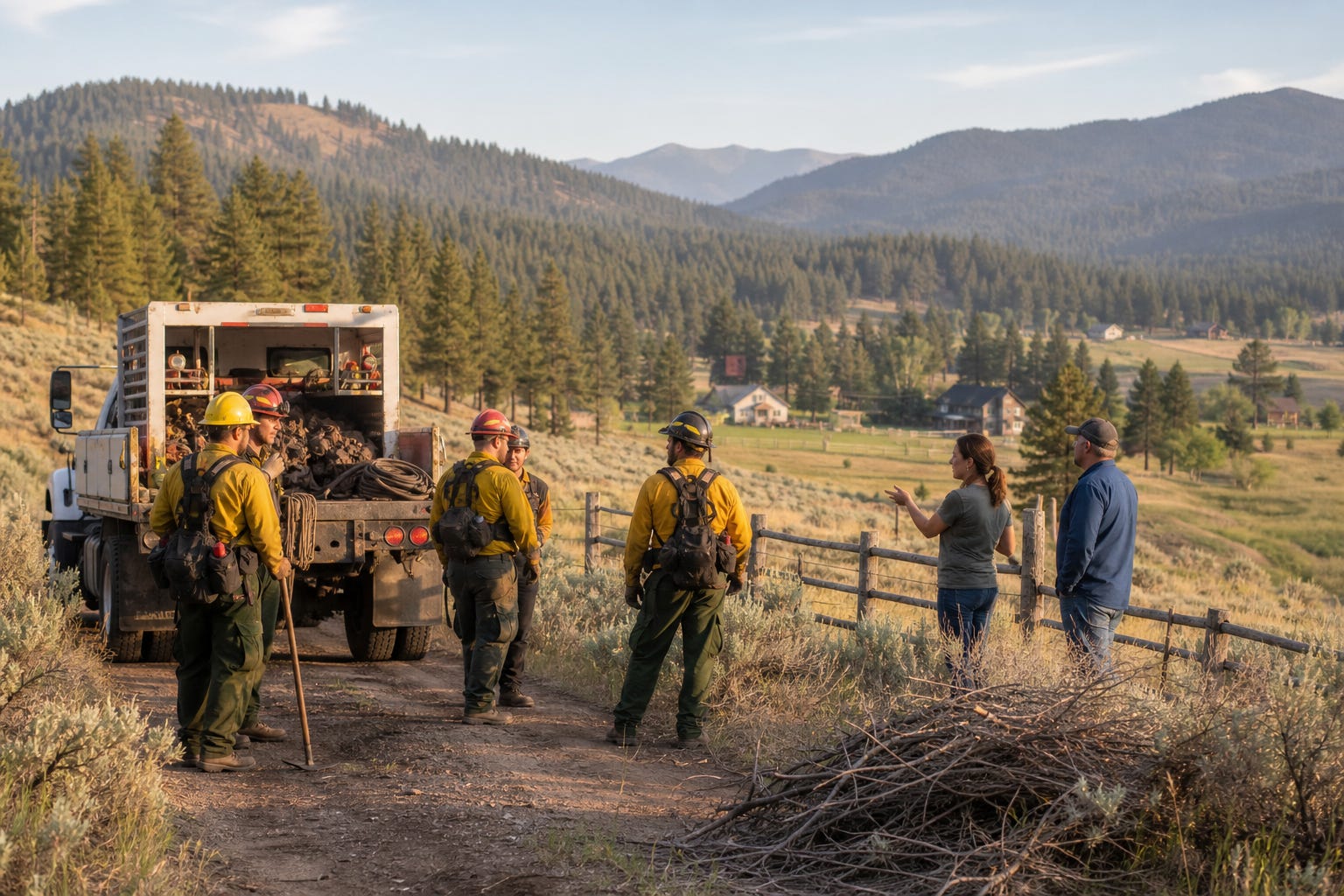
Gov. Brad Little used a June 16 wildfire briefing in Boise to frame this summer's fire risk as a test of preparation, not panic. Idaho enters the season with more forest work, broader agency coordination and a common evacuation message, but the practical question for families, ranches and taxpayers is still plain: can the state keep more fires small before they reach homes, timber ground and local budgets?
Idaho is pushing work before the smoke
Little's office said the state has continued to carry out recommendations from the state's 2024 wildfire review. The work centers on active forest management, firefighting readiness and partnerships that cross land ownership lines. The governor pointed to Idaho's shared forest work with the U.S. Forest Service and its Good Neighbor Authority projects as tools meant to make state and federal crews line up before fire season gets ugly.
In December, Idaho renewed a stewardship deal with the Forest Service. The state says the updated agreement is meant to cut wildfire risk and increase timber output through collaborative projects. That matters in places where forest health, mill work, school endowment land and private property all sit in the same fire path.
The Idaho Department of Lands says its fire program works with timber protection associations, rural volunteer departments and other partners across nine million plus acres that include state, private and federal ground. Its first-attack standard is simple: stop new starts before they grow past the 10-acre mark when possible. For taxpayers, that is the difference between a local response and a much larger public bill.
Faster warnings are part of the plan
Little's June 16 update also named detection and evacuation coordination as part of the state's 2026 posture. The governor's office says Idaho has expanded fire detection and intelligence tools that help evacuation decisions, including cameras, satellite systems, lightning detection and wildfire hazard modeling near the line where homes meet wildland fuel.
The state has also adopted Ready, Set, Go! as a common evacuation-risk message across Idaho, with sheriffs, emergency managers, the Idaho Office of Emergency Management, the Department of Lands and fire chiefs involved. That does not move evacuation authority out of local hands. IDL says local sheriffs remain responsible for ordering wildfire evacuations, while the department can share notices through its alert system and public channels.
That distinction matters because fire warnings are most useful when residents know who is speaking, what level of danger they face and when to leave. Confusion costs time. Time is what rural roads, foothill neighborhoods and volunteer departments rarely have to spare.
The cheapest fire tool is still prevention
State agencies are also putting responsibility back on residents and visitors. Little and fire officials said people cause most wildfires, not lightning, which makes prevention a public safety issue rather than a slogan. IDL's prevention page says the public plays a major role in reducing unwanted fires, and its Fire Restrictions Finder lays out how limits can apply across federal, state, tribal and private lands inside designated fire areas.
Closed fire season runs from May 10 through Oct. 20. During that period, IDL says burning outside city limits on state and private lands is regulated through burn permits, and restrictions can limit activities when fire danger rises. Violations can carry fines, misdemeanor citations or fire suppression costs billed to the responsible party, depending on the agency and land involved.
That is where the state's preparation meets the citizen's part of the bargain. Idaho can build camera networks, coordinate agencies and send crews early. It cannot make a careless campfire, debris burn or roadside spark harmless after the wind gets hold of it.
Little's message gives Idaho a practical standard for the summer. Judge the plan by whether families get clear warnings, whether firefighters catch more starts early and whether forest work protects property, schools and jobs before another bad season writes the lesson in smoke.