
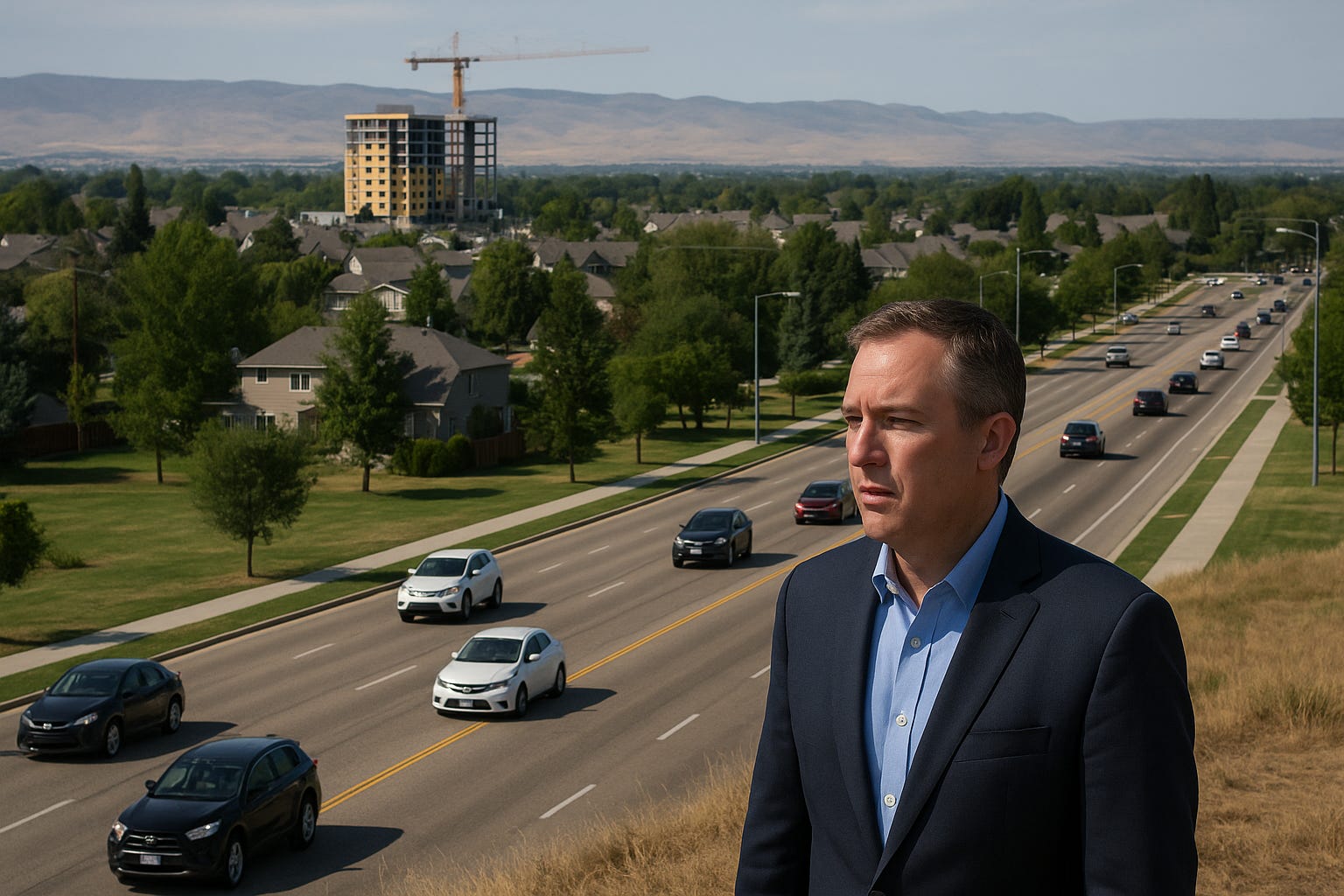
Meridian has crossed 152,000 residents, and Mayor Robert Simison is treating that number less like a trophy than a deadline for police, roads and taxpayers.
In his 2026 State of the City address June 3 at the Galaxy Event Center, Simison described a city still rising fast, but he tied that growth to the practical machinery residents notice first: fire response times, police pay, road projects, parks, water systems and the cost of keeping a family city functional. The story is no longer whether Meridian is growing. It is whether city government can keep up without turning growth into a tax, traffic or public safety problem.
Growth has become a city services test
The Community Planning Association of Southwest Idaho lists Meridian's 2026 population at 152,070, up from 147,340 in 2025 and 117,635 at the 2020 census. Boise is still larger, but Meridian is firmly Idaho's second-largest city, and the broader Ada and Canyon County region has added about 150,000 people since 2020.
That kind of growth changes what a mayor's speech has to be about. Simison pointed to major projects that are supposed to keep Meridian from becoming only a collection of rooftops and traffic signals. Local reports from the address highlighted a new community center at Settlers Park, the final phase of the Linder Road overpass, a planned Heritage Square redevelopment downtown and a new Saint Alphonsus medical complex in north Meridian.
Those are not vanity projects if they work. They are the basic pieces of a city trying to stay usable as families, workers and businesses keep arriving. A road that opens late, a park that never gets built, or a downtown block that stays stalled too long becomes a daily tax on residents' time.
Public safety is the sell
Simison's strongest case was public safety. Meridian voters approved a public safety levy in 2025, and local reporting says the money is being used to create a city prosecutor's office, retain firefighters whose positions had been supported by a federal grant and increase police salaries.
The mayor also highlighted technology as a force multiplier for first responders. Meridian police launched a drone first responder program earlier this year, and one local report said the department has averaged 12 drone flights per day, with drones arriving first at scenes about two-thirds of the time. The examples from the speech included a house fire, a domestic incident and a suspect with a firearm.
The Fire Department has also seen faster response times after dispatch technology changes, with one report putting the improvement at one minute and 52 seconds. That is the kind of number residents understand. In a fast-growing city, public safety is not an abstract department line. It is whether help gets there before a bad situation gets worse.
The bill is the politics
The harder part is paying for it. Simison backed a proposed 3% property tax increase for fiscal 2027, the full amount allowed under Idaho code. Local reporting also noted projected revenue pressure, including about $600,000 less from liquor taxes and utility franchise fees next year, slower building permit revenue and an estimated $2 million annual hit tied to state limits on new growth revenue.
That is where the taxpayer test starts. Meridian can point to real growth and real service needs, but residents deserve a straight line between the money collected and the services delivered. More people should mean more economic strength, not just more pressure on police, roads and household budgets.
Simison's useful frame is fiscal discipline. He presented Meridian as a city that has tried to save before it spends and avoid debt while still building for the next stage. That claim will be measured less by applause at a luncheon than by whether the city can keep its promises when construction costs, staffing needs and property tax bills all arrive at once.
What Meridian is trying to protect
Meridian's brand is simple: a place to live, work and raise a family without giving up safety, access or a sense of local control. That pitch is why the city keeps attracting people. It is also what growth can damage if the basics fall behind.
The mayor's address was optimistic, but the stakes are concrete. If Meridian can keep response times down, finish key roads, build useful public spaces and show taxpayers what they are buying, growth becomes an Idaho success story. If it cannot, the same population boom becomes a warning about what happens when a family city outruns its own infrastructure.
For now, Meridian has the better problem to have. People still want in. The next test is making sure the city they came for still works after they arrive.