
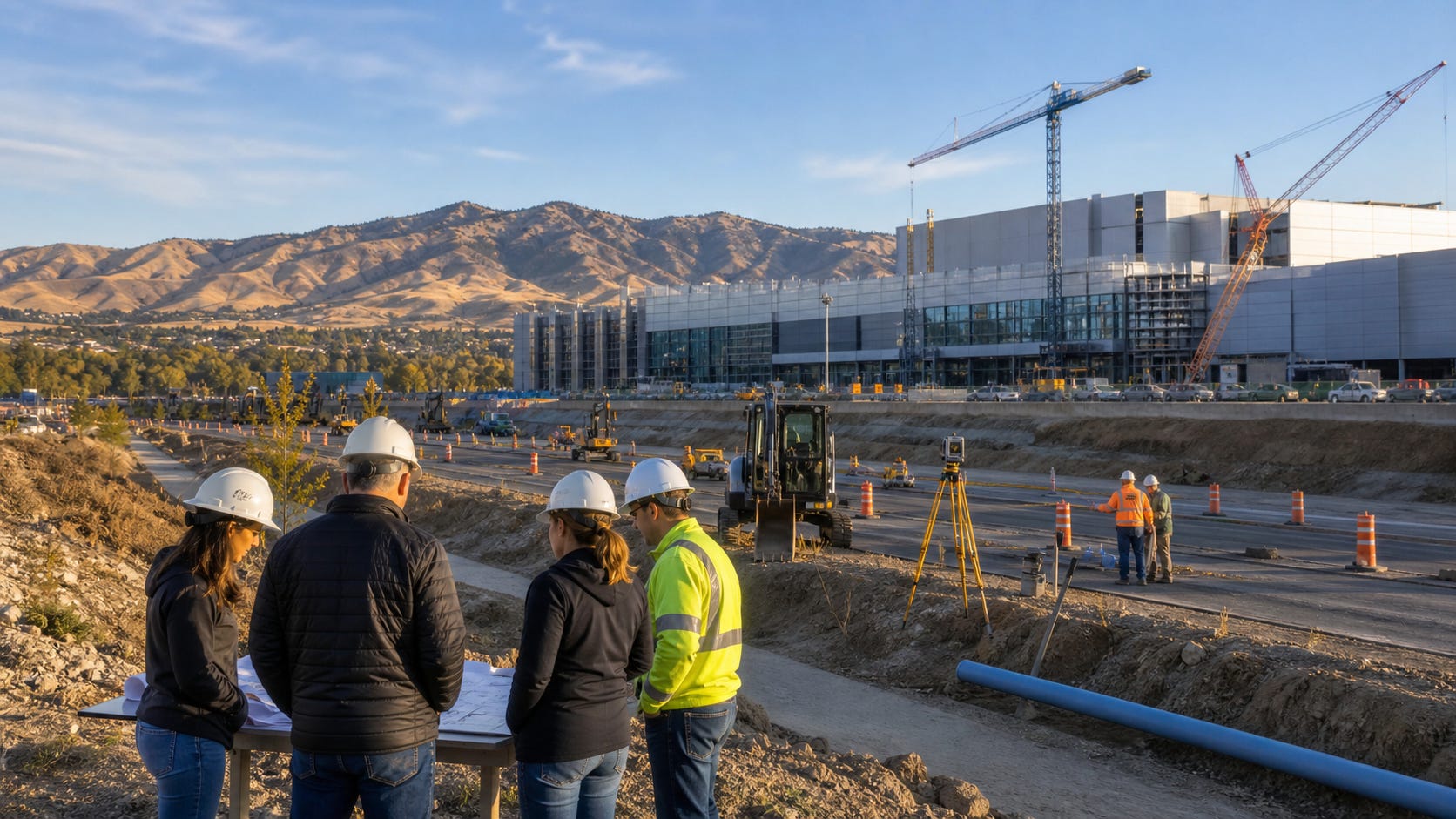
Micron's Boise expansion is no longer just a semiconductor story. It is now a City Hall money, staffing and infrastructure test, with Boise collecting just over $25 million in planning fees from the chipmaker from the start of 2023 through May, according to city budget documents cited in local reporting.
Fees are reshaping City Hall's workload
The money is unusually large for one company. Local reporting said Micron's payments account for more than a third of the planning and development fees Boise has collected or expects to collect between fiscal year 2023 and fiscal year 2026, which ends in September.
That matters because Boise's planning operation is getting bigger at the same time. The city's Planning and Development Services department was budgeted at $13.7 million before the first fabrication plant was announced. This year's budget plans $23.6 million, a 72 percent increase.
The basic taxpayer question is simple: if a private expansion creates a surge of permits, reviews, road questions, utility coordination and inspection work, the cost should follow the project instead of quietly landing on families who are just trying to pay property taxes and keep up with growth.
Micron's campus is pulling southeast Boise into the future
Federal and local reports have described Micron's Boise work as part of a long-term investment in domestic memory manufacturing. BoiseDev has reported that the company has described tens of billions of dollars in Boise spending, including an additional fabrication plant announced in 2025.
City planning pages show why the ripple effects do not stop at the factory fence. Boise has been studying undeveloped areas south of the airport and east of Micron, including southeast Boise land where roads, utilities and future land use decisions could shape the next wave of industrial and residential growth.
Boise publishes planning and development fee schedules and runs a department built around applications, reviews, permits and inspections. That is the local-control promise behind growth: build jobs, build infrastructure, but do not pretend the bill disappears. Someone pays. The only honest debate is whether the growth that creates the pressure also carries the cost.
The win is jobs, if Boise keeps the math honest
There is a real upside here. A major semiconductor expansion can mean high-skill jobs, local supplier work, construction activity and a stronger Idaho role in a strategically important American industry.
But big growth only stays popular when residents can see the tradeoff in public budgets and public services. Families care about commute times, emergency response, school pressure, housing costs and whether City Hall is adding staff because the workload demands it or because a boom gave government room to expand.
Micron's expansion gives Boise a rare chance to prove that Idaho can welcome a major employer without losing the plot on taxpayers, neighborhoods and basic accountability. The fees are coming in. The harder test is making sure the infrastructure, permits and public services keep pace without turning one company's success into a blank check for local government.