
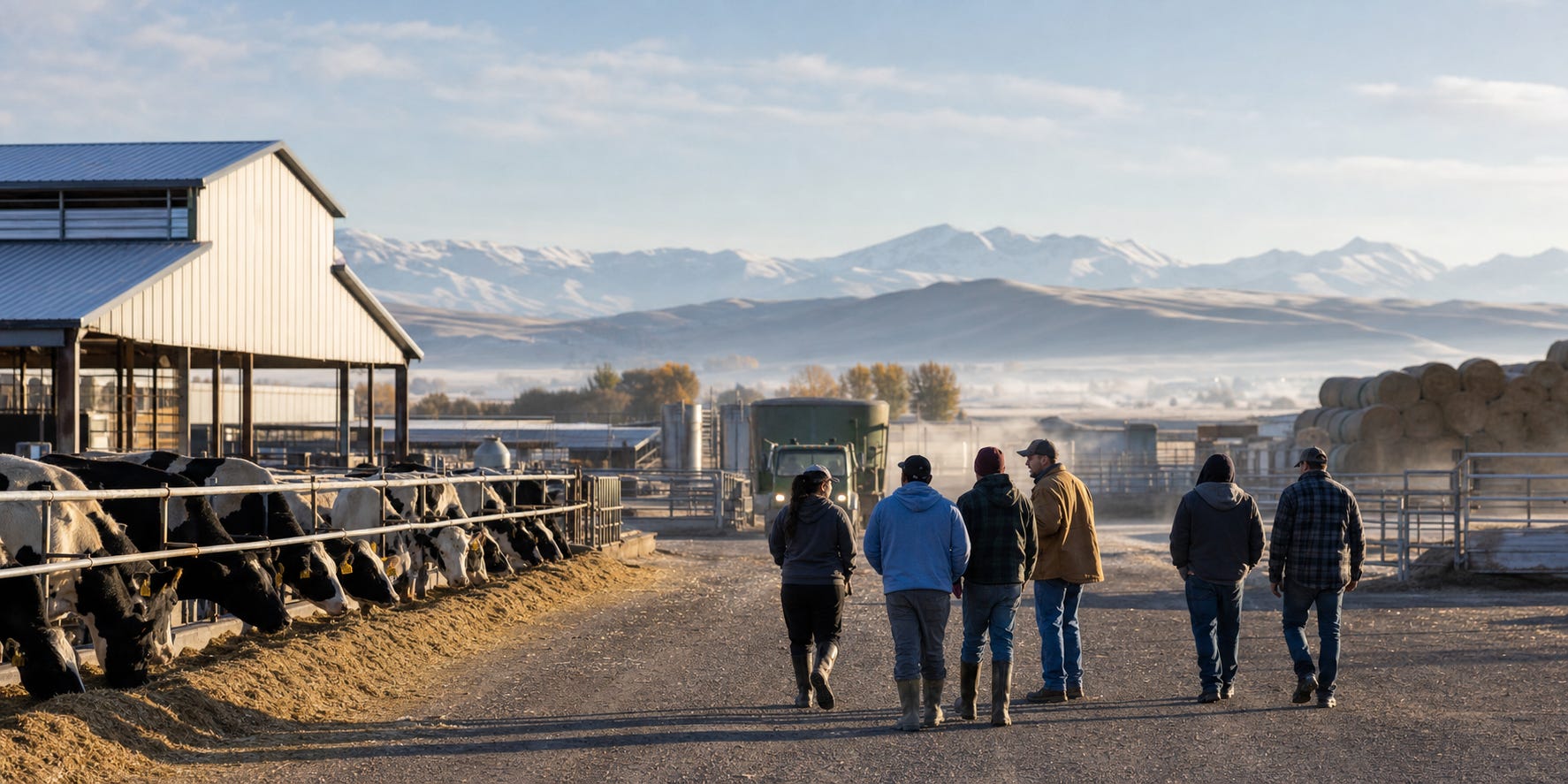
Idaho Congressman Mike Simpson has joined a new push to rebuild the federal farm guest-worker system around the reality of year-round agriculture. The Republican is an original cosponsor of H.R. 9535, introduced June 30, which would let dairy farms and other continuous operations use H-2A labor contracts for nearly a full year instead of limiting the program to seasonal needs.
The proposal reaches directly into Idaho's rural economy. Industry figures put the state fourth nationally in milk production, with 353 dairy operations, nearly 692,000 milk cows, about 33,000 jobs and $10.7 billion in total sales. The same figures say foreign-born workers fill 90 percent of jobs on Idaho dairies.
Why Idaho dairies care about the 350-day rule
Cows do not follow a harvest calendar. They need feeding, milking and care every day, which has long made the seasonal design of H-2A a poor fit for dairy employers. Simpson said he has worked on the issue with Idaho's dairy industry for roughly 20 years.
H.R. 9535 would redefine temporary agricultural work as a contract lasting fewer than 350 days, regardless of whether the underlying job exists year-round. Employers could stagger worker arrivals and departures, while labor certifications could remain valid for as long as three consecutive years. Qualified H-2A workers could also transfer between certified agricultural employers under procedures spelled out in the bill.
For Idaho farm families, the appeal is stability. A legal and predictable hiring channel would give producers a clearer way to staff barns, protect animal care and plan payroll. It would also tie worker authorization to a regulated federal program rather than leaving a vital part of the food supply dependent on legal uncertainty.
The bill mixes access with tighter rules
The measure would not remove the requirement to recruit American workers first. Federal certification would still depend on an employer meeting recruitment standards and showing that enough qualified domestic workers were not available for the offered jobs.
It would also establish a single online platform for employers to submit documents, respond to federal agencies, track applications and pay required fees. The bill directs agencies to reduce duplicate filings and redundant reviews, while preserving wage and working-condition protections. Housing would remain an employer responsibility under health and safety standards, with certifications that could last up to three years.
The proposal includes a limited process for certain farmworkers already in the country without authorization. A worker would need at least 180 qualifying agricultural workdays during the two years before enactment. The waiver is restricted to specified violations connected to obtaining farm employment. Successful applicants would enter H-2A status, which is a temporary worker category and does not create a path to citizenship.
That distinction is central to Simpson's case for the bill. His position is that stronger border enforcement and a lawful farm workforce can operate together. The policy would give producers a legal labor channel while keeping employment records, federal certification and worker status inside an enforceable system.
Congress now owns the timetable
The Securing Agriculture's Workforce Act has 50 cosponsors, including 46 Republicans and four Democrats. It has support from more than 400 agricultural organizations and has been referred to the House Judiciary Committee. No committee vote has been announced, so the proposal remains a bill rather than a change in law.
That leaves Idaho producers watching Washington again. Previous farm-labor overhauls have repeatedly stalled, even as dairies and other year-round operations kept facing the same mismatch between federal rules and daily work. Simpson has acknowledged that immigration legislation is difficult, but he argues the current border environment gives Congress a better opening to separate lawful agricultural labor from illegal entry.
For Idaho, the practical test is uncomplicated. Farms need workers, rural communities need stable payrolls, and families expect a reliable domestic food supply. H.R. 9535 puts a detailed legal framework on the table. The next question is whether Congress will move it before another production season passes under rules written for a different agricultural economy.