
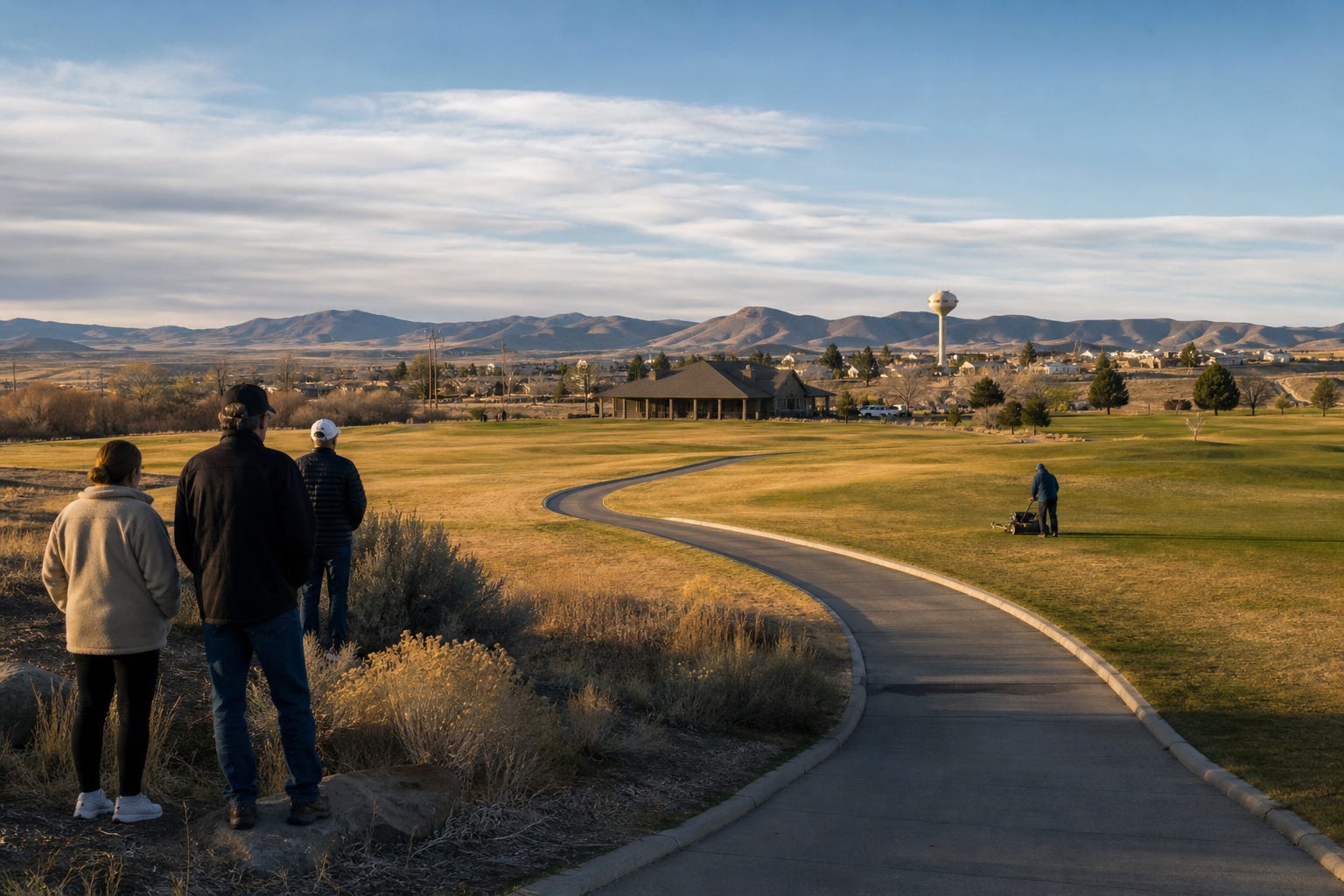
Mountain Home's Desert Canyon Golf Course is no longer just a place to book a tee time. It has become a live budget question for City Hall, where council members spent hours this week weighing whether taxpayers should keep covering a city-owned course expected to cost about $311,000 this fiscal year.
That number is why the debate matters beyond golfers. A small city has to decide what belongs in the public budget, what should pay its own way, and how much room remains for streets, water, police, fire, parks, and other basic services families notice first.
A taxpayer cost with a community face
Mayor Rich Sykes has said the goal is to preserve a community asset while finding a responsible operating model. The city's own materials describe Desert Canyon as an 18-hole course that began as a 9-hole course in 1963 and expanded with a back nine in 1998. It is open year-round, offers season passes, lessons, a driving range, and a bar and grill.
In other words, this is not an abandoned patch of grass on the edge of town. It is part recreation facility, part event space, and part local identity marker.
Supporters point to uses that reach past tee times. The course hosts community events, including a fireworks gathering, and supporters say local high school golfers use it as a home course and practice site. The city also has a Golf Advisory Committee, with recent agendas posted for April, May and June, which shows the council is not treating the course as an afterthought.
The budget question is bigger than golf
Opponents are asking a plain question: should the general taxpayer help fund one hobby when other needs compete for the same dollars? Residents raised concerns about water use, infrastructure, and whether a private operator could run the course more efficiently.
The criticism is not that a golf course has no value. The harder question is whether value is enough to justify a public subsidy when Mountain Home also has to handle public safety, transportation, water systems, streets, and routine infrastructure work.
The June 23 council agenda listed an action item on staff's recommended plan for golf course operations and maintenance. The June 25 amended budget agenda repeated that action item inside the city's budget work. A city-owned amenity that draws public dollars now sits in the same room as roads, water, police, fire, and debt math.
What City Hall has to prove
The course will remain under city operation for now while officials continue discussing the pro shop, hiring a PGA professional, maintenance, and improvements. That gives Mountain Home a narrow but useful test: if the city keeps the course, residents should be able to see the business plan, the service tradeoffs, and the line between community benefit and permanent subsidy.
Public amenities can be worth funding. Small towns need places where families gather, students compete, and local pride has a physical address. But taxpayers also deserve a simple answer before the next budget vote: what does Desert Canyon cost, what does it return, and what essential work waits if City Hall chooses the course first?