
Canyon County Prosecuting Attorney Christopher Boyd has asked a court to dismiss a trespass citation against evangelical preacher Titus Folks, concluding that a permit for an event open to the public did not give organizers unrestricted authority to remove him from Nampa's Lakeview Park because of the content of his speech.
The requested dismissal, filed Aug. 31 in State v. Titus N. Folks, would close a local dispute that began when Folks brought a table, religious flyers and a message to the Canyon County Pride Festival. Boyd's review drew a practical line: event managers could direct where the table belonged, but the public park remained a forum where speech could not be barred simply because of its viewpoint.
A citation followed the dispute over reserved space
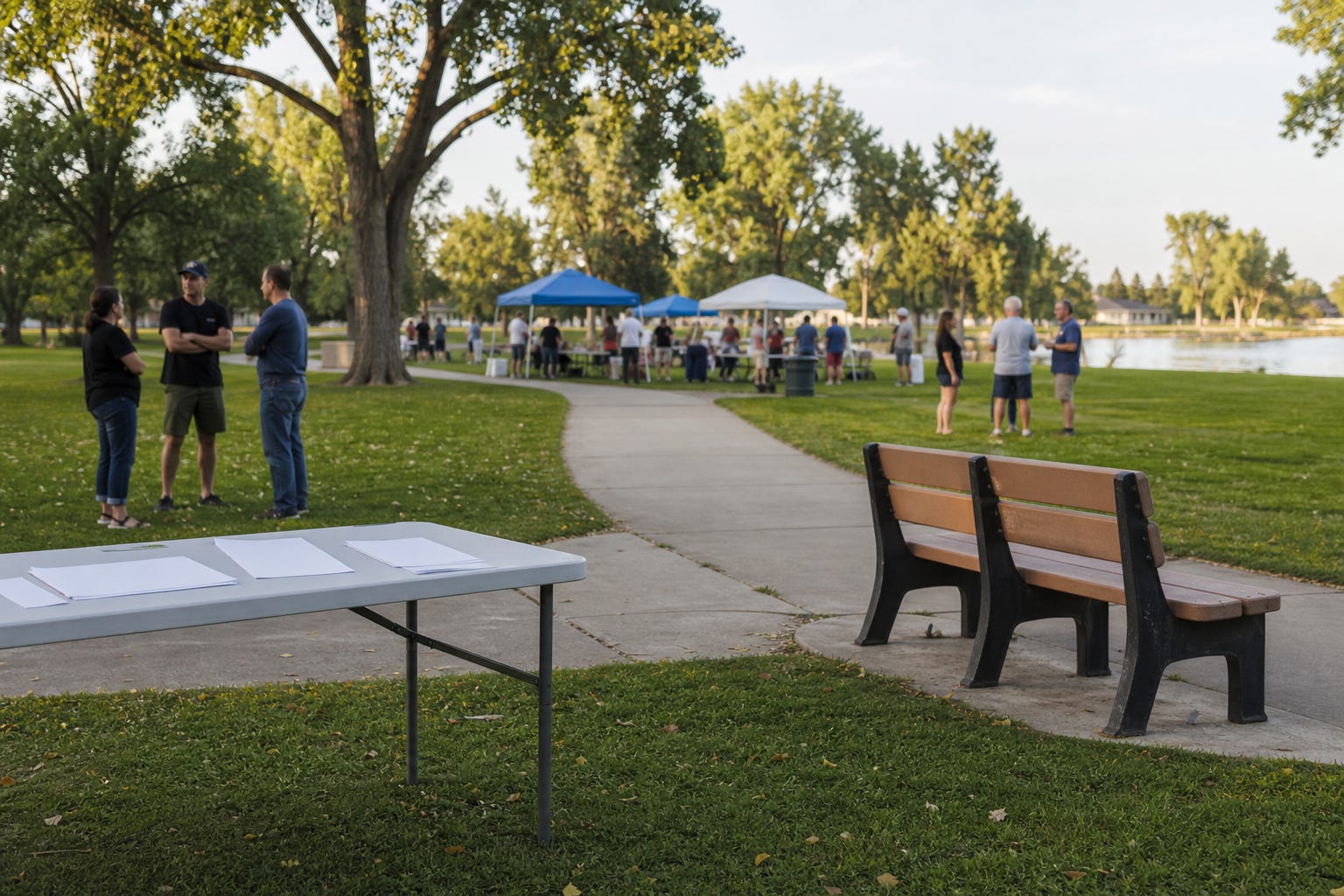
The festival was a permitted, publicly advertised event at Lakeview Park. According to the prosecutor's account, Folks placed a table inside a reserved portion of the park, spoke with participants and tried to distribute flyers. Organizers asked him to leave and called Nampa police.
Responding officers told Folks he could move outside the reserved area. The county's account says they issued the trespass citation only after Folks requested one. The case was filed as CR14-26-10419.
A separate local report, citing the legal group representing Folks, described him as an evangelical preacher who intended to share a Christian message. That detail made the content question central to the prosecutor's review, but Boyd did not fault officers for confronting a difficult scene. He said they acted professionally and in good faith.
The prosecutor separated the table from the speech
Boyd's office treated Lakeview Park as a traditional public forum, a legal category that gives speech substantial constitutional protection. The event permit allowed organizers to reserve and manage space. In the prosecutor's analysis, it did not create unlimited power to exclude a member of the public because of what he planned to say.
That distinction produced two different answers. Folks could be required to relocate his table. He could not, according to Boyd, be stopped from speaking with festival participants or offering them flyers solely because of the message.
"The First Amendment does not yield to a permit or a preference," Boyd said in announcing the motion.
The statement matters because it does not turn every disagreement at a permitted event into a free-for-all. Officials can enforce neutral rules about tables, boundaries and use of reserved areas. The prosecutor's conclusion says those rules cannot become a shortcut for viewpoint control in a park that remains open to the public.
The rule local officials still need to apply
The court must still act on the prosecutor's motion, so the citation has not been erased by a final judicial order. The public explanation from Boyd's office does, however, give Nampa and other Idaho communities a clearer template for future events.
Organizers need predictable control over the space they reserve. Police need instructions they can apply quickly when tempers or competing messages collide. People of faith, advocacy groups and ordinary residents need confidence that local rules will be enforced without turning the content of lawful speech into the deciding factor.
That balance is a matter of local government accountability as much as constitutional doctrine. A clean policy can protect orderly events while reducing the chance that officers, organizers and residents end up in court over a boundary that should have been clear from the start.
For this case, Boyd's office has placed the boundary at the table: manage the physical setup, but do not use an event permit to silence a lawful speaker in the surrounding public forum. If the court grants dismissal, that will be the formal end of Folks' citation. The larger test will be whether Idaho cities write and train to the same distinction before the next public event brings it back.