
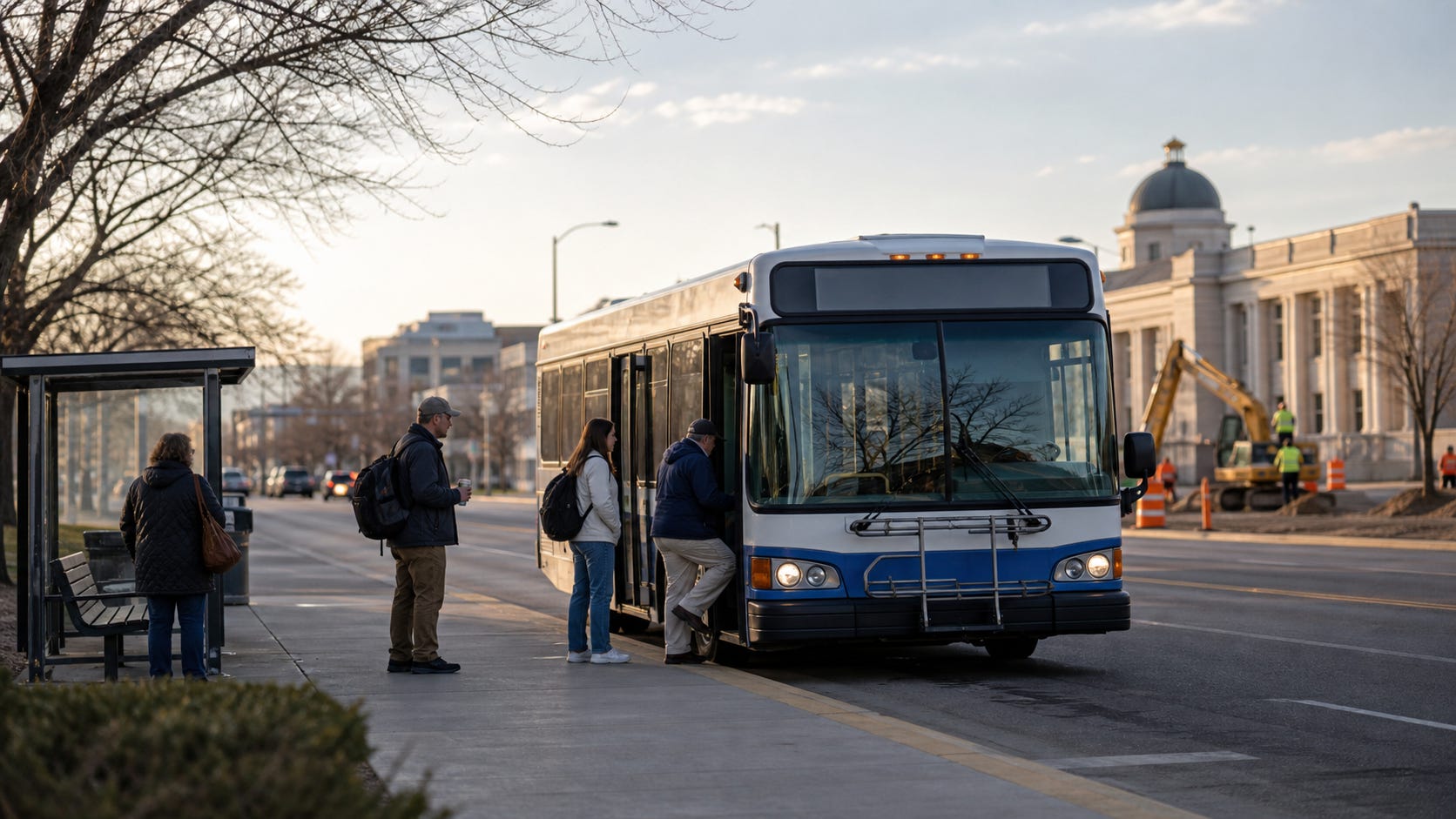
Nampa's public bus service could end Oct. 1 after the City Council voted 4-2 to remove all local funding for Valley Regional Transit from its proposed fiscal 2027 budget. The choice is not final. A revised spending plan is due Aug. 3, followed by a public hearing and expected vote Aug. 17. For now, a line item of less than $500,000 has become a test of which services a growing city expects taxpayers to support.
Council chose the zero-funding option
Nampa's proposed fiscal 2027 budget totals $293 million. That is $17.1 million below the current year's plan. The city lists $49.5 million in property tax revenue, a 17 percent share of all planned spending. Most of the overall reduction comes from lower capital spending, especially in water, water renewal and grant-supported projects.
During its budget workshop, the council considered three transit choices: continue paying for both Route 42 and on-demand service, keep only on-demand service, or eliminate the city's contribution to the regional system. Four council members selected the third option. Dale Reynolds and Natalie Jangula voted against it.
Council member Sebastian Griffin has said Nampa must give priority to critical infrastructure, deferred maintenance and public safety when money is limited. He also pointed to proposed reductions elsewhere, including city economic development funds, council operations and the public library. That puts the transit decision inside a larger taxpayer question, not in a budget vacuum.
VRT had already cut its request
The transit agency first sought about $860,000 from Nampa for the coming fiscal year. City leaders asked it to return with a lower-cost model, and the agency produced a $498,522 proposal.
That plan would have kept the on-demand service area and operating hours while mixing smaller shared vehicles with ride-hailing providers. Some unmatched trips could carry a 50-cent charge above the regular fare. The plan also would have removed Nampa stops from the Route 40 Caldwell-to-Boise express, requiring Nampa riders to connect through Route 42 or use park-and-ride sites in Caldwell or Meridian.
The council did not select that cheaper design. Its preliminary direction was to provide no city money to the system. If that survives the final budget vote, the provider says regular public transit service inside Nampa will end when the new fiscal year begins.
Workers and a street grant carry the risk
The fixed Route 42 line runs from the Happy Day Transit Center in Caldwell through Nampa to Boise Towne Square. Transit records show about 1,000 regular riders use that route, accounting for roughly 17,000 rides a year. The provider says its Nampa services delivered more than 30,000 rides last year.
The decision may also reach beyond bus stops. City staff warned that ending Route 42 could jeopardize a $701,747 federal grant tied to pedestrian improvements on 16th Avenue because bus infrastructure helped the project qualify. Council members must now weigh the local transit expense against the risk of delaying that work or replacing the grant money.
A provider-run survey drew 62 responses, so it is a measure of participating riders rather than a citywide vote. Among those respondents, 66 percent said removing Nampa's Route 40 stops would make commuting less convenient or put a job at risk. Eighty-four percent supported local government funding for public transportation. Riders also identified work, school, groceries and medical appointments as the trips most exposed to a service loss.
The August hearing is the accountability point
The city plans to post its updated budget Aug. 3. Comments received by noon Aug. 12 can be added to the official council packet. The public hearing is scheduled for 6 p.m. Aug. 17 at Nampa City Hall, with the final budget decision expected that night.
The unresolved questions are measurable. Residents need a clear count of unique riders, the public cost of each completed trip, the exposure of the 16th Avenue grant, the services available to people who cannot drive and the exact priorities that would receive the freed money.
The council has already forced the provider to show a less expensive model. Local accountability now requires deciding in public whether that model is still too costly, or whether zero funding would simply move costs onto workers, families and other agencies. On Aug. 17, Nampa's elected officials will own that answer, and residents will have the chance to put their views on the record.