
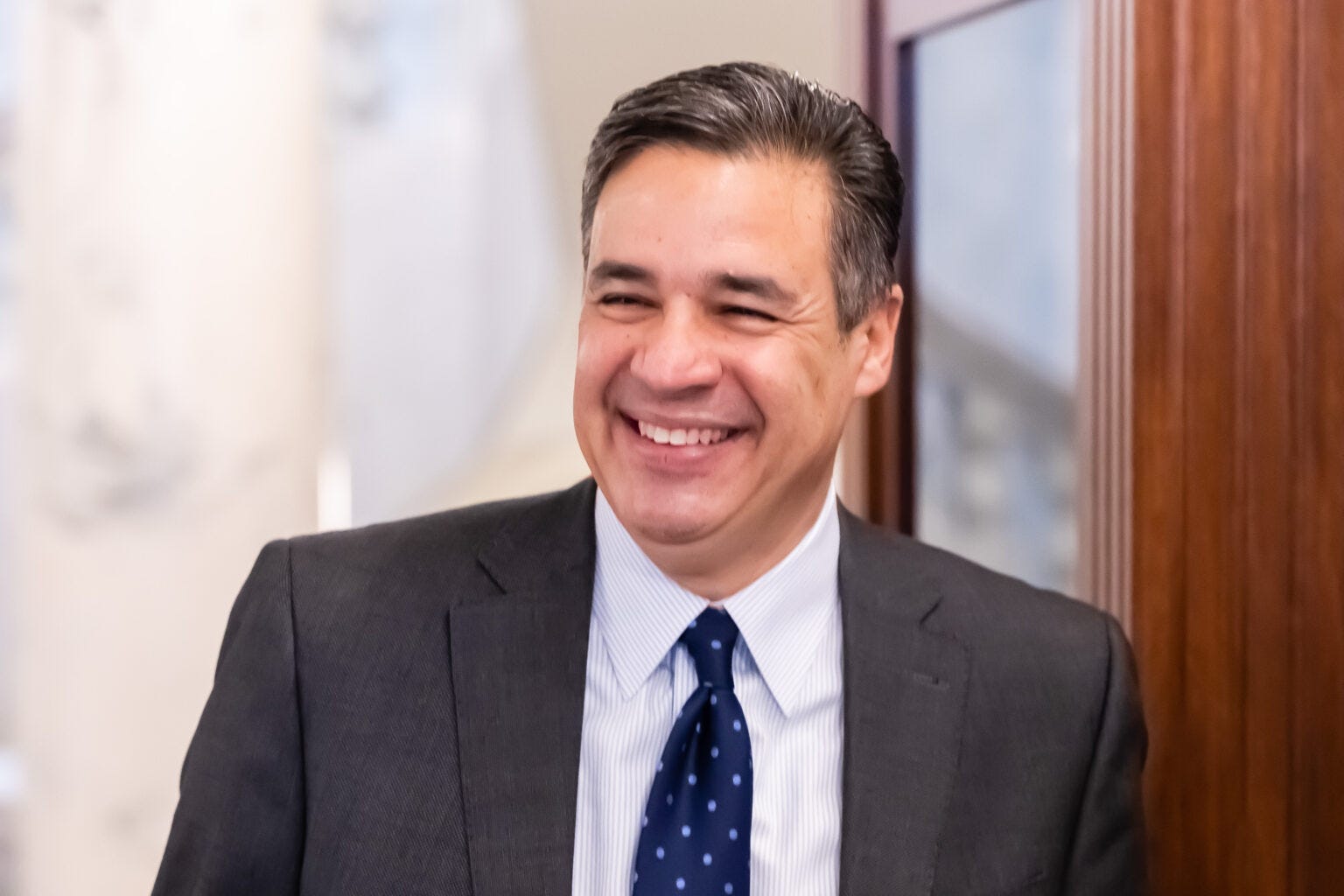
In a decisive move to safeguard Idaho's electoral integrity, Attorney General Raúl Labrador has filed a lawsuit against a coalition pushing to dismantle the Republican Party's closed primary system in favor of ranked choice voting. This legal action aims to keep the contentious measure off the November ballot, citing constitutional violations and deceptive signature-gathering practices.
A Fight to Preserve the Closed Primary System
Labrador's lawsuit, submitted to the Idaho Supreme Court, challenges the Idahoans for Open Primaries initiative on grounds that it breaches the state constitution by encompassing more than one subject. Furthermore, the AG contends that the initiative's proponents misled voters during the signature collection process by failing to fully disclose the measure's implications.
This legal challenge was anticipated by the initiative's organizers, who recently garnered nearly 75,000 verified signatures to qualify the measure for the upcoming general election. The coalition's leader, Luke Mayville, has dismissed the lawsuit as a "political stunt" and a direct affront to the volunteers who mobilized to support the initiative.
Protecting Voter Rights and Electoral Integrity
The proposed measure seeks to eliminate Idaho's long-standing closed primary system, replacing it with an open primary that allows all voters to participate, regardless of party affiliation. This would culminate in a general election where voters can rank their preferred candidates. Labrador's dual-pronged legal challenge aims to prevent this significant overhaul of Idaho's electoral process.
Secretary of State Phil McGrane, named as a defendant in the lawsuit, is tasked with overseeing elections and preparing a pamphlet detailing arguments for and against the initiative. McGrane's office has refrained from commenting on the lawsuit, while Labrador expressed confidence that the Supreme Court will take the matter seriously and align with the AG's stance.
Opposition from Conservative Leaders
The initiative has encountered staunch opposition from Idaho's conservative circles, with notable figures like Idaho Republican Party Chair Dorothy Moon vocalizing their resistance. Opponents argue that the measure threatens to undermine the party's control over candidate selection, while proponents claim it empowers ordinary voters by broadening their choices.
Mayville has countered that the opposition is driven by "powerful party insiders and special interest groups" fearful of losing their influence. Some Republicans, including former Governor Butch Otter, support the measure, believing it will ensure more inclusive and representative candidate selection. However, current state leaders, such as McGrane and Governor Brad Little, have yet to publicly declare their positions.
Legal and Financial Implications
McGrane has noted that implementing the initiative could incur significant costs, estimated at over $25 million, due to the need for new voting tabulation systems. This financial burden adds another layer of complexity to the debate surrounding the measure.
Previously, the Idaho Supreme Court mandated Labrador to revise the measure's ballot titles, which the justices found biased against the initiative. Now, Labrador's latest legal argument centers on alleged deceptive practices by the initiative's organizers and a supposed violation of the single-subject rule in the Idaho Constitution.
Upholding the Single-Subject Rule
Labrador maintains that the initiative's dual focus on primary and general election reforms constitutes a breach of the single-subject rule. In contrast, the measure's proponents argue that both elements are intrinsically linked to the overarching goal of electoral reform.
"I think it's time for the Supreme Court to make a definitive ruling on our single subject jurisprudence," Labrador asserted, underscoring the importance of this legal battle in determining the future of Idaho's electoral framework.
As the lawsuit progresses, it remains to be seen how the Idaho Supreme Court will adjudicate this pivotal issue, which has profound implications for the state's electoral system and the democratic rights of its citizens.