
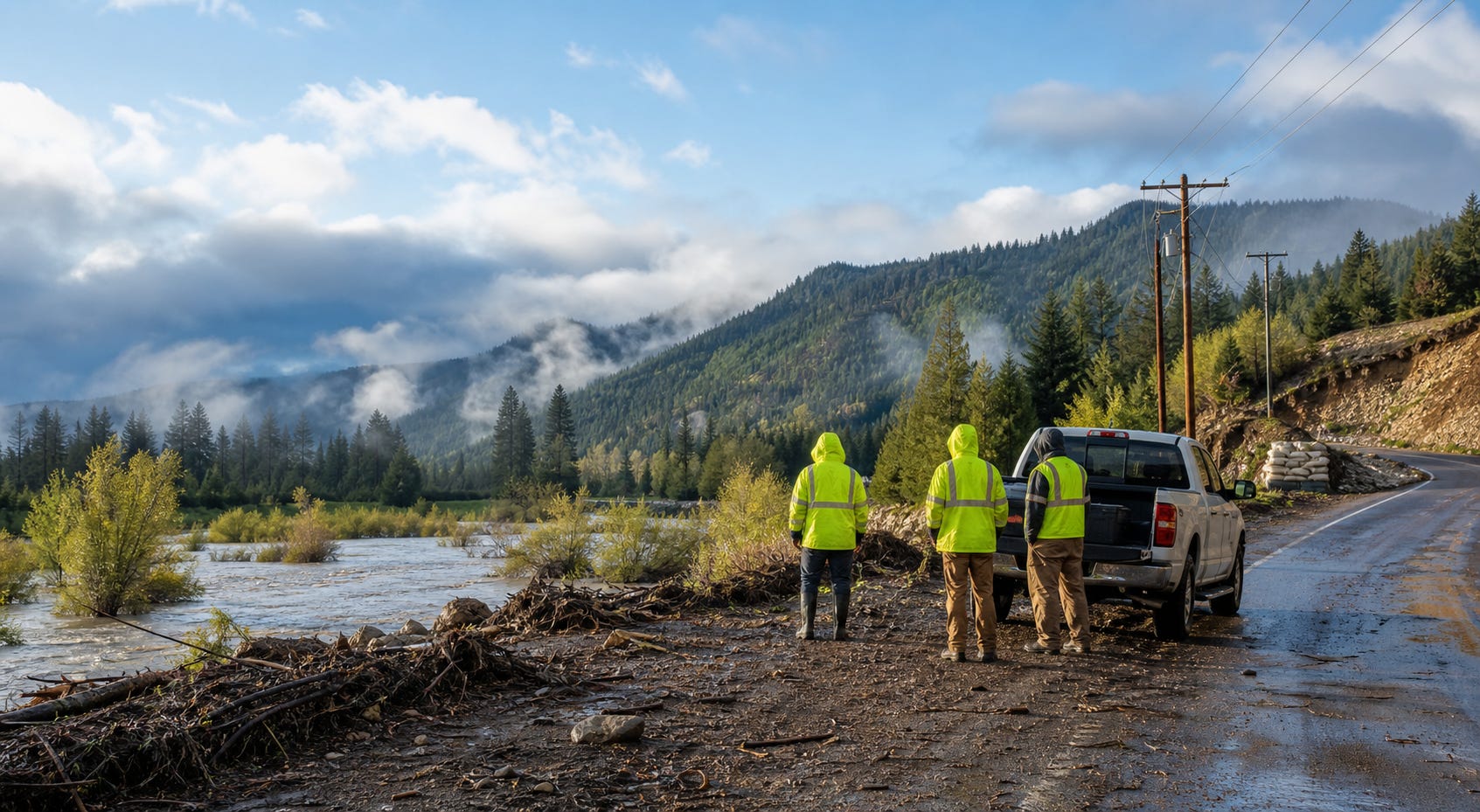
President Donald Trump has approved Idaho's request for a major disaster declaration covering six North Idaho counties, opening a federal recovery lane after March winds, flooding, landslides and debris flows left more than $5.9 million in documented damage and knocked out power to more than 11,000 customers.
Six counties can seek public aid
The declaration covers Benewah, Bonner, Clearwater, Kootenai, Latah and Nez Perce counties. For local officials, the decision is less about ceremony than paperwork with real consequences: eligible public agencies and some private nonprofit organizations can now begin seeking federal Public Assistance for emergency work and damaged public facilities.
That matters because the March 11 through March 15 storm did not hit as one clean incident. State emergency officials described wind gusts ranging from 58 mph to 99 mph, followed by prolonged rainfall that saturated ground already stressed by winter and spring conditions. Roads, public facilities, utility infrastructure and local response budgets all became part of the same recovery problem.
Gov. Brad Little was notified by Trump on Tuesday, according to the Idaho Office of Emergency Management. Little framed the approval as a way for North Idaho communities to restore public infrastructure, support businesses and protect quality of life after the storm. That is the practical local-control piece: counties and cities still have to document their losses, but Washington has now cleared the gate for help.
Local infrastructure is the taxpayer test
The federal approval does not erase the cost. It starts a cost-sharing process, which means local governments still need clean records, eligible projects and disciplined follow-through. The Idaho Office of Emergency Management said potential applicants have until July 30 to submit a Request for Public Assistance, the first step for governments and eligible nonprofits trying to recover costs.
That deadline puts pressure on county courthouses, road departments, emergency managers and utility partners to move fast without turning recovery into a paperwork swamp. The strongest case for federal aid is simple: small Idaho communities should not have to choose between routine services and repairing public infrastructure after a storm that exceeded local capacity.
Ben Roeber, bureau chief for the state emergency agency, said the severe weather damaged critical public infrastructure and that the state would keep working with local partners and FEMA. The useful part for taxpayers is accountability. A declaration opens the door, but reimbursement depends on whether the claims are eligible, documented and tied to actual storm damage.
Residents still have a reporting window
The state is also asking homeowners, renters and businesses to report damage from the March wind, flooding, landslide and debris event by July 13. That report is not the same as an assistance application, and it does not guarantee aid. State officials say the information helps Idaho measure damage and decide what other support programs may be available.
For families in North Idaho, that distinction is important. A driveway washout, damaged business access road or private property hit by debris may not fit the same category as a county road or public building, but those reports still help show the size of the problem.
The declaration gives Idaho a better recovery position than it had last week. The next test is local execution: get the records in, protect taxpayers from sloppy claims and make sure storm-hit communities are not left carrying a statewide infrastructure problem alone.