
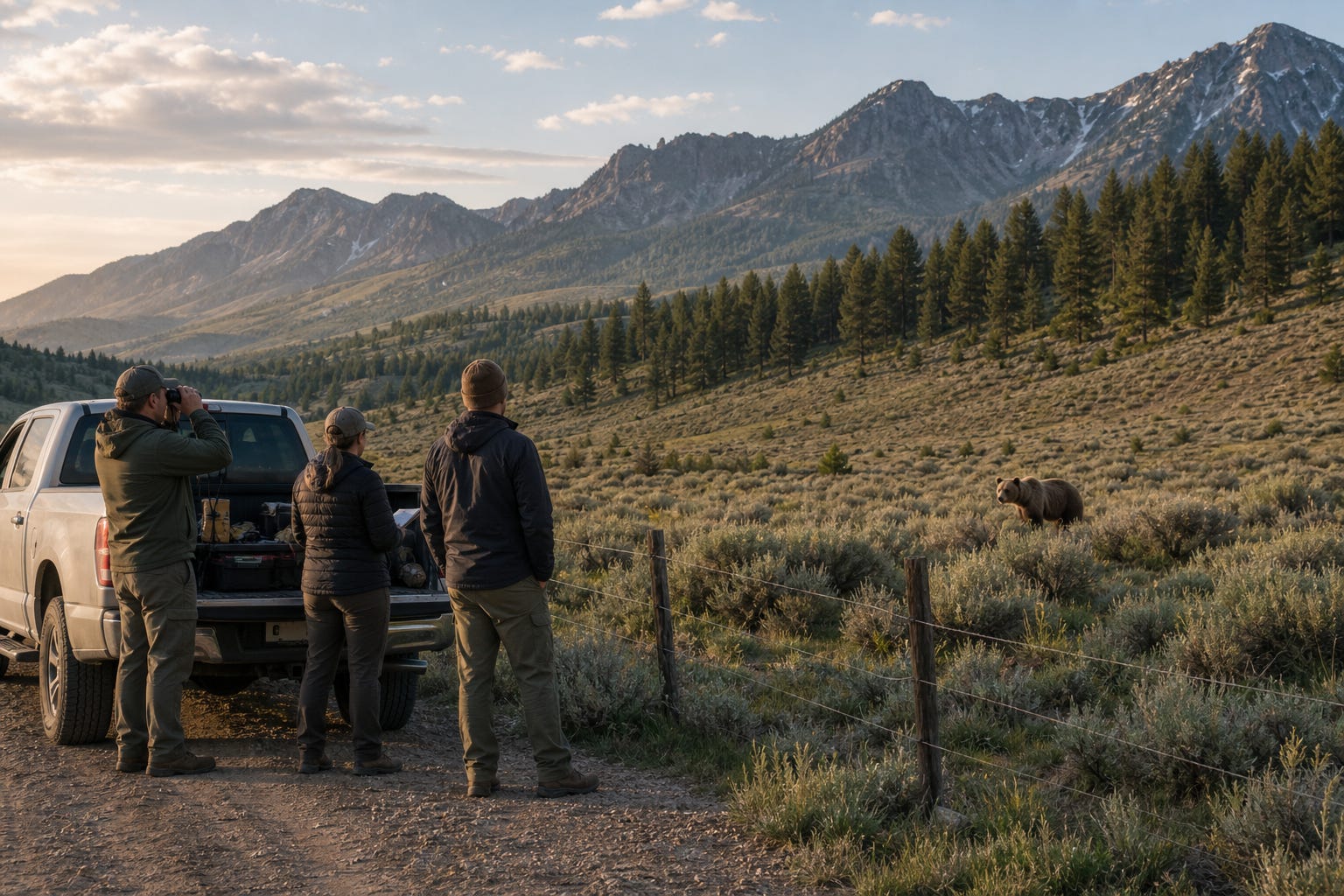
Idaho could gain broader day-to-day authority over grizzly bears under a Trump administration proposal announced this week with Gov. Brad Little at the table. The plan would leave grizzlies in the lower 48 listed as threatened while giving approved state and tribal agencies more room to deter, relocate or remove bears when federal recovery standards are being met.
For Idaho families, ranchers and outdoor communities, the change is less about an agency chart than about who can act when a protected predator moves near homes, livestock or busy recreation country. It is also a measurable step in Little's long-running push to put more wildlife decisions in the hands of state professionals who know the ground.
The rule changes authority, not protection
The Department of the Interior announced the revised proposal Tuesday, July 14, in Montana. Little joined Interior Secretary Doug Burgum, Montana Gov. Greg Gianforte, Wyoming Gov. Mark Gordon and U.S. Fish and Wildlife Service Director Brian Nesvik for the rollout.
The proposal updates the special rules applied to a threatened species under section 4(d) of the Endangered Species Act. It does not remove grizzlies from federal protection, and it does not alter existing experimental population designations.
State and tribal agencies would still operate with federal approval. Where population targets have been reached, however, those agencies could take a larger day-to-day role in hazing problem bears, moving them or authorizing lethal removal when necessary. Federal officials say the purpose is to resolve conflicts and public-safety threats without abandoning long-term conservation.
The proposal is scheduled for publication in the Federal Register on July 17. The public comment window is set to remain open through Aug. 17. No final rule has been issued.
Little has pressed this case for years
Idaho petitioned the federal government in 2022 to remove lower-48 grizzlies from the threatened-species list. A 2025 legal settlement then required the U.S. Fish and Wildlife Service to complete a decision addressing the listing.
The new proposal stops short of the full delisting Idaho requested, but it would shift meaningful operating authority westward. Little's case is that Idaho wildlife professionals can protect a recovered population while responding to the people who live and work in bear country.
That distinction matters on ranches, near trail systems and in rural communities. Federal protection establishes the conservation floor. State management can put response decisions closer to local conditions, with clearer accountability when livestock, private property or public safety is at risk.
Recovery has created a new management test
Grizzlies in the lower 48 have been federally listed as threatened since 1975. Current federal figures cited in regional reporting put at least 1,900 bears across four established areas, including the Selkirk Mountains of North Idaho and northeastern Washington.
That recovery is the reason federal officials say more flexible management is now possible. It is also why the practical challenge has changed. A larger bear population brings more chances for contact with ranchers, recreationists and residents, especially where habitat overlaps with working land and growing communities.
The proposal is not a hunting season, and it is not full state control. Expanded authority could include lethal removal, but federal permission and population benchmarks would remain guardrails. Bears introduced into the Bitterroot Mountains or North Cascades would not receive the same expanded state-management treatment under the current proposal.
The result is a narrower policy than either side of the old delisting fight sought. Idaho would get more tools, while Washington would retain the threatened listing and federal oversight.
Idaho residents get the next say
The 30-day comment period gives ranchers, local officials, wildlife professionals and residents a chance to put Idaho-specific concerns into the federal record. That record matters because earlier federal attempts to delist the Yellowstone-area population in 2007 and 2017 were later overturned in court. Any lasting policy will need to survive both scientific review and legal scrutiny.
For Little, the proposal is tangible progress toward local control without waiting for full delisting. For Idaho, the test is practical: can state managers respond faster when a bear threatens a ranch or community while preserving a healthy population? The Trump administration's plan would give Idaho a chance to prove it can do both.