
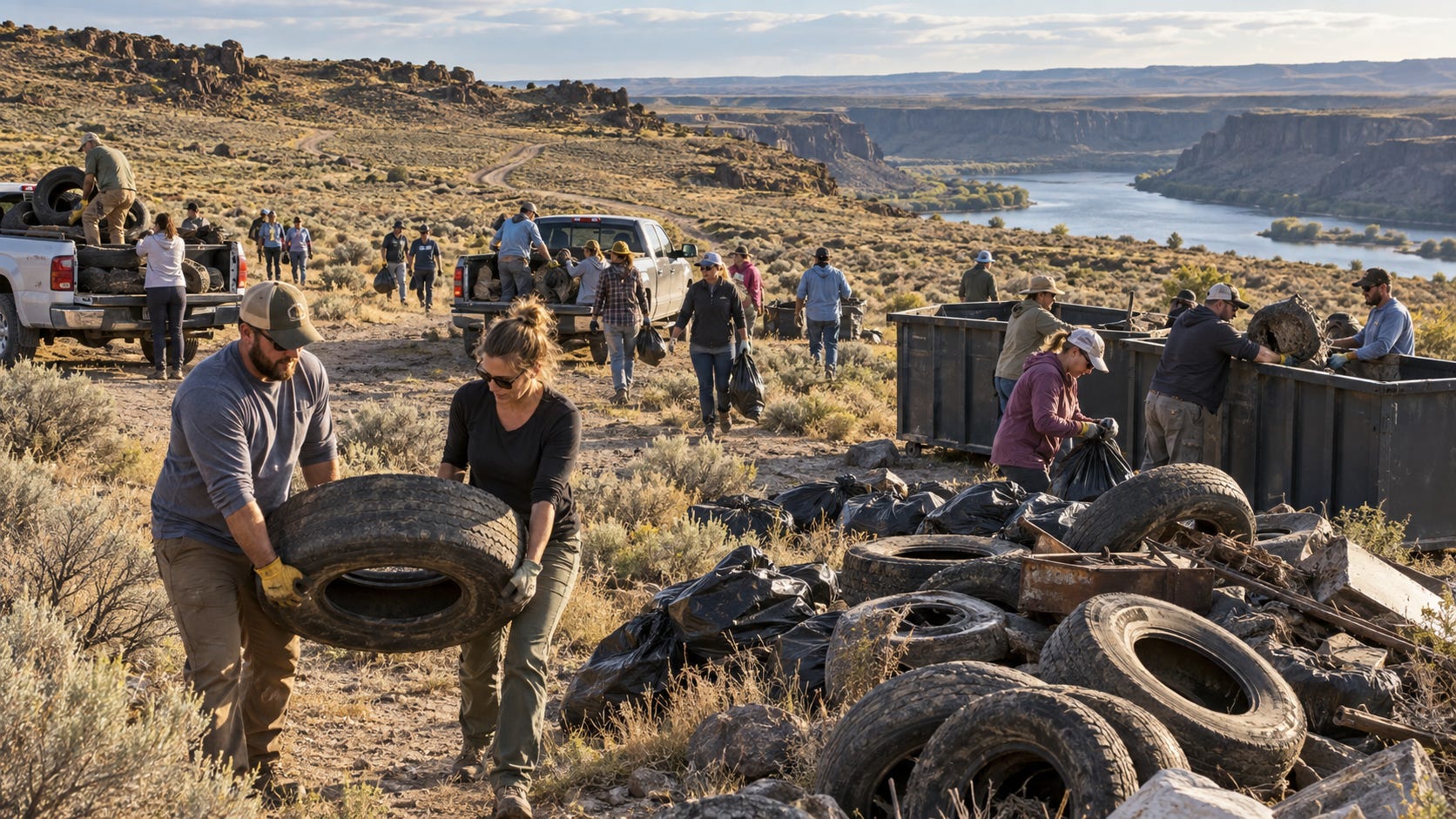
About two dozen volunteers gathered near Burley for a cleanup whose scale became clear when the haul was counted: 72,000 pounds of garbage and 56 used tires removed from the Milner Recreation Area.
The Idaho nonprofit 208Cleanup organized the effort. Southern Idaho Solid Waste supplied large dumpsters, and Commercial Tire covered the tire disposal fees. What could have been a small litter pickup became a major removal job on public land used by campers, anglers, boaters, hikers and families.
The numbers are blunt. A crew small enough to fit in a few pickup trucks confronted a pile measured in tens of thousands of pounds. The cleanup report did not identify who dumped the material or how long it had accumulated, but the result left a clear measure of what volunteers and local businesses removed in one coordinated push.
A small crew faced a massive haul
The group collected ordinary garbage alongside 56 discarded tires. Tires create their own disposal burden, which is why Commercial Tire's decision to cover those fees mattered to the effort. Southern Idaho Solid Waste provided the large containers needed to move the rest of the material out.
That division of work kept the project practical. Volunteers supplied the labor. A regional waste operator supplied capacity. A local tire business handled a specialized cost. None of those pieces alone would have produced the same result. Together, they turned a volunteer day into a cleanup large enough to change the condition of the site.
The 72,000-pound total also separates this project from a cosmetic sweep along a roadside. This was accumulated dumped material in southern Idaho's high desert, not a few bags gathered after a weekend crowd. Removing it required local people willing to give their time and businesses willing to absorb real disposal needs.
Milner carries more than recreation value
The Bureau of Land Management calls the site the Milner Historic Recreation Area. It protects visible Oregon Trail ruts left by emigrants who crossed the area more than a century ago. A 1.3-mile paved, accessible walking path follows the historic route and includes panels explaining the site's history.
Milner also contains four miles of Snake River shoreline, which the agency describes as the largest accessible stretch of public land along the river in the Magic Valley. The area has two boat ramps, fishing access and 26 campsites. Its basalt cliffs and sagebrush country also support birds, rabbits, reptiles and mule deer.
That makes the cleanup more than an exercise in making empty desert look better. The material came out of a place where Idaho history, wildlife and daily recreation overlap. Families camp there. Anglers work the shoreline. Boaters use the ramps. Visitors walk beside wagon ruts that survived generations before modern dumping reached the area.
Local partners covered the hard parts
The project shows what local stewardship looks like when it is organized around a concrete job. 208Cleanup brought people together. Southern Idaho Solid Waste supplied the dumpsters. Commercial Tire removed one financial obstacle by covering tire disposal. The volunteers supplied the hours and effort needed on the ground.
There is no indication that one cleanup will end dumping across southern Idaho's desert. Organizers are already directing potential volunteers toward future projects. But this effort established a useful standard: define the site, assemble the right partners, remove the material and count the result.
The result is hard to ignore
Milner's history is measured in wagon ruts, river access and a landscape that Idahoans continue to use. The latest chapter can be measured just as plainly: 72,000 pounds of garbage and 56 tires no longer sitting at the recreation area.
That is not a slogan about caring for public land. It is local accountability measured in dumpsters, disposal fees and a Saturday of work.