
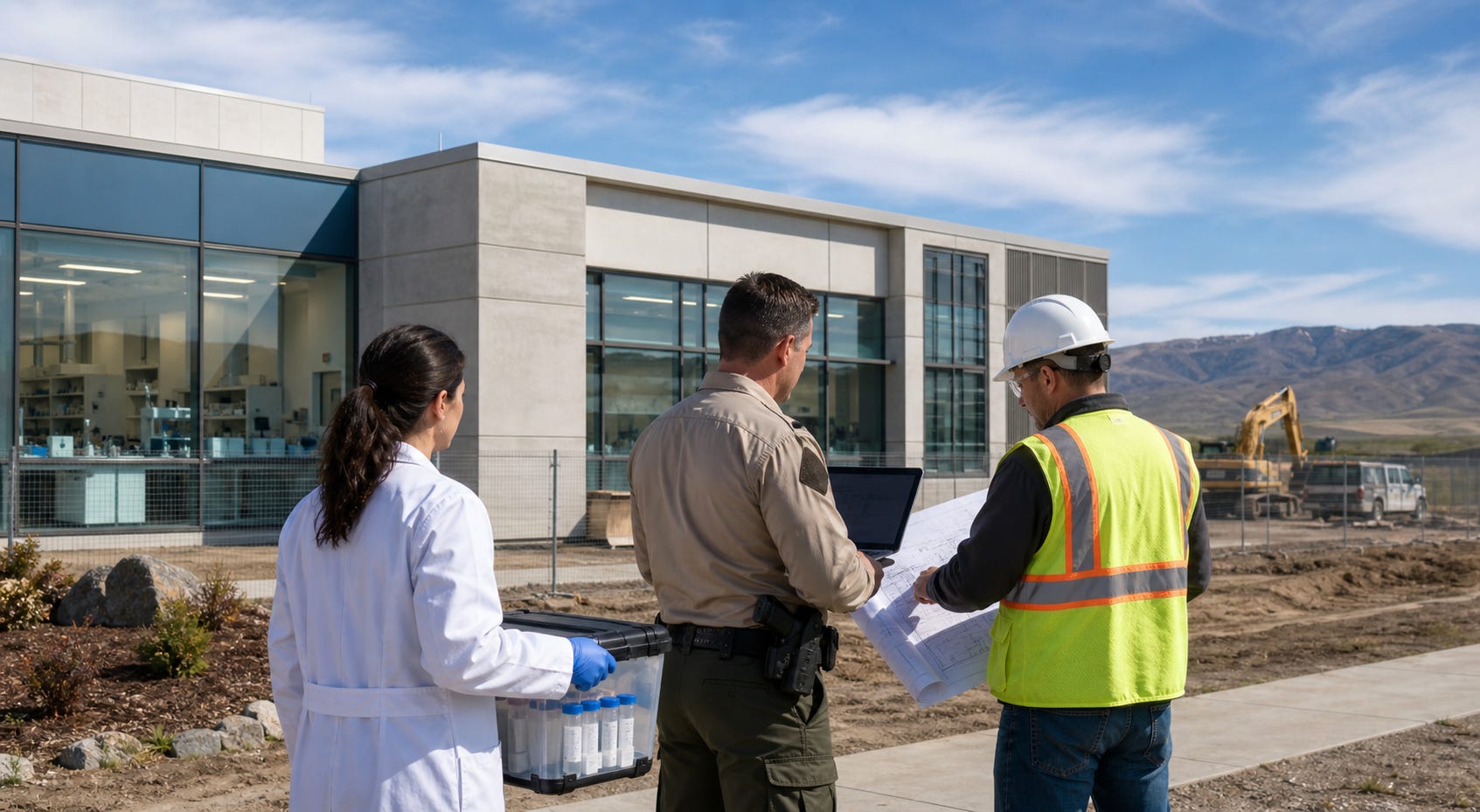
Idaho State Police broke ground Aug. 25 on a 20,000-square-foot forensic laboratory at its Meridian headquarters, beginning a $29 million expansion scheduled for completion in January 2028. Teams working on DNA evidence, fingerprints, electronic devices and ballistic comparisons will move into the purpose-built space.
The project puts a large state investment behind a practical public-safety problem: local investigators need reliable evidence analysis, and the volume and technical complexity of that work continue to grow. The new building is intended to give scientists more room, newer infrastructure and capacity for technologies that do not fit easily into the existing laboratory.
A statewide caseload is driving the expansion
The Meridian operation serves far more than Idaho State Police investigations. State records show 16,069 submissions during fiscal year 2026. DNA accounted for 3,745 samples. The system worked with 114 police and sheriff's agencies, county prosecutors statewide, 14 public defense offices and coroners throughout Idaho.
Those numbers make the project a statewide piece of criminal-justice infrastructure even though the construction site is in the Treasure Valley. Evidence collected by a sheriff's office, city police department or coroner can depend on the same state system for testing and interpretation. Prosecutors and defense attorneys also rely on that work when scientific evidence becomes part of a court case.
ISP Director Col. Bill Gardiner said the agency needs modern facilities that can keep pace with new technology and growing demand. He credited Gov. Brad Little and the Idaho Legislature with supporting the long-planned expansion, which the agency says will strengthen assistance to law enforcement and help provide answers for victims and families.
New tools target active investigations and cold cases
The planned laboratory will bring several specialized teams into dedicated space. Scientists handling biological evidence and fingerprints will work alongside experts examining electronic devices and firearms data. The NIBIN unit gives participating agencies access to a federal system that compares ballistic evidence and can reveal possible connections among gun crimes.
Digital evidence now reaches well beyond phones and desktop computers. ISP Forensic Services Laboratory System Director Matthew Gamette said investigators increasingly encounter tablets, vehicle infotainment systems and other connected devices. That evidence can matter in cases involving human trafficking, crimes against children and other serious offenses. More scientists, instruments and secure work areas are meant to help the laboratory handle that demand without allowing evidence queues to become a drag on investigations.
The agency also plans to establish whole genome sequencing capabilities for advanced forensic DNA analysis. ISP says the technology could add another tool for current investigations and unresolved cases. Gamette described the goal as moving scientific results to investigators and prosecutors sooner, before an active case loses momentum and becomes cold.
Relocating those teams will create room in the older Meridian building. ISP expects that site to carry more chemistry and toxicology work, alcohol testing and DNA database duties. The current construction is the first phase of a larger laboratory plan, while future phases remain outside the present project.
The funding record matters to Idaho taxpayers
ISP corrected its initial project announcement to clarify that the laboratory is funded through Idaho's General Fund under House Bill 779, which the Legislature approved in 2022. The agency had first identified federal American Rescue Plan Act money as the source. The correction means the $29 million should be understood as a direct state investment rather than one-time federal aid.
That makes performance and accountability central to the project's public value. Gamette said the laboratory system tracks measures such as cost per sample, cost per case and cost per item. The new facility will add specialized electrical, plumbing, ventilation and information-technology systems, along with equipment and work areas designed specifically for forensic science.
The practical test will come after the doors open in 2028. Idaho families waiting for answers and local agencies waiting for evidence results will be looking for shorter delays, dependable science and better use of the space taxpayers bought. For a laboratory that already touches cases in every county, faster and more capable forensic work could affect investigations far beyond Meridian.